
In this article
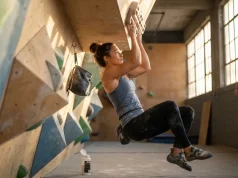
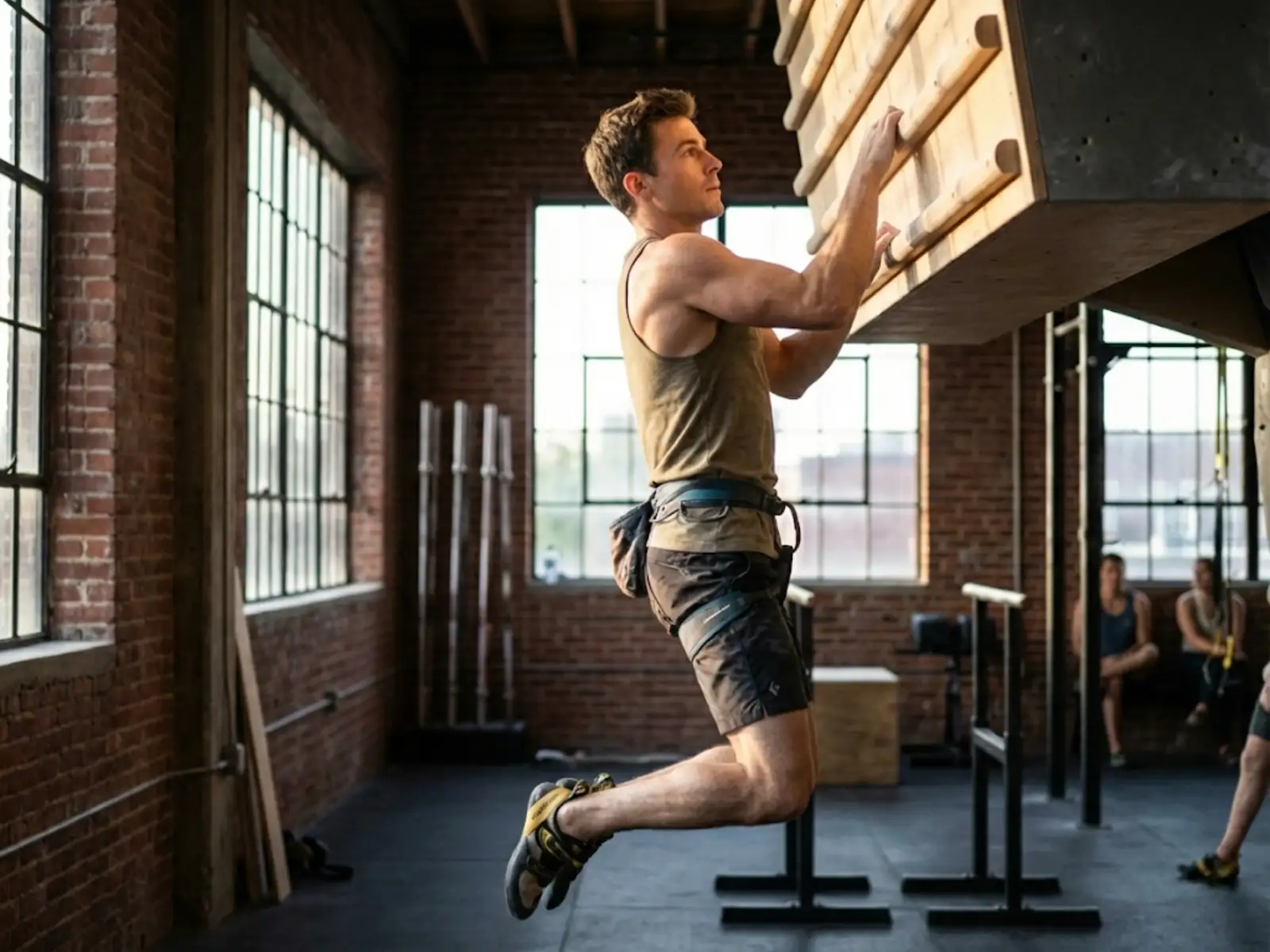
The rung was four feet away—too far for a normal reach. My legs kicked straight as my hips drove toward the wall, fingers stretching for that distant edge. For a split second, I felt weightless. Then contact. The catch was clean, my scapula locked, and momentum carried me upward.
That’s when I finally understood: campus board training isn’t about pulling harder. It’s about pulling smarter. After years of coaching climbers through their first campus sessions—and watching far too many blow out pulleys from bad form—I’ve learned that the difference between explosive power gains and career-ending injuries comes down to understanding what’s actually happening in your body.
This guide breaks down the campusing technique training principles that separate efficient power development from reckless finger destruction. You’ll learn the physics of dynamic movement, the neuromuscular demands of plyometric movement, and the technical cues that elite climbers use to build contact strength without wrecking their bodies.
⚡ Quick Answer: Campus board training develops explosive climbing power through plyometric movements that target the stretch-shortening cycle. Success requires proper scapular activation, a half-crimp grip position (never full crimp), and adequate rest between sets (3-5 minutes). Most climbers should wait until they can climb V5-V6 and do 15-20 pull-ups before starting campus work. The reward is elite-level contact strength—but the cost of bad form is pulley ruptures and growth plate injuries.
The Genesis of Campus Training
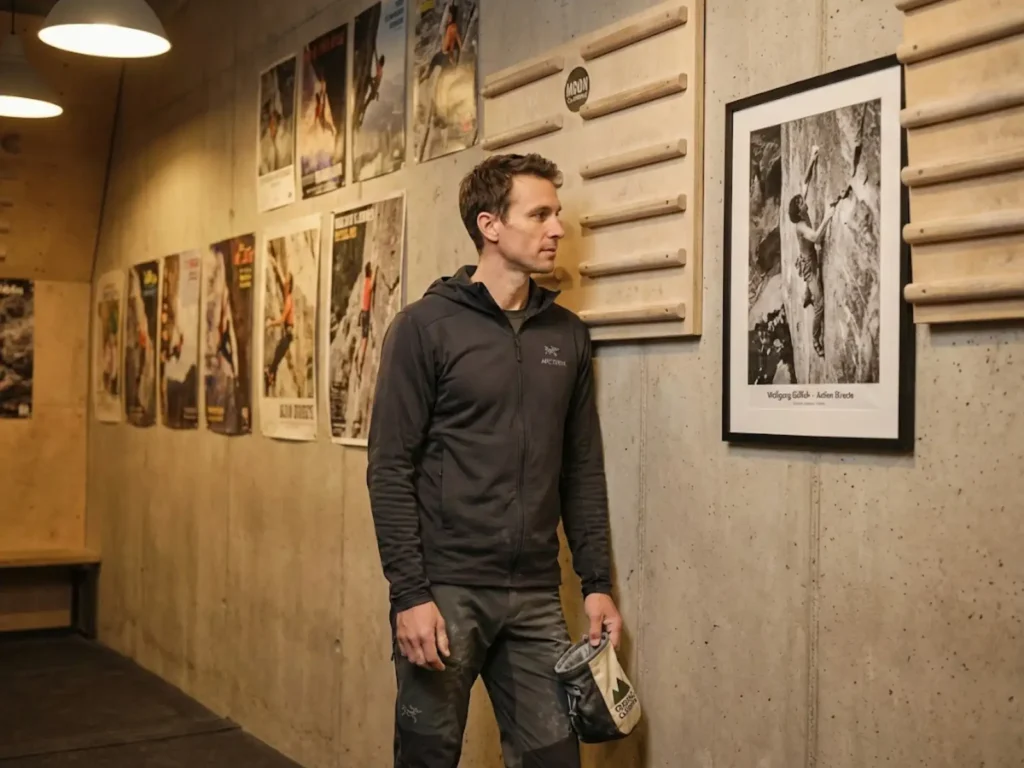
Wolfgang Güllich built the first campus board in 1988 at a university gymnasium called “The Campus Centre” in Nuremberg, Germany. He wasn’t training for general fitness. He was preparing for a single move on a route called Action Directe—a desperate lunge into a sharp two-finger pocket that would eventually become the world’s first consensus-graded 9a (5.14d).
Traditional training methods couldn’t replicate the explosive demands of that move. Static hangboard training built finger strength, sure. But Güllich needed something different—the ability to generate maximum force in a fraction of a second, catch a tiny hold in mid-flight, and immediately fire into the next move without losing momentum.
What he created was the adaptation of Soviet plyometric theory to finger strength development. The concept of the stretch-shortening cycle—where muscles absorb a rapid eccentric load and immediately transition into concentric contraction—had been used in track and field for decades. Güllich applied it to climbing.
Pro tip: The campus board was never meant for beginners. Güllich was already climbing 5.14 when he built it. If you’re not at V5-V6 minimum with solid base strength, you’re not ready for this tool.
On September 14, 1991, Güllich sent Action Directe, validating the campus board as the definitive instrument for elite power training. The tool has since spread to every serious climbing gym on the planet, with standardized rung spacing (11 cm) allowing for benchmark training protocols like the famous 1-5-9 benchmark.
What Makes Campusing Different from Hangboarding
The distinction matters. Hangboard workouts develop isometric (static) finger strength—your ability to hold a position. Campus training develops dynamic power—your ability to generate force explosively and catch holds at high velocity.
This difference traces back to the rate of force development (RFD). In climbing, particularly during dynamic moves on small holds, the time available to generate force is often less than 200 milliseconds. Campus board training improves this metric, enhancing the sensitivity of muscle spindles and increasing tendon stiffness for more efficient energy transfer.
The 1-5-9 Benchmark and Standardized Progression
Rung spacing matters for quantifiable training program structure. The standard 11 cm spacing allows climbers worldwide to measure progress against consistent benchmarks. The 1-5-9 ladder—start on Rung 1, skip to 5, then to 9—has become the global metric for elite arm power and contact strength.
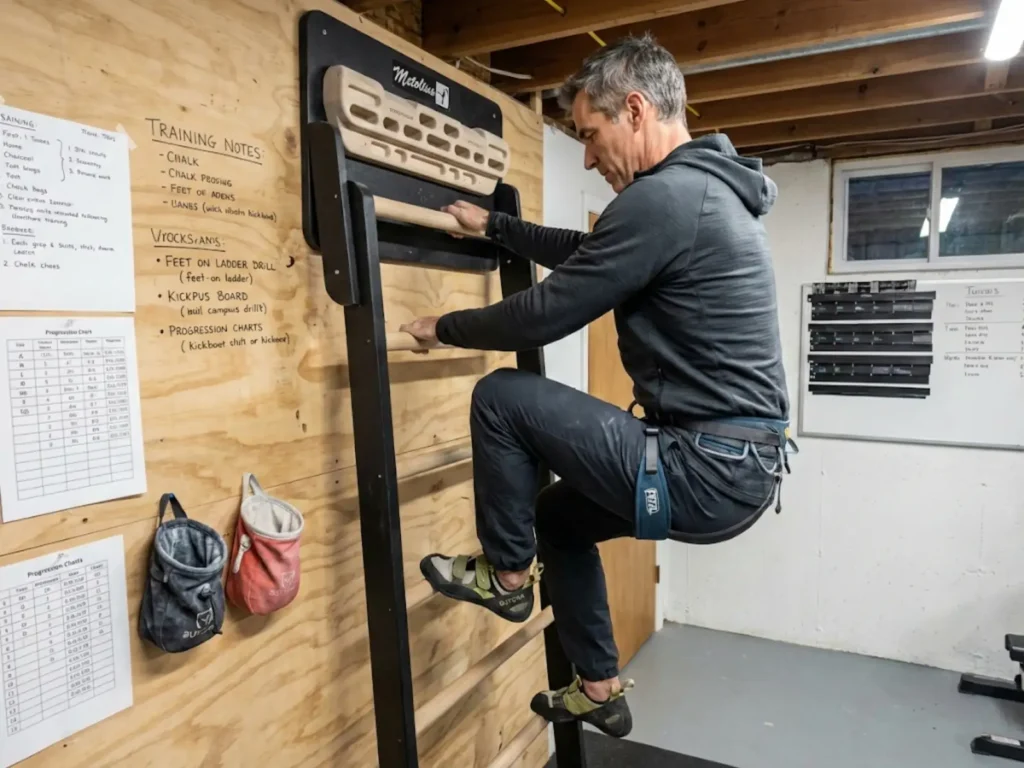
Most beginners start with feet-on campusing using a kickboard set below the main board. This scales the load on fingers and allows technique development before full feet-off campusing attempts.
The Physics of Projectile Motion on the Board
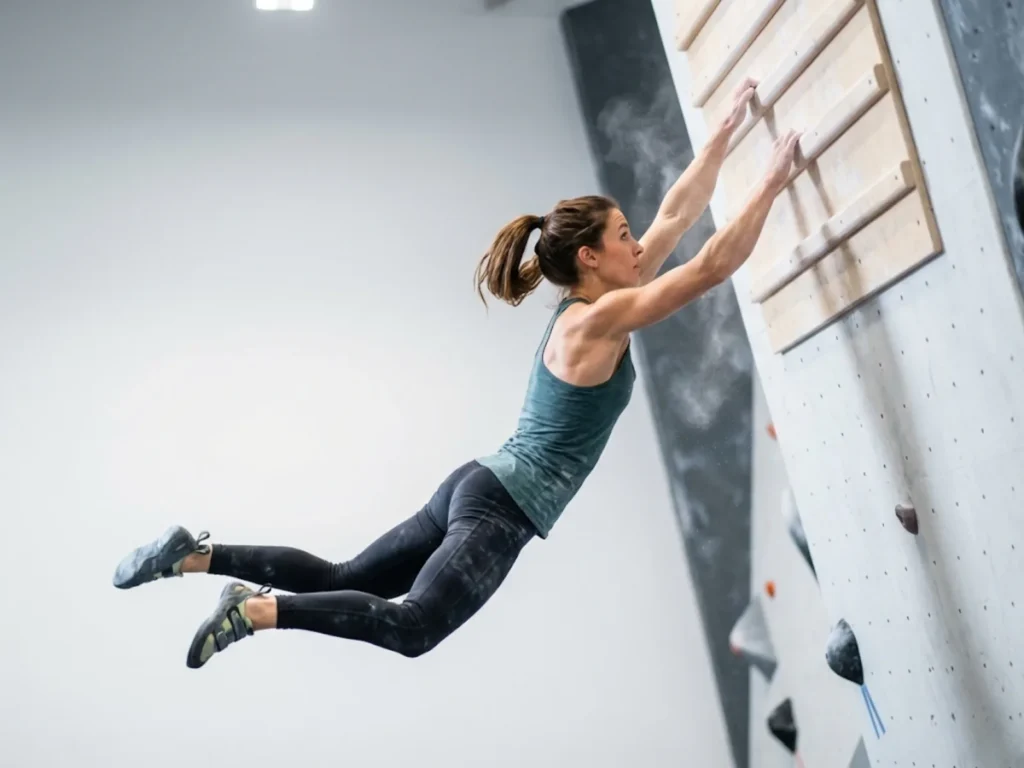
A campus move is projectile motion where your body is the projectile. During the flight phase, your center of gravity accelerates upward and inward toward the board. Miss the force vector, and you miss the rung.
Research using motion analysis systems shows that normalized maximal vertical force during the acceleration phase ranges from 1.5 to 2.5 times body weight. As target distance increases, force demand grows—and so does the precision required for a successful catch. Larger moves require not just more power, but better timing.
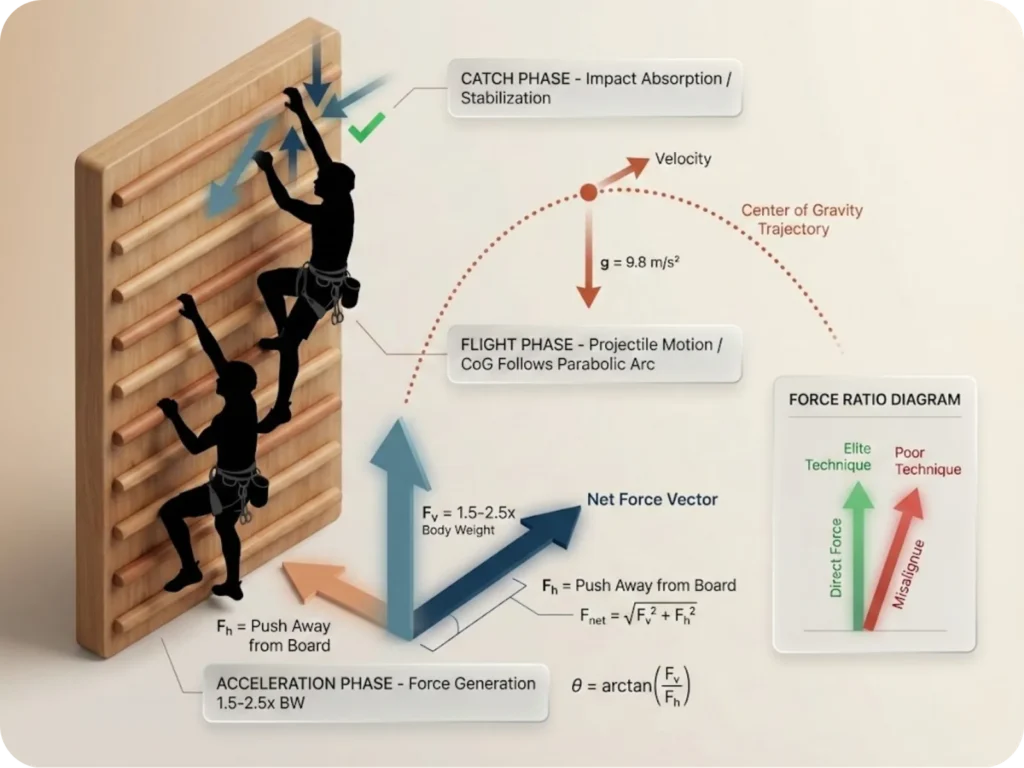
The horizontal reaction forces are equally critical. You push away from the board initially, then pull back in to initiate flight. The “Ratio of Force”—the relationship between net horizontal and net vertical force—separates expert technique from wild pulling. Elite campusers orient their force vectors toward the target rung, minimizing wasted energy in lateral oscillation.
Third-Class Levers and the Speed-Power Trade-Off
The human body primarily uses Third-Class Levers for pulling movements—the effort (muscle contraction) sits between the fulcrum (joint) and the load (body weight). This system prioritizes speed and range of motion over mechanical advantage.
That’s what enables the explosive snap of a campus move. But it also means your muscles and tendons must absorb massive internal forces to stabilize joints against gravity. The trade-off is clear: you can move fast, but the load on your connective tissue is substantial.
Force-Vector Training and Dynamic Correspondence
Campus boarding represents a blend of axial and anteroposterior force application. You apply force vertically to counteract gravity and horizontally to maintain contact with the overhanging board. Poor force application—pulling straight up instead of in toward the board—results in swinging away, missing catches, or landing in deep lock-offs that stop momentum.
Scapular Mechanics and Shoulder Stability
The shoulder complex is the primary engine of the campus move. Four joints, eighteen synergistic muscles, and a stability requirement that’s dynamic, not static. Understanding scapular activation is non-negotiable for safe training.
The scapulothoracic force couple—the interaction between the serratus anterior and trapezius muscles—controls the critical movements of your shoulder blade. During the upward reaching motion, the scapula must undergo upward rotation, posterior tilting, and external rotation to keep the humeral head properly aligned.
When this force couple fails, you get a “winging” scapula—the shoulder blade pulls away from the rib cage, your shoulder girdle drops, and pulling efficiency drops dramatically. Worse, the force of impact during catches transfers to non-contractile structures like the labrum and rotator cuff.
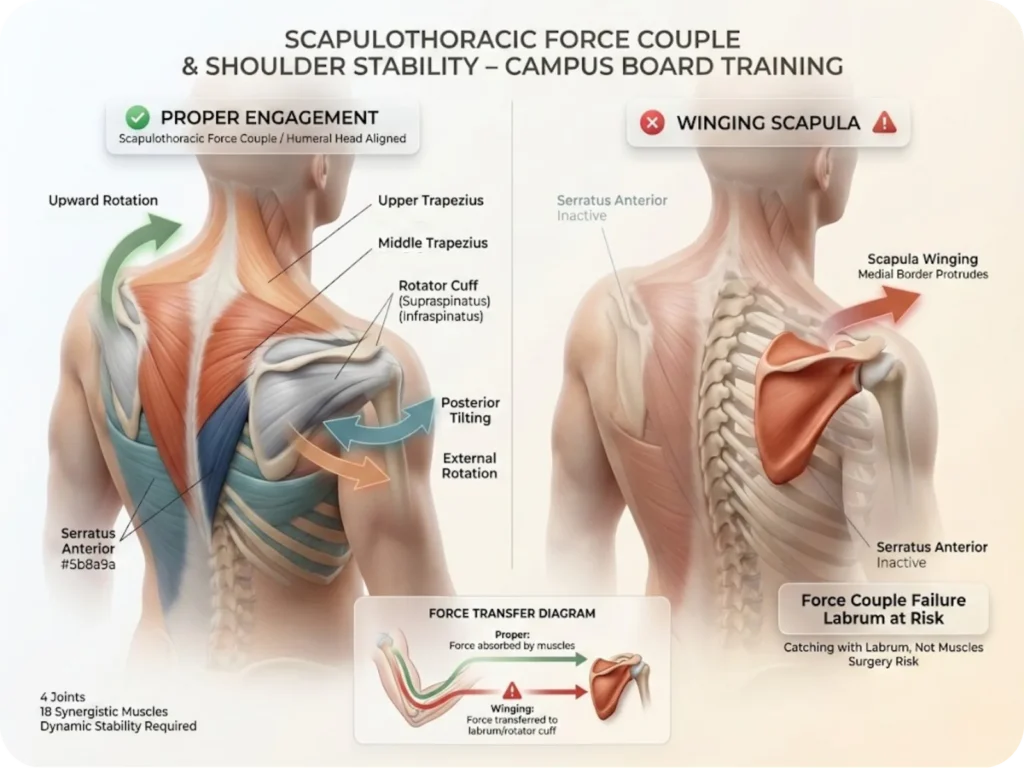
Pro tip: If your scapula isn’t engaged at the deadpoint, you’re catching with your labrum, not your muscles. That’s how you end up needing surgery.
The Scapular Pull-Up Test
Before every campus session, perform three scapular pull-ups—hanging with straight arms and shrugging your shoulders down and back to engage the scapula. If you can’t hold an engaged position for 10 seconds, your shoulder stabilizers are too fatigued for campusing. Skip the board. Come back tomorrow.
This daily “ready-state” check screens for CNS fatigue management before you load the board with high-intensity work.
Grip Mechanics and the Never Crimp Rule
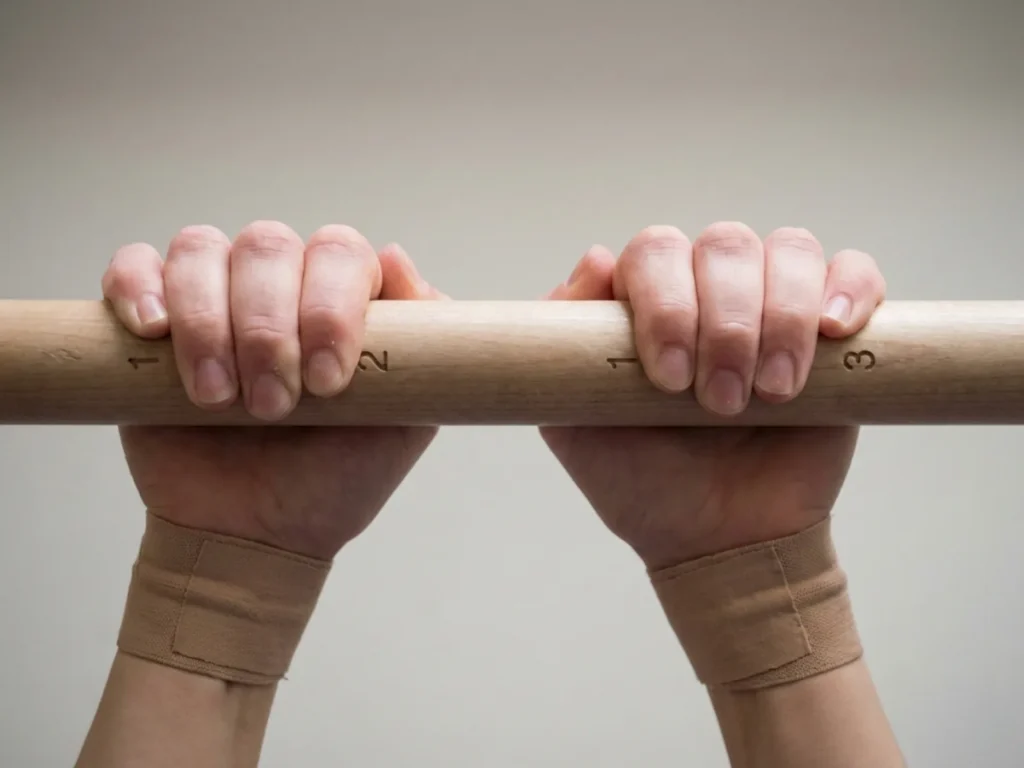
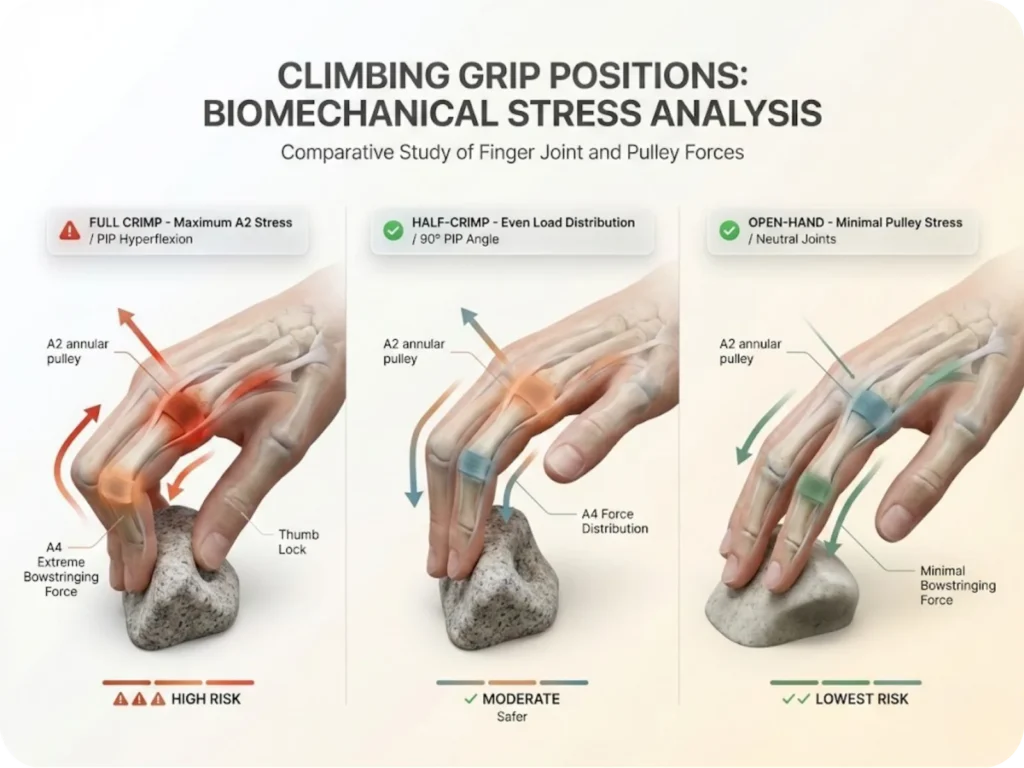
The never crimp rule is non-negotiable. In a full crimp, your finger joints hyperextend in ways that place the A2 pulley under extreme stress and lock your fingers into a static orientation that prevents fluid pressing into subsequent moves.
The preferred grip for campus training is the Chisel or Campus Half-Crimp: finger joints at roughly 90 degrees with a neutral wrist. This distributes load more evenly across the flexor tendons and pulleys. On larger rungs, the Open-Hand grip further reduces pulley stress.
Your finger pads and the flexor chain must sustain massive loads during the catch phase. Your grip position determines whether muscles or pulleys absorb that force. Choose wrong, and you’ll hear the pop.
Growth Plate Vulnerability in Adolescents
One of the most critical concerns in campusing technique training involves adolescent climbers. In skeletally immature individuals, the epiphyseal (growth) plates are the weakest link—significantly less resilient than surrounding ligaments and tendons.
Research shows a 600% increase in stress fractures to the growth plates of the middle phalanx over the past decade, directly correlated with competitive youth climbing and premature campus board use. According to the UIAA Medical Commission, double dyno exercises—where both hands move simultaneously—generate high-velocity shock loads that are the primary risk factor.
The British Mountaineering Council recommends strict age restrictions: no feet-off campusing or double dyno training before age 18, or until growth plates are definitively closed.
The Readiness Framework
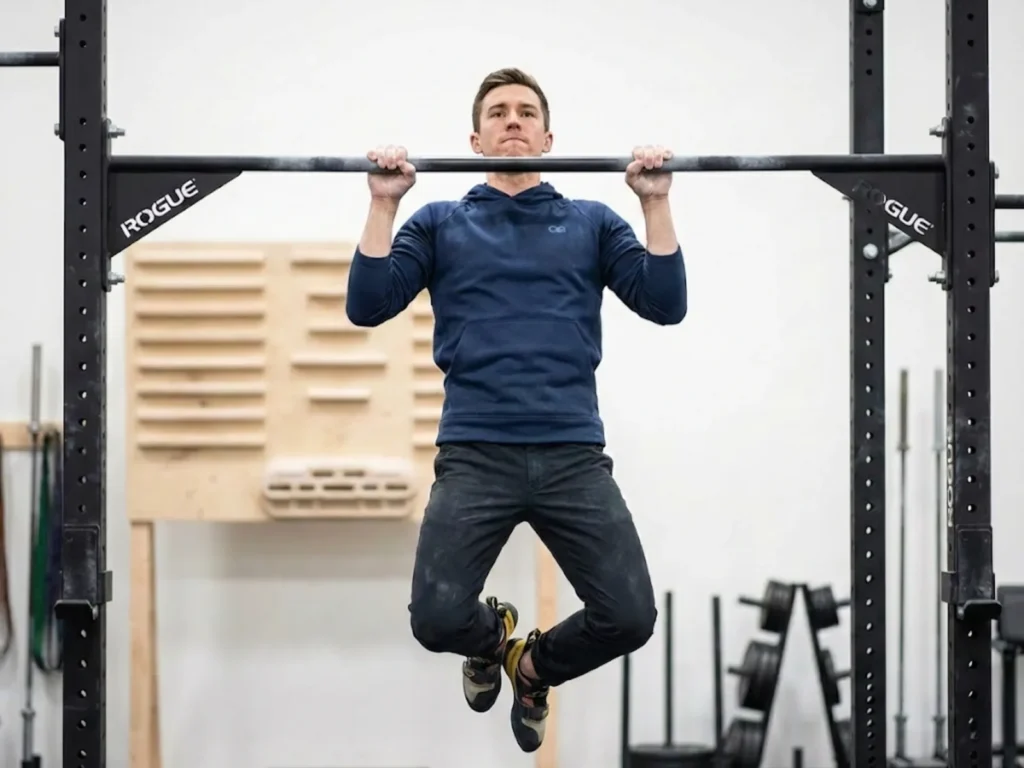
The triage test concept—borrowed from medical environments—ensures athletes possess the requisite base strength before touching the campus board. Without this screening, you’re loading connective tissue that isn’t ready for the reactive forces.
A consensus among leading coaches like Eric Hörst and Kris Hampton from Power Company Climbing suggests several benchmarks:
- Base Experience: 2-5 years of consistent bouldering and sport climbing for gradual tendon and ligament adaptation
- Grade Proficiency: V5-V6 or 5.12 climbing ability, indicating foundational finger strength and dynamic movement capability
- Pull-up Capacity: 15-20 solid, controlled pull-ups ensuring the shoulder girdle can handle dynamic transitions
- The Ladder Test: If you can’t perform a 1-2-3-4-5 ladder without matching hands, you’re not ready for advanced power exercises
These aren’t arbitrary numbers. They reflect the minimum strength required to survive the reactive forces of the board without overloading connective tissue that hasn’t adapted.
The Daily Ready-State Check
Even if you meet the broad benchmarks, you should perform a daily triage before each session:
Warm-up integrity: Spend 30 minutes climbing problems of increasing difficulty. If you feel “slow” or “uncoordinated,” CNS fatigue from previous sessions may still be present.
Scapular engagement test: Three scapular pull-ups with 10-second holds. Failure means shoulder stabilizers are too fatigued.
The Never Crimp audit: If you find yourself reverting to full crimp on the rungs, you’re either too tired to maintain proper form or using rungs too small for your current level.
CNS Fatigue and Recovery Science
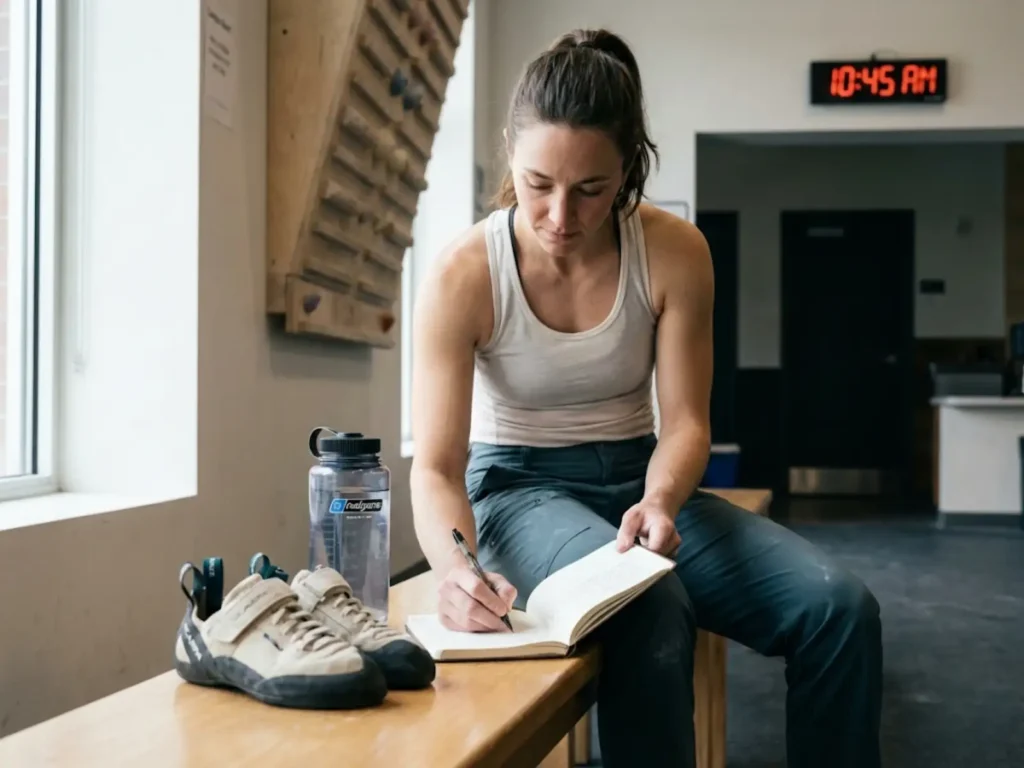
Campus boarding is exceptionally taxing on the central nervous system. Unlike metabolic fatigue—the “pump” from glycogen depletion—CNS fatigue originates in the brain and spinal cord, specifically at the neuromuscular junction where signals transmit to muscles. It impairs coordination, reaction time, and complex motor skills.
Here’s the critical data: a nerve cell can take up to seven times longer to recover than a muscle cell. Even if your muscles feel fresh, your power output may be severely diminished without adequate CNS recovery.
This is why proper rest protocols aren’t optional. Limit campus sessions to twice per week maximum, with 48-72 hours between high-intensity power sessions. Rest intervals between sets should be 3-5 minutes minimum—not to rest your muscles, but to allow neuromuscular junction recovery.
Pro tip: If you’re not resting 3+ minutes between sets, you’re training endurance, not power. That’s not what the campus board is for.
Metabolic vs. CNS Fatigue
Understanding the difference changes how you train:
Metabolic fatigue comes from glycogen depletion and lactate accumulation. Recovery requires 24-48 hours with proper nutrition and hydration.
CNS fatigue comes from neuromuscular junction threshold being reached. Recovery requires 48-72 hours with sleep and training variety.
Muscular fatigue comes from microtrauma to muscle fibers. Recovery requires 24-72 hours with protein intake.
Campus training primarily induces CNS fatigue, which is why “feeling fresh” doesn’t mean you’re recovered. Your muscles might be ready, but your nervous system might not.
Programming for Progression
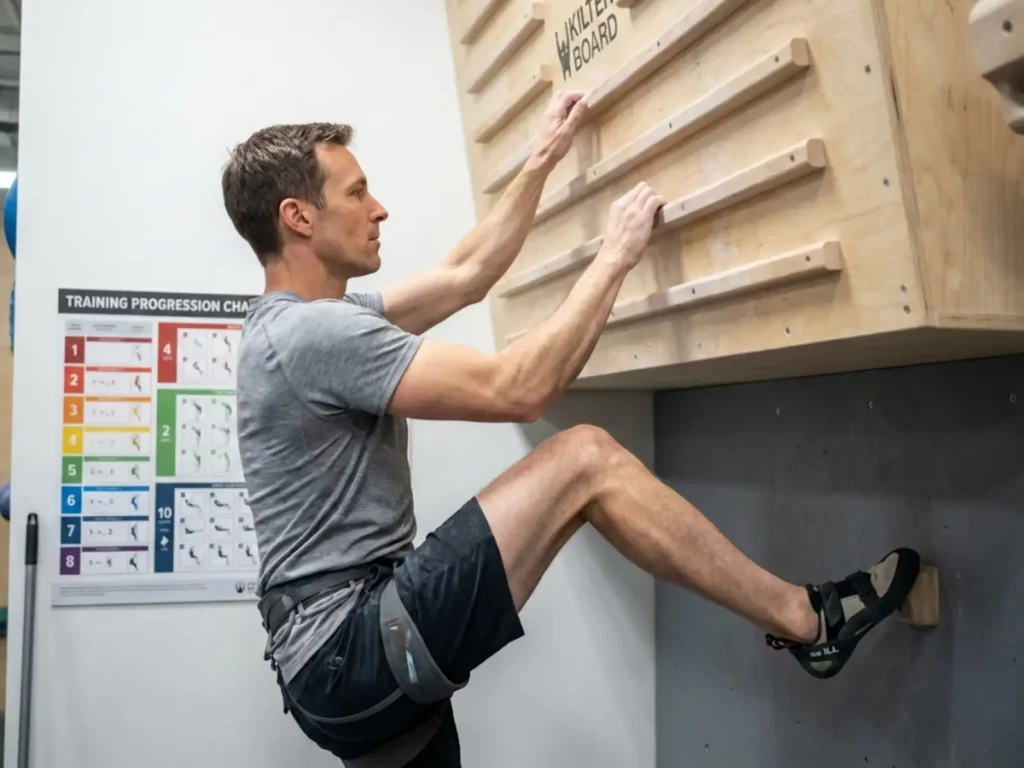
Effective campus board training is not about working to failure. It’s about performing high-quality, explosive sets that ingrain efficient motor patterns. The goal is quality over quantity in every session.
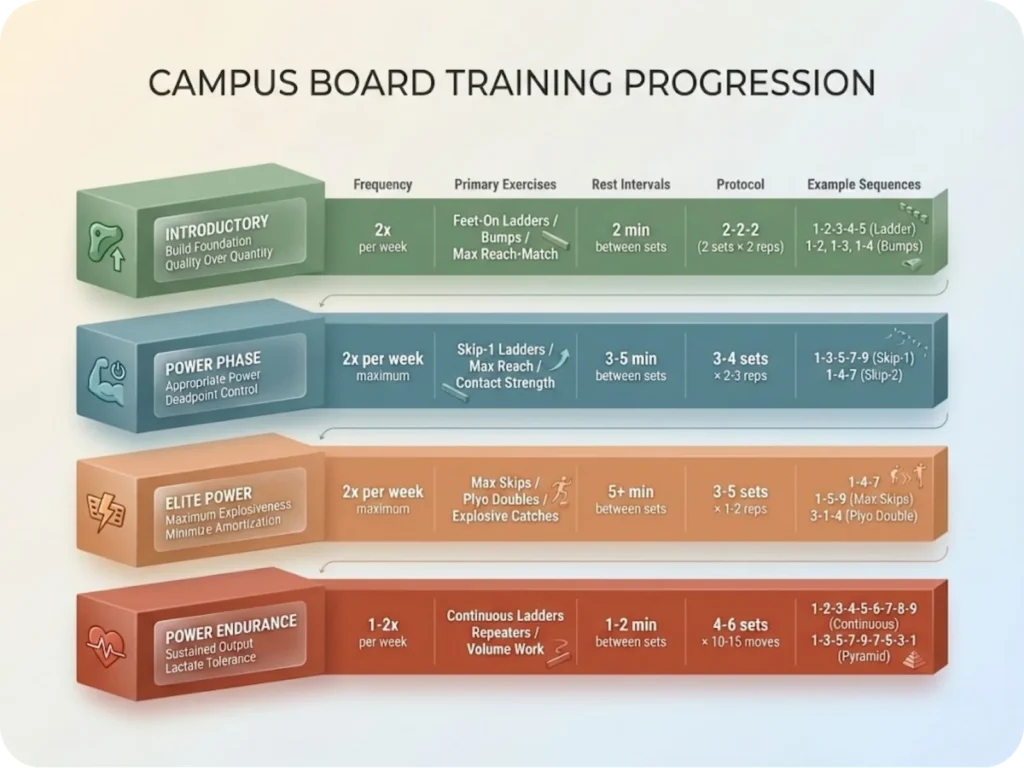
The 2-2-2 Protocol for Intermediates
For climbers transitioning to the board, FrictionLabs recommends the 2-2-2 protocol: 2 sets of 2 reps for each exercise, with 2 minutes of rest between sets. This conservative approach ensures you stop well before neurological exhaustion, allowing focus on form and velocity.
Exercise 1: Feet-On Ladders — Using the kickboard to reduce finger load, climb hand-over-hand to a high rung and back down.
Exercise 2: Bumps — With one hand fixed on a low rung, the other hand “bumps” up to successive rungs (1-2, 1-3, 1-4) as fast as possible.
Exercise 3: Max Reach/Match — Reaching from Rung 1 as high as possible, catching the target rung, and matching with the second hand. This builds both pulling power and contact strength.
Advanced and Elite Power Cycles
As you progress, focus shifts to rung skips and plyo doubles:
Skip-1 Ladders (1-3-5-7-9) focus on “appropriate power”—using only the energy needed to reach the next rung without over-pulling and catching in a deep lock-off.
Max Skips (1-4-7 or 1-5-9) represent the gold standard for pure arm power. Success requires catching the final rung exactly at the deadpoint.
Plyo Doubles start from Rung 3, drop to Rung 1, and immediately explode back to Rung 4 or 5. The key is minimizing the “amortization phase”—the transition time between eccentric and concentric contraction.
Training frequency for power phase: twice per week maximum. Rest intervals: 3-5 minutes for power work, 5+ minutes for elite power exercises.
Technical Cues for Biomechanical Efficiency
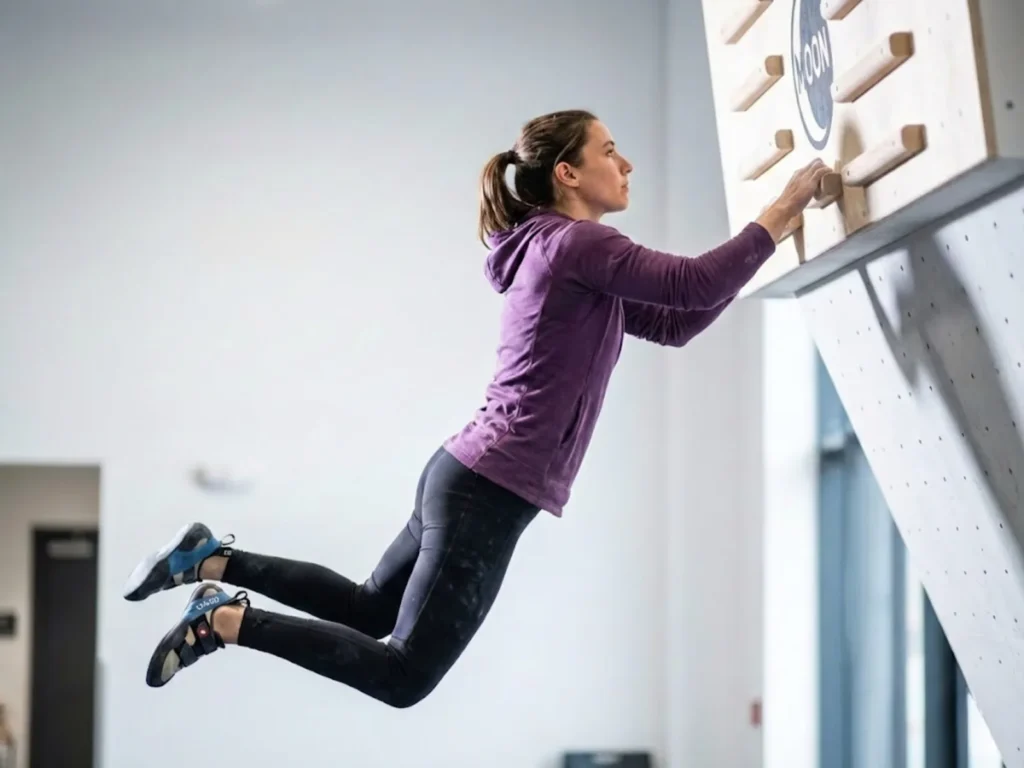
Success on the campus board is as much about technique as raw power. Robin O’Leary and other elite coaches emphasize technical cues that separate high-performance campusing from wild pulling.
Leg Kipping and Deadpoint Timing
While campusing is a feet-off activity, the lower body isn’t passive. A harmonious “flick” or “kick” of the feet generates vertical momentum, raising your center of gravity.
The deadpoint occurs when your center of gravity stops rising. You must time the catch of the upper rung exactly when your legs kick straight at the apex of this movement. Kicking too early (before reaching) or too late (after you’ve started falling) results in a jarring catch that places massive impact forces on finger joints.
Appropriate Power and the Straight-Arm Catch
A common mistake among intermediate climbers is over-pulling and catching a rung in a deep lock-off—arms at 90 degrees or less. This kills all momentum and requires massive energy to restart movement for the next rung.
Elite climbers aim to catch the rung with a straight but engaged arm, utilizing full arm length to generate power for the subsequent move. This “appropriate power” conservation is what enables long ladders and 1-5-9 sequences.
The Lower Arm Press
In any hand-over-hand campus move, the lower arm is as important as the upper arm. It must “press down” for as long as possible to assist the leading arm.
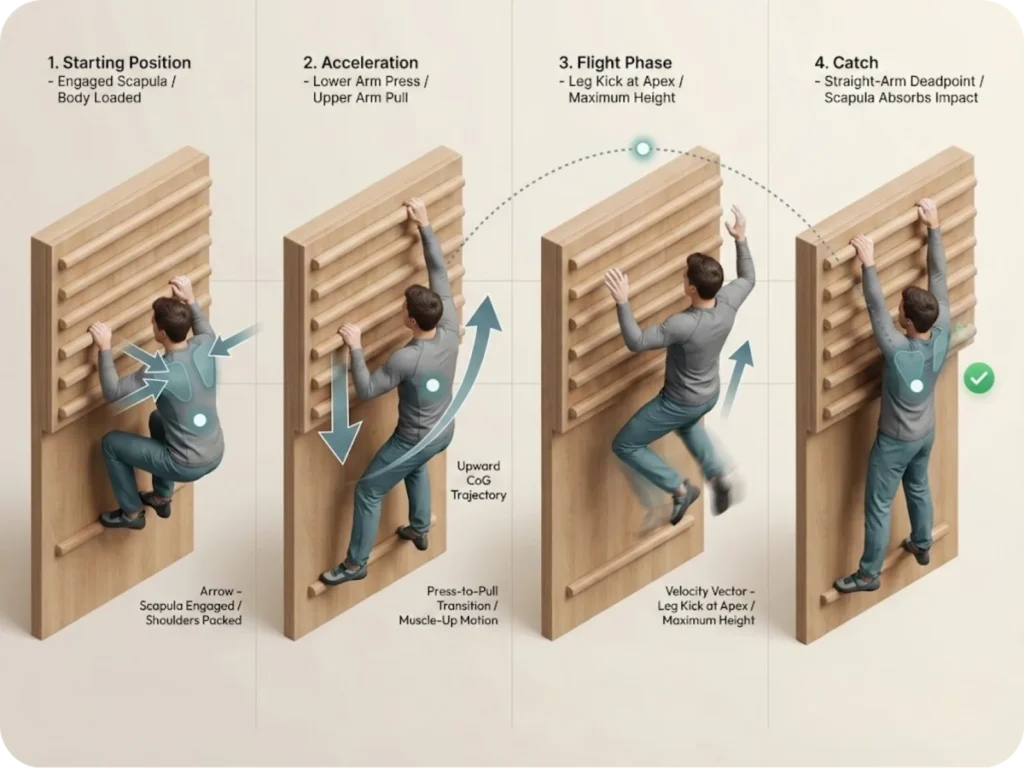
Releasing the lower arm too early causes your body to sag and your hips to fall away from the board, reducing your effective reach. The press-to-pull transition mimics a muscle-up motion and is critical for high-end power development.
Demographic-Specific Modifications
The principles of campusing mechanics aren’t uniform. Age, sex, and body type require specific modifications to progressive training protocols.
Masters Athletes (40+)
For climbers over 40, the primary concern is what coaches call “material change” in connective tissues. Tendons become less elastic, recovery capacity decreases.
Masters athlete protocols should prioritize high-quality, high-velocity movements over high-volume sessions. “Even less is even more” becomes the mantra. A longer volume-based phase must precede any high-intensity power work to prepare joints for the stress.
The campus board can actually be valuable for older climbers—it’s an excellent tool for maintaining the explosive movements needed for sport climbing as the aging athlete’s natural default is to slow down.
Female-Specific Physiological Considerations
Female athletes may face unique challenges related to bone density and energy availability. Low energy availability, menstrual dysfunction, and impaired bone mineral accrual can lead to long-term skeletal fragility.
Repetitive loading on the campus board is a significant risk factor for stress fractures in athletes with low energy availability. A personalized framework for training—where volume is reduced during symptomatic periods—is the most effective approach. Interestingly, impact-based training like campusing can actually promote bone health if energy availability is adequate.
Body Type and the Negative Ape Index
Climbers with a negative ape index—arm span shorter than height—must work significantly harder on the campus board to achieve the same skips.
The Lazy H Climbing trajectory concept applies here: shorter-limbed climbers must pull their hips closer to the board and time their leg kipping more aggressively to elevate their center of gravity at the precise moment of the catch. The importance of pressing down with the lower arm is magnified—they can’t rely on a dead-hang catch and must maintain body tension through the entire flight phase.
Conclusion
The campus board is a precision instrument that delivers unparalleled gains in contact strength and explosive power when used with proper understanding. But it’s a tool of high consequence—the line between adaptation and climbing injury is thin.
Three things to remember:
CNS fatigue is the primary limiter. Nerve cells recover seven times slower than muscle cells. Train twice per week maximum with 3-5 minutes rest between sets.
Technique trumps raw force. Success comes from appropriate power, deadpoint timing, and hip trajectory—not desperate pulling. Film yourself and fix your form.
The Never Crimp rule protects long-term health. Use a Chisel or Half-Crimp grip. Full crimp shifts load from muscles to pulleys—that’s how you end up needing surgery.
Now go send something.
FAQ
Can I start campus board training if I’m climbing V3-V4?
No. The consensus is V5-V6 minimum with 2-5 years of consistent experience. Your tendons and ligaments need time to adapt before you subject them to the reactive forces of the board. Starting too early leads to A2 pulley ruptures and stress fractures.
How often should I campus board train?
Twice per week maximum with 48-72 hours between sessions. Campus training is CNS-intensive, and nerve cells take up to seven times longer to recover than muscle cells. More frequency means diminished power output and increased injury prevention challenges.
What’s the difference between campusing and hangboarding?
Hangboard training develops isometric (static) finger strength—your ability to hold a position. Campusing develops plyometric (dynamic) power—your ability to generate force explosively and catch holds at high velocity. They’re complementary tools, not interchangeable.
Is it safe for climbers over 40 to use a campus board?
Yes, with modifications. Masters athletes should prioritize high-quality, high-velocity movements over high volume. Longer warm-ups, more rest, and a focus on technique are essential because connective tissues become less elastic with age.
Why is the Never Crimp rule so important?
Full crimp places the A2 pulley under extreme stress and locks fingers into a static position that prevents the fluid pressing motion campus moves require. Use a Chisel or Half-Crimp grip to distribute load evenly across tendons and pulleys.
Safety Notice: Rock climbing and mountaineering are inherently high-risk
activities that can involve physical trauma or fatal incidents. The information on Rock Climbing Realms is for
educational and informational purposes only. Techniques and advice presented here are not a substitute
for professional, hands-on instruction. Conditions and risks vary by location. Always seek guidance
from a qualified instructor before attempting new techniques. By using this website, you agree that you
are solely responsible for your own safety. Any reliance you place on this information is strictly
at your own risk, and you assume all liability for your actions. Rock Climbing Realms and its authors
will not be held liable for any harm, damage, or loss sustained in connection with the use of this information.
Affiliate Disclosure: We are a participant in the Amazon Services LLC Associates Program, an
affiliate advertising program designed to provide a means for us to earn advertising fees by advertising and linking
to Amazon.com. As an Amazon Associate, we earn from qualifying purchases. We are also an official affiliate partner
of Black Diamond Equipment via the AvantLink network. If you click on a Black Diamond affiliate link and make a
purchase, we may earn a commission at no additional cost to you. We also participate in other affiliate programs.
Additional terms are found in the terms of service.