In this article
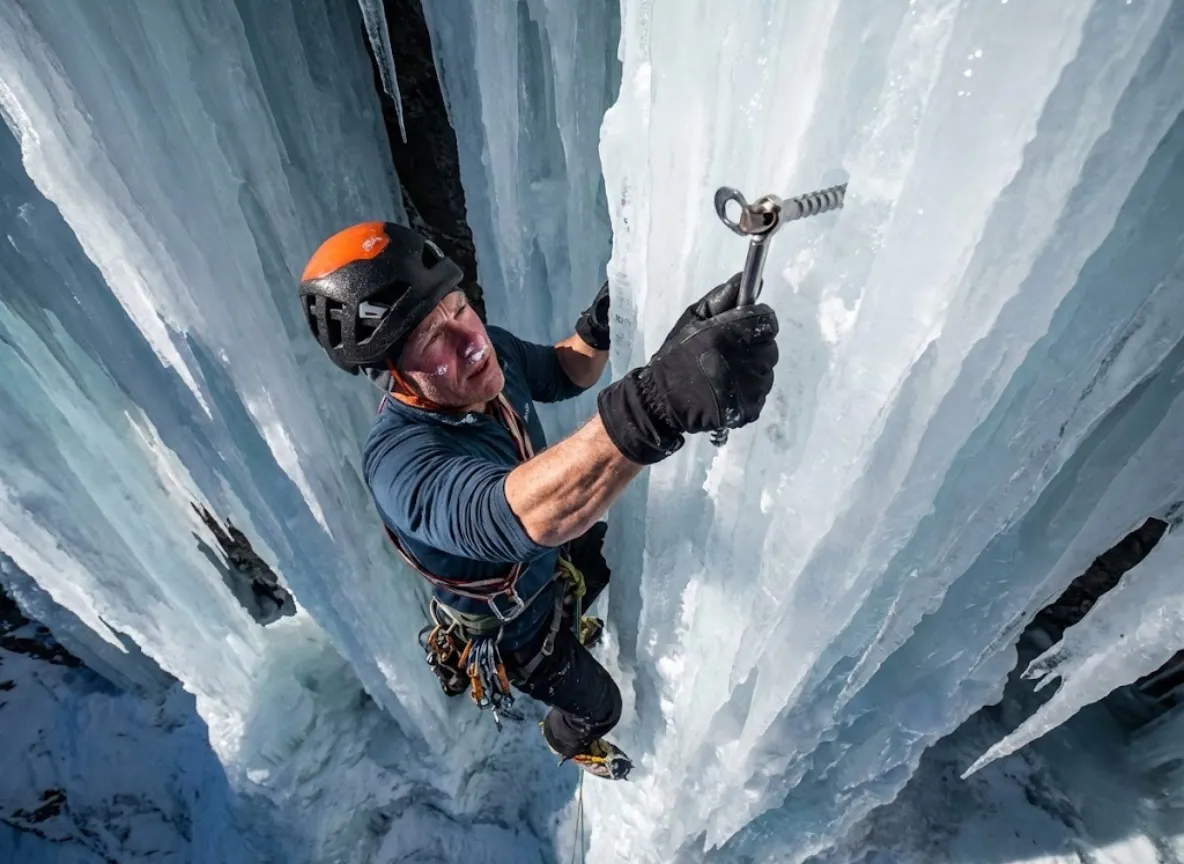
Your calves burn in a lactic acid scream. You are thirty feet out from your last piece of protection on a vertical pillar of wet, chandeliered ice. You reach for your ultralight screw, place it, and crank.
It bites, turns twice, and then freezes solid.
It didn’t hit rock. The aluminum body dissipated the friction heat too fast, flash-freezing the threads to the ice. In this moment, the twenty grams you saved on the approach are irrelevant. The only metric that matters is usability under duress. This guide dissects the lightest ice screws on the market for 2026 not just by the scale, but by the thermodynamics of survival.
We are moving past the “Stupid Light” mindset of simple gram-counting. Instead, we look at the complex material physics of thermal conductivity, tube wall thickness, and structural integrity. You will learn why a screw saving 20 grams can be a liability, and how to balance mass reduction with the realities of high-end alpinism.
How to Choose the Right Ultralight Ice Screw: An Expert’s Framework

Selecting the right technical climbing gear requires objective knowledge grounded in physics and metallurgy. Before you drop $80 on a piece of metal, you need to understand how it behaves when the temperature drops and the stress rises.
Thermodynamic Placement Efficiency (Why Do Some Screws “Bind”?)
Some screws bind because aluminum conducts friction heat away from the threads too rapidly. This causes the microscopic layer of lubricating water to flash-freeze, bonding the metal to the ice before the screw is fully seated.
This is a physics problem, not a design flaw.
- Thermal Conductivity Rates: Aluminum conducts heat rapidly (~205 W/mK), whereas Steel is much slower (~50 W/mK).
- The Mechanism of Insertion: As you drive a screw, friction generates heat. Steel retains this heat, keeping a microscopic layer of water liquid, which acts as a lubricant. Aluminum conducts it away instantly.
- The “Flash-Freeze” Effect: In wet or very cold ice, aluminum’s rapid heat evacuation causes the screw to bond to the ice before it is fully seated.
If you have ever been pumped out trying to force a stuck screw, you know the danger. You can verify the specific thermal conductivity rates here to see the massive difference between materials. This behavior must be factored in when fitting into your complete ice climbing gear system, because a screw that binds is a screw that delays your clip.
Strength-to-Weight Ratio & Structural Integrity
Weight savings often come at the cost of durability. Aluminum threads are significantly less ductile than steel. Loading a screw that isn’t fully buried (tied off) presents higher shear risks, a concept known as the “Screwtrusion” risk.
While all certified new ice screws meet the minimum requirements, the g/kN efficiency varies wildly. We analyze how much holding power is provided per gram of weight carried. It is critical to ensure that “light” does not mean “unsafe,” which is why checking for UIAA Safety Standards compliance (specifically UIAA 151 and CE EN 568) is non-negotiable.
Pro-Tip: Always rack at least one full-steel screw for V-threads. Aluminum threads dull quickly when re-boring holes containing grit or old cord.
Understanding these structural limits is vital when tackling complex ice climbing grades, where the margin for error shrinks as the terrain steepens.
Our Selection Process: How We Built This Guide
We don’t rely on marketing hype. Our commitment to objectivity means we analyze gear based on metallurgical properties and field physics. We looked at the lineage of lightweight gear, from the early days of E-climb to the modern hybrid construction found in Salewa and Blue Ice products.
Every screw in this guide was assessed against five criteria:
- Thermodynamic Efficiency: Does it bind in wet ice?
- Strength-to-Weight Ratio: Is the weight savings worth the cost?
- Initial Bite Aggression: How fast does the 3-tooth or 4-tooth tip engage?
- Racking Density: How well does it sit on the harness?
- Long-Term Durability: Will it last more than one ice season?
We filtered specifically for “Ultralight” status, defining this as under 100g for standard lengths or hybrid construction. While outlets like HowNOT2 and WeighMyRack provide excellent destructive testing data, our focus is on usability. A quick note: we may earn a commission if you buy through our links, but our “Critical Flaws” sections ensure we never recommend gear that fails the safety test.
The Best Lightest Ice Screws of 2026: Our Top Recommendations for Every Need
Our Top Picks for The High-Altitude Alpinist & Skimo Specialist
These users count every gram. The gear here is primarily for rescue, ski traverses, or glacier travel, and rarely for sustained technical pitching where you place dozens of screws a day.

Our Top Picks for The Technical Alpine Mixed Climber
These users need weight savings but cannot compromise on performance. The gear must drive into hard ice, clearing the ice core without binding, as these screws will be placed on lead during the crux.
Final Thoughts: Balancing Mass and Safety
Choosing the right ice screw is about understanding the environment you are entering. Context is King. If you are hauling a sled across a glacier, the Blue Ice Aero Lite is unbeatable. If you are leading a technical mixed face, the reliability of the Petzl Laser Speed Light or the steel-bodied Camp Rocket Plus (formerly associated with Cassin) is worth the extra grams.
Remember the thermodynamics. Understanding why aluminum threads binding in wet ice happens can save you from a pumped-out panic on lead. If you are struggling with rack weight, look at your “System Weight”—integrated slings like the Grivel Speedy can reduce total mass without sacrificing tube diameter or performance.
Audit your current ice rack. If you are venturing into higher altitudes or longer approaches, invest in 2-3 ultralight ice screws for your “alpine draw” placements, but keep steel on your harness for the crux.
FAQ – Frequently Asked Questions
Why do aluminum ice screws get sticky or hard to turn halfway in?
This is due to aluminum’s high thermal conductivity. It transfers friction heat away from the threads so quickly that the microscopic water layer acting as lubricant flash-freezes, bonding the screw to the ice. The Petzl Laser Speed Light uses a specialized coating quality to reduce this effect.
Are aluminum ice screws safe?
Yes, provided they are placed correctly. They must meet the same CE EN 568 and UIAA 151 strength standards (typically 10kN). However, they are less durable against shear forces if not fully buried (tied off). Always check the UIAA Safety Standards for current requirements.
Can I sharpen hybrid or aluminum ice screws?
Yes, but it requires more care. Hybrid screws have steel teeth that can be sharpened like normal screws, but you must avoid damaging the aluminum transition point. Fully aluminum teeth (rare on modern technical mountaineering screws) wear down very fast and are difficult to maintain.
Do I need a full rack of ultralight screws?
Generally, no. Most technical climbers prefer a mixed rack—using steel screws for the hardest or wettest pitches and ultralight screws for belay anchors or short waterfall ice to save weight and money.
Risk Disclaimer: Rock climbing, mountaineering, and all related activities are inherently dangerous sports that can result in serious injury or death. The information provided on Rock Climbing Realms is for educational and informational purposes only. While we strive for accuracy, the information, techniques, and advice presented on this website are not a substitute for professional, hands-on instruction or your own best judgment. Conditions and risks can vary. Never attempt a new technique based solely on information read here. Always seek guidance from a qualified instructor. By using this website, you agree that you are solely responsible for your own safety. Any reliance you place on this information is therefore strictly at your own risk, and you assume all liability for your actions. Rock Climbing Realms and its authors will not be held liable for any injury, damage, or loss sustained in connection with the use of the information contained herein.
Affiliate Disclosure: We are a participant in the Amazon Services LLC Associates Program, an affiliate advertising program designed to provide a means for us to earn advertising fees by advertising and linking to Amazon.com. As an Amazon Associate, we earn from qualifying purchases. We also participate in other affiliate programs. Additional terms are found in the terms of service.