Home Climbing Gear and Equipment Climbing Gear for Kids: From Toddler to Crusher

Climbing Gear for Kids: From Toddler to Crusher

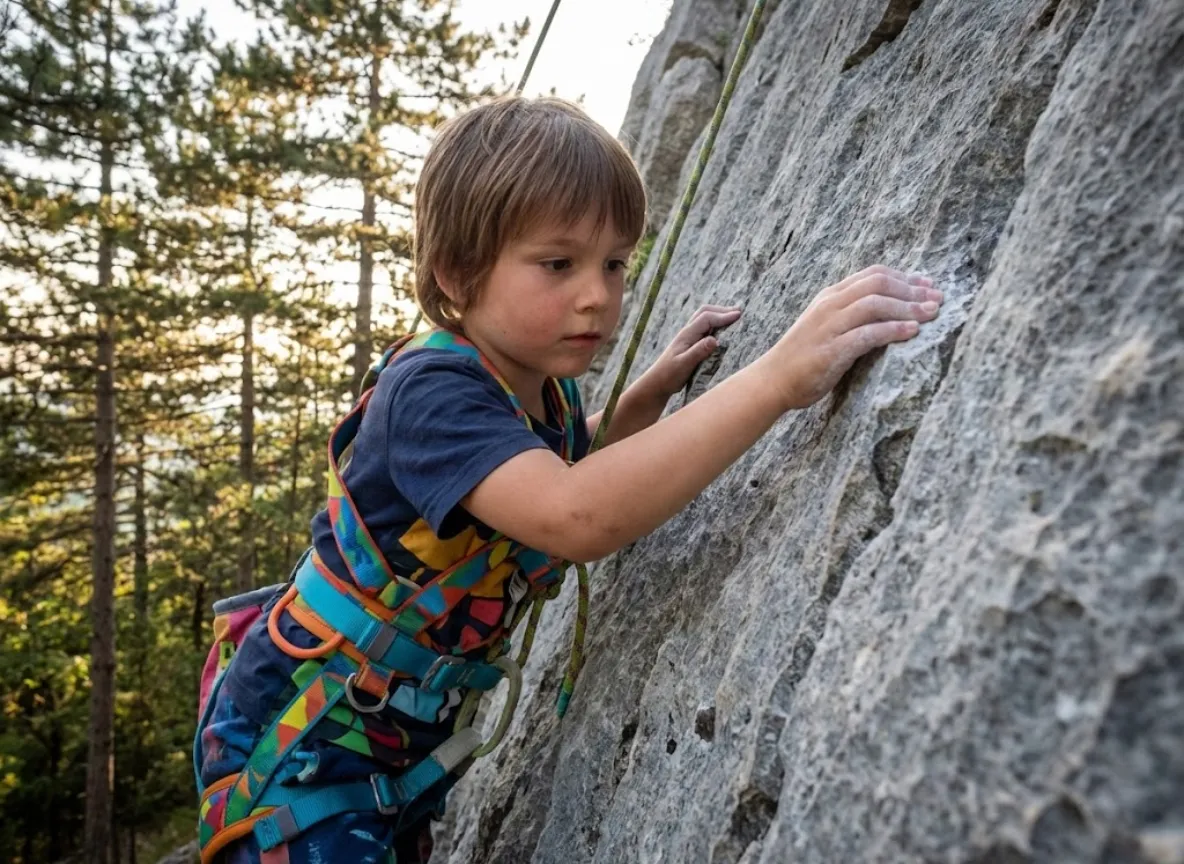
A young child rock climbing outdoors wearing a full-body safety harness.

A five-year-old child hanging upside down in a loose sit harness is a catastrophic failure of physics, not just equipment. I’ve seen this happen in the gym: a parent buys a harness that looks “pro,” cinches it down, and assumes their job is done. But children are not miniature adults. Their center of mass is higher, their hips are undefined, and their growth plates are fragile.

As a climbing guide who has rigged systems for hundreds of families, I know that climbing gear for kids requires a fundamentally different approach than adult equipment. The market has shifted to address these biomechanical realities, treating youth gear as a standalone discipline rather than a simplified accessory. This expert guide bridges the gap between parental anxiety and athletic progression, mapping the specific engineering required for every stage of a young climber’s development, acting as the empowered parent’s handbook.

How to Choose the Right Climbing Gear for Kids: An Expert’s Framework
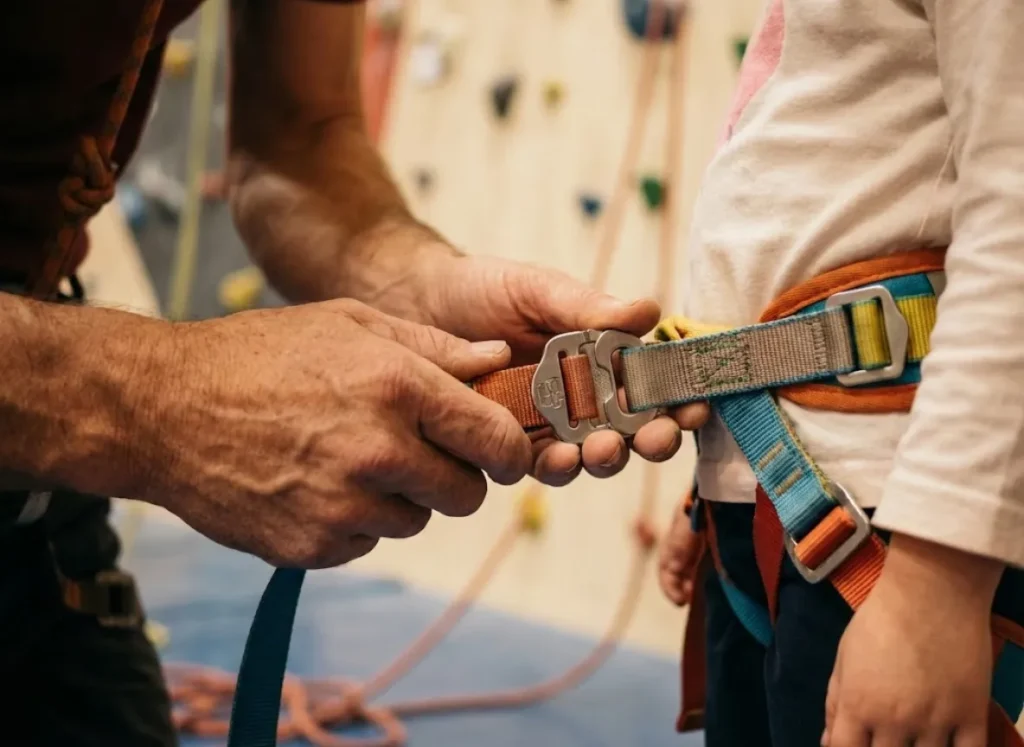
Close up of an adult adjusting a child's climbing harness buckle for safety.

You are not just buying gear; you are investing in a system that compensates for your child’s developing anatomy. The objective is to make a smart, confident choice based on biomechanics and psychology, not just the price tag or color.

Inversion Mitigation & Safety Engineering

Gravity discriminates against taller toddlers and small climbers. Because a young child’s head is large relative to their body, they possess a high center of gravity. In a standard fall, this acts as a fulcrum, flipping them upside down instantly, creating a severe inversion risk.

Compounding this is the “No-Hips” problem. Young children lack developed iliac crests (hip bones), which are what a standard sit harness relies on to stay in place. Without that skeletal shelf, a standard harness can slide right off during an inversion.
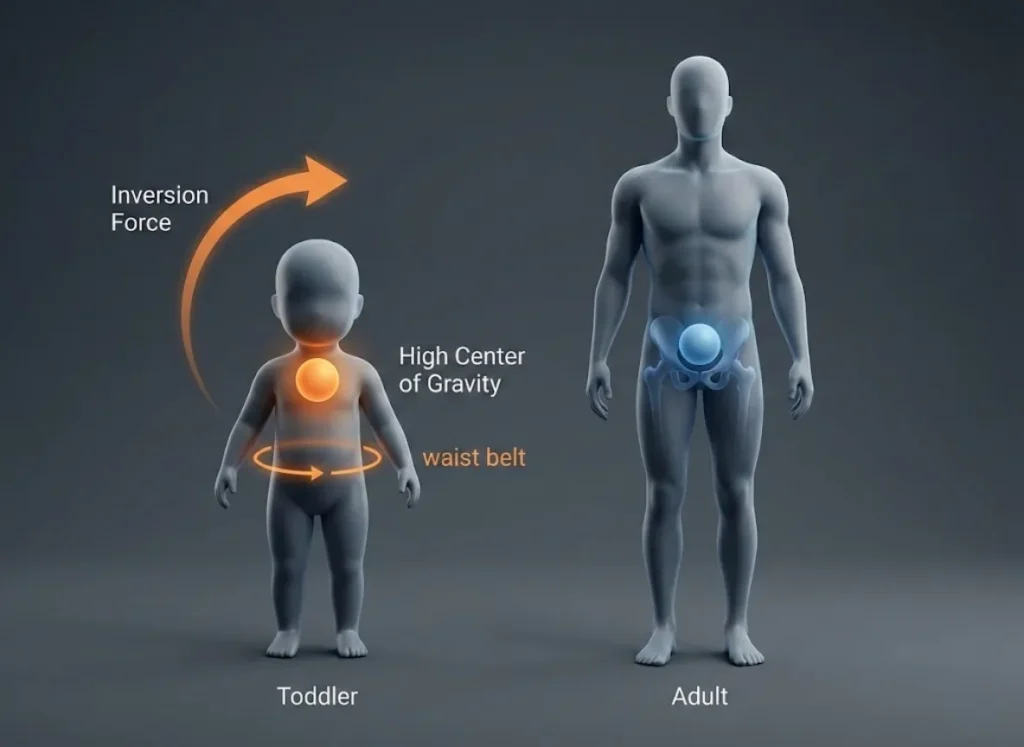
A sophisticated 3D infographic comparing the anatomy of a toddler and an adult. It highlights the toddler's high center of gravity and lack of hip bones, illustrating the physics of "Inversion Force" that causes backward flipping in standard harnesses.

This is why the UIAA Safety Standards strictly differentiate between Type B (full-body harness) and Type C (sit) harnesses. Until your child has defined hips and a lower center of gravity, a Type B harness is non-negotiable to maintain an upright orientation. We discuss the nuances of securing these systems in our guide to the perfect harness fit, but for kids under five, the physics of small bodies dictates safety.

Autonomy Engineering & The “Friction” Factor

The transition from passenger to pilot begins with putting on your own climbing shoes. There is a massive psychological shift when a child can don their gear without an adult hovering over them. We call this “Autonomy Engineering,” or the kid-independence score.

Look for Velcro closures on shoes, color-coded tie-in points on harnesses, and semi-rigid “vest-style” structures that don’t turn into a tangled mess in the gear bag. Research in developmental psychology suggests that mastering these small physical tasks fosters a sense of competence that translates directly to the wall.

Reducing the “parental friction” of getting dressed changes the tone of a gym session from management to enjoyment, allowing for more parental climbing time. This independent gear up process also allows them to better communicate about their climbing shoe fit, ensuring they aren’t suffering in silence.

Durability vs. Performance Sensitivity

Novice kids have “loud feet.” They drag their toes against the wall with every move, acting like sandpaper on soft rubber. For this phase, you need thick, hard rubber (like FriXion rubber) that offers maximum abrasion resistance.

However, as technique improves, that durability becomes a liability. Advanced kid climbers need proprioception—the ability to feel micro-features through the sole. This requires softer compounds like Vibram XS Grip 2. The trade-off is brutal: high-performance shoes wear out fast.
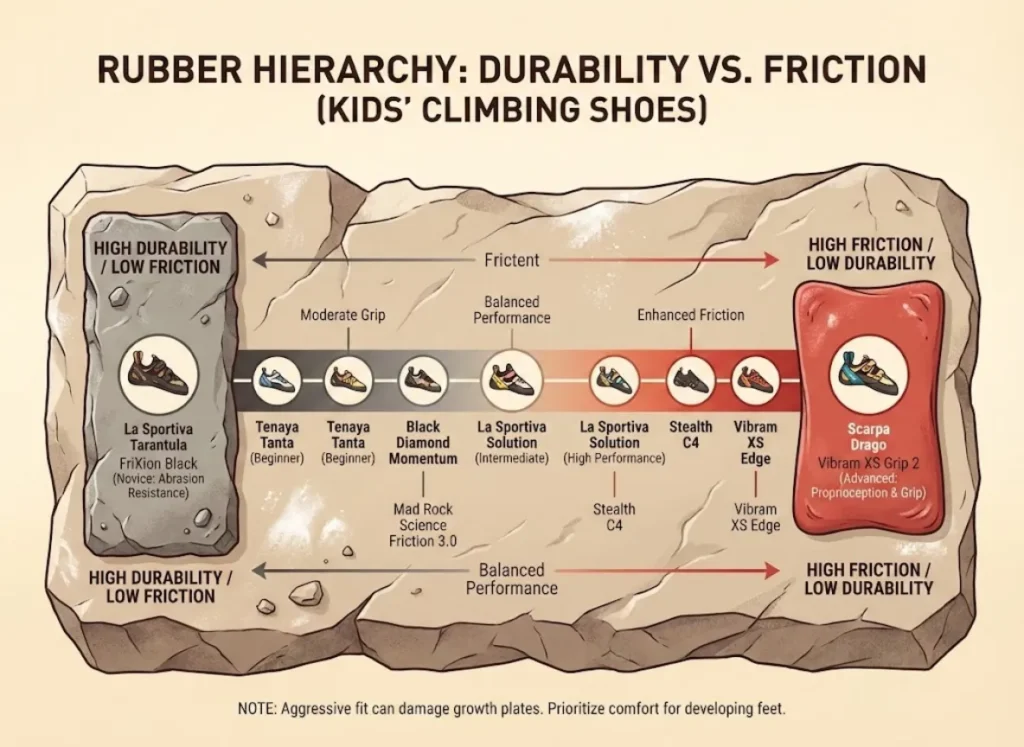
A bar chart infographic titled 'RUBBER HIERARCHY: DURABILITY VS. FRICTION (KIDS' CLIMBING SHOES)'. The left side, labeled 'HIGH DURABILITY / LOW FRICTION', shows a thick grey bar for 'FriXion Black' with a 'Novice' label and a 'La Sportiva Tarantula' shoe icon. The right side, labeled 'HIGH FRICTION / LOW DURABILITY', shows a thinner red bar for 'Vibram XS Grip 2' with an 'Advanced' label and a 'Scarpa Drago' shoe icon. Text about 'Proprioception' and 'Growth Plates' is included.

You also need to be vigilant about fit intensity. According to Dr. Jared Vagy, aggressive, tight shoes can damage open growth plates in developing feet. Understanding the materials is key, which is why we break down the compounds in our definitive guide to climbing shoe rubber.

Our Selection Process: How We Built This Guide
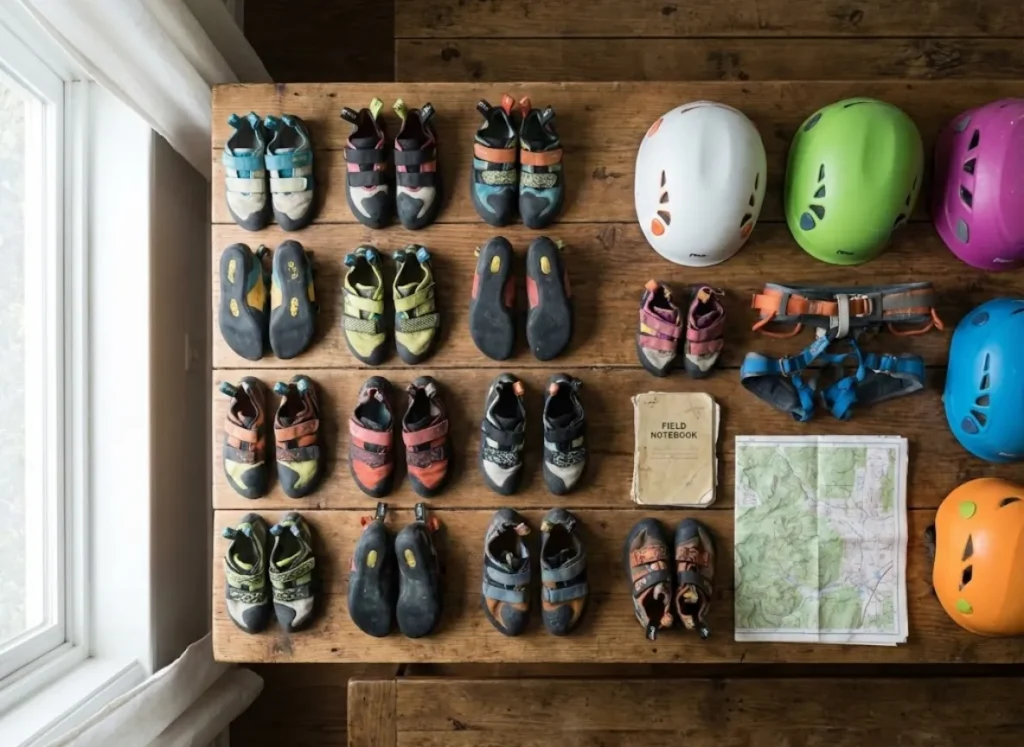
A flat lay collection of kids climbing shoes, harnesses, and helmets organized for review.

We don’t rely on marketing copy. Our commitment to objectivity means we focus on biomechanical data and safety certifications (UIAA certification / CE certification).

Every product below was scored against six specific criteria: Safety Engineering, Growth Accommodation, Autonomy, Suspension Comfort, Performance Sensitivity, and Durability. We conducted a deep commercial investigation, analyzing expert reviews and comparing top models like the Petzl Ouistiti, Edelrid Finn III, and Black Diamond Momentum Full Body against our winners. We also considered cost-per-wear and resale value, knowing that high-quality gear like the Black Diamond Momentum often retains value.

The Best Climbing Gear for Kids of 2026: Our Top Recommendations for Every Need
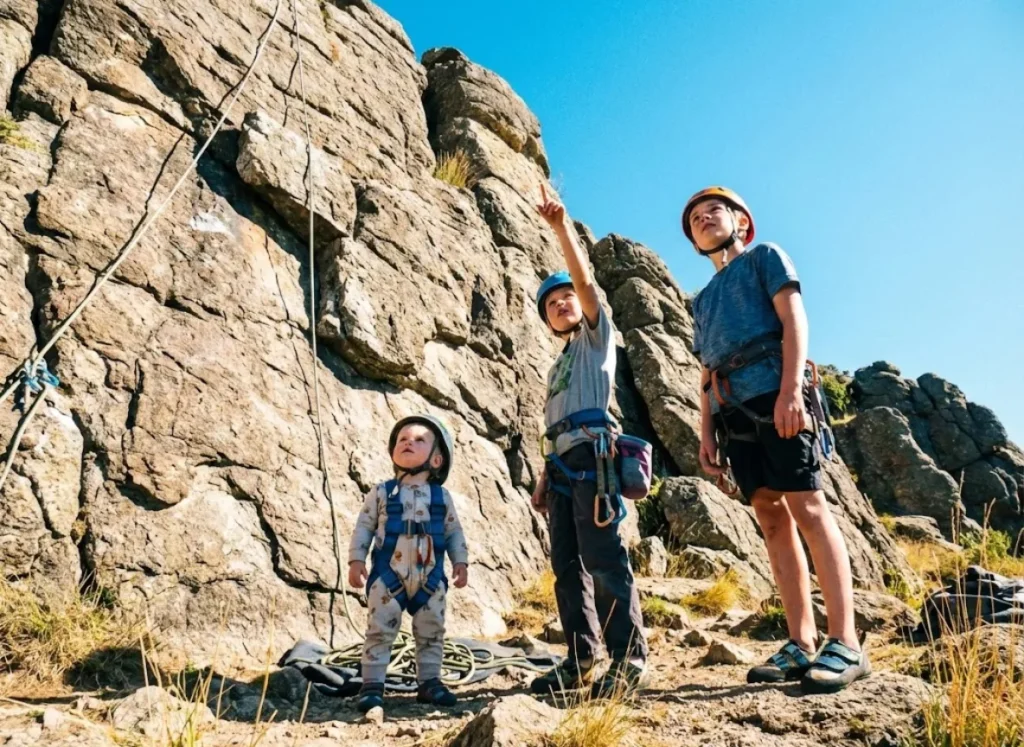
Three children of different ages wearing climbing gear standing at an outdoor crag.

Our Top Picks for Persona 1: The Little Hanger (Ages 2-5)
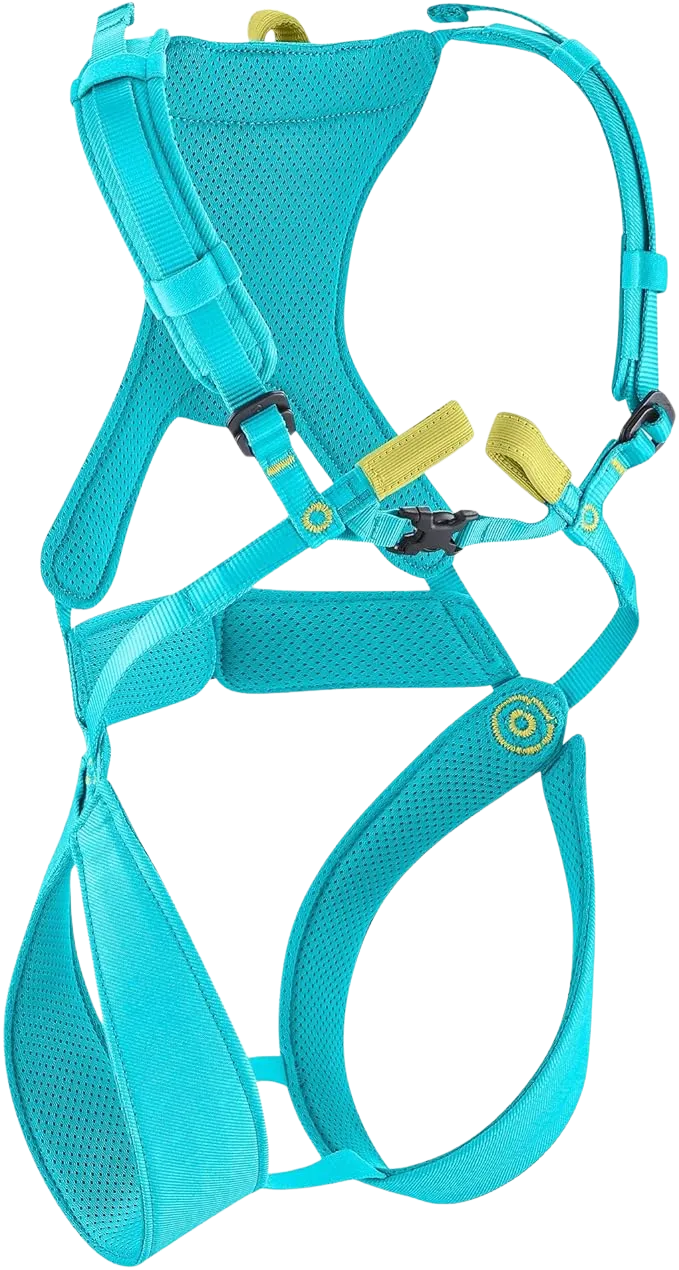
Edelrid Fraggle III Full Body Harness

$ $ $ $
Edelrid Fraggle III Full Body Harness

The Edelrid Fraggle III is the gold standard for toddlers because it solves the “spaghetti strap” nightmare common in other full-body harnesses. Its semi-rigid, vest-like structure holds its shape, allowing a toddler to step into it intuitively, much like putting on a jacket. Critically, the “growing” tie-in point extends the torso length to maintain the correct center of gravity as the child grows, ensuring the tie-in point remains high on the chest to mechanically prevent inversion. The only downside is the bulk; the ample padding that makes it comfortable also means it takes up significant space in a pack compared to simpler webbing harnesses.

Overall
Safety Engineering
Growth Accommodation
Autonomy Engineering
Suspension Comfort
Durability
Certification

EN 12277 Type B

Fit Range

XXS (Weight < 40kg)

System Weight

~300g

Material

3D Mesh, Polyester webbing

You Should Buy This If…

  • Your child is under 5 years old and prone to “dead weight” falls.
  • You want a harness that is easy to put on a squirming toddler.
  • You need a secondary clip-in point for tethering while hiking or skiing.

You Should Reconsider If…

  • Your child has disproportionately large thighs (fixed leg loops).
  • You need a harness that packs down extremely small (bulky due to padding).

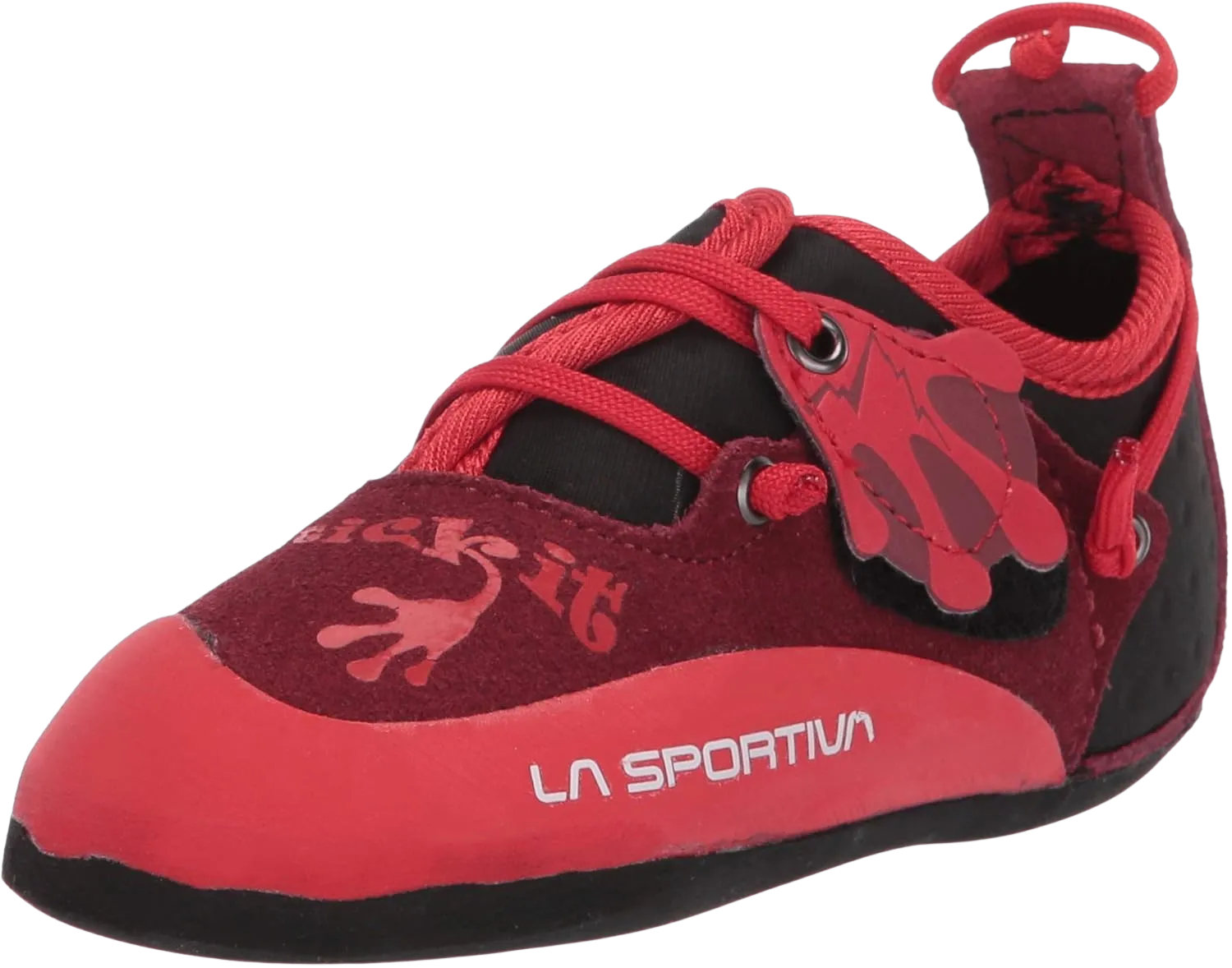
La Sportiva Stickit

$ $ $ $
La Sportiva Stickit

Climbing shoes are notoriously difficult to size for rapidly growing feet, but the La Sportiva Stickit addresses this with an ingenious open lacing system at the heel. This allows the shoe to mechanically adjust across two full sizes, significantly extending its usable life and saving parents money. The wide Velcro opening allows toddlers to put the shoes on themselves, fostering early independence, while the flat sole protects developing foot structures. However, be aware that this is strictly a comfort-first shoe; the rounded toe and lack of midsole support make it nearly impossible to stand on small, technical edges.

Overall
Autonomy Engineering
Growth Accommodation
Performance Sensitivity
Durability
Comfort
Sole

FriXion RS Rubber

Closure

Velcro + Adjustable Heel Cord

Fit Range

Covers 2 sizes per pair (e.g., EU 26-27)

Material

Unlined Leather / Synthetic

You Should Buy This If…

  • You want a single pair of shoes to last a full year of growth.
  • You value a shoe the child can put on entirely by themselves.
  • Comfort is the priority over technical performance.

You Should Reconsider If…

  • Your child is climbing technical edges (soft sole offers no edging support).
  • You find the “adjustable sizing” concept confusing to dial in initially.

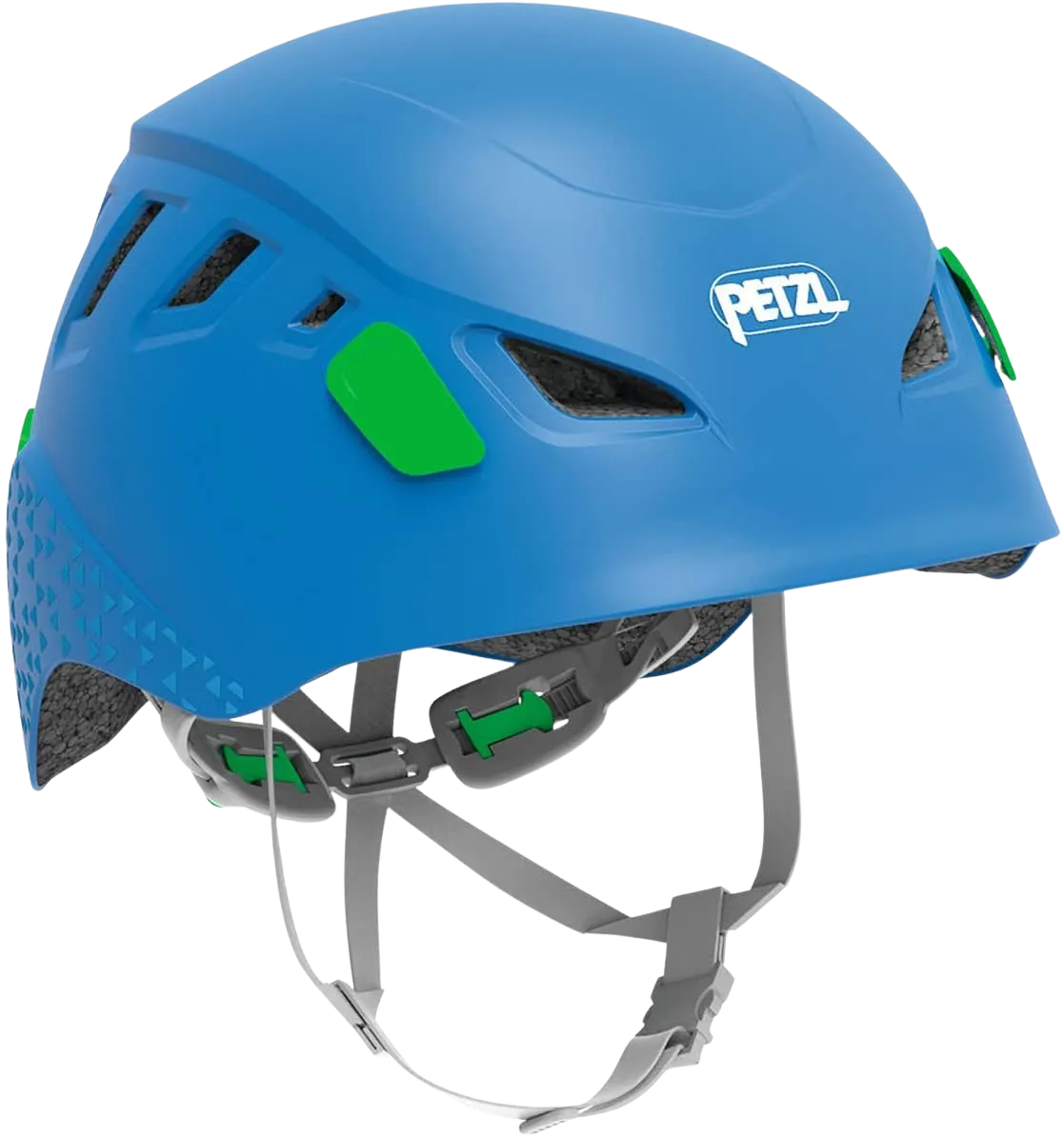
Petzl Picchu Helmet

$ $ $ $
Petzl Picchu Helmet

The Petzl Picchu is the definitive “one-and-done” protective solution for active families. By carrying dual certifications for both climbing (EN 12492) and cycling (EN 1078), it eliminates the need to buy and store separate helmets, which is a massive logistical win. Its hardshell ABS construction is robust enough to handle being dropped in parking lots—a frequent occurrence with toddlers—making it a durable investment. The primary drawback is ventilation; the durable shell offers less airflow than dedicated cycling helmets, which can lead to sweaty, grumpy kids on very hot days.

Overall
Safety Engineering
Growth Accommodation
Autonomy Engineering
Comfort
Durability
Certification

CE EN 12492 (Climbing), CE EN 1078 (Cycling)

System Weight

330g

Material

ABS Shell, EPS Liner

Head Circumference

48-54 cm

You Should Buy This If…

  • You want a single helmet for both biking and climbing.
  • Durability and impact resistance are your top priorities.
  • Your child enjoys customizing gear with stickers (included).

You Should Reconsider If…

  • Your child has a weak neck or fatigues easily (330g is relatively heavy).
  • You need maximum ventilation for extremely hot climates.

Our Top Picks for Persona 2: The Gym Monkey (Ages 6-9)
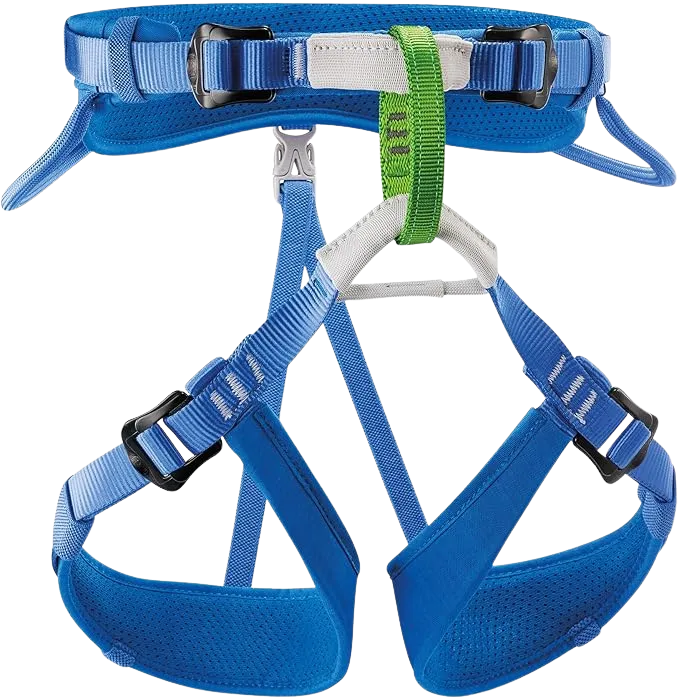
Petzl Macchu Sit Harness

$ $ $ $
Petzl Macchu Sit Harness

The Petzl Macchu is the benchmark harness for the transition phase between toddlerhood and pre-teen climbing. It mimics the aesthetic of adult harnesses, which boosts the child’s confidence, but features a critical safety adaptability: it can be paired with the Petzl Body chest harness to convert into a full-body system if hips are undefined. This modularity makes it a safe investment for rapidly growing children who might be “between stages.” One point of friction is the buckle system; while secure, the dual waist buckles can be stiff and difficult for younger children to adjust independently compared to a single-buckle design.

Overall
Safety Engineering
Growth Accommodation
Autonomy Engineering
Suspension Comfort
Durability
Certification

EN 12277 Type C

Waist Size

54-64 cm

System Weight

335g

Features

Visual check loop, EndoFrame construction

You Should Buy This If…

  • Your child is transitioning from a full-body harness but might still need chest support.
  • You want a harness with a massive adjustability range for longevity.
  • Visual safety features like a colored belay loop are important to you.

You Should Reconsider If…

  • Your child has thick thighs relative to their waist (leg loops can run tight).
  • You want the simplest possible buckle system (dual waist buckles add complexity).

Pro-Tip: If your child complains of heel pain in new shoes, have them take the shoes off between every single climb. This habit not only saves their feet but extends the life of the shoe by reducing sweat and heat buildup.
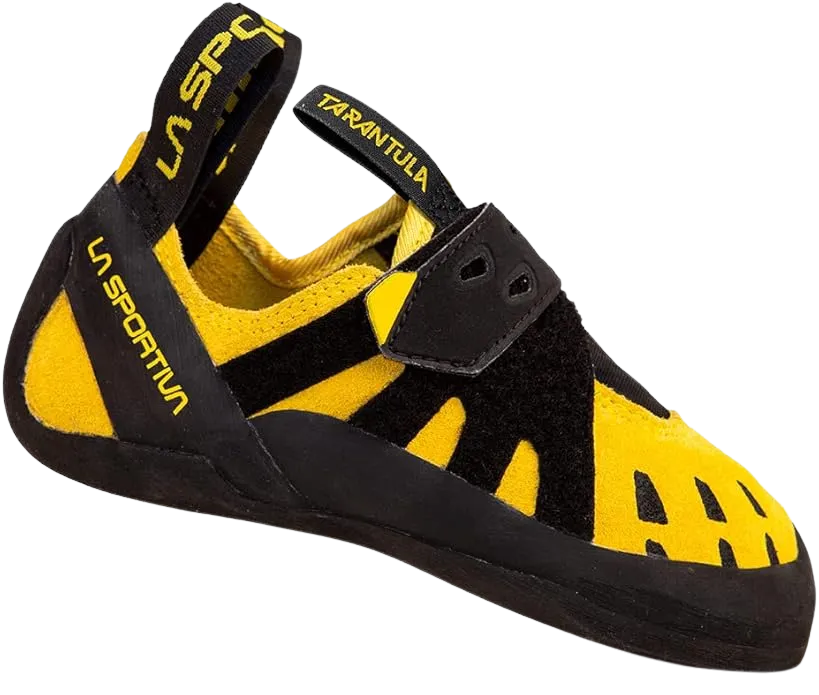
La Sportiva Tarantula Jr

$ $ $ $
La Sportiva Tarantula Jr

Designed as a durable workhorse, the La Sportiva Tarantula Jr scales down the legendary adult gym shoe for younger feet. It utilizes FriXion Black rubber, a harder compound specifically formulated to withstand the abrasive “toe dragging” typical of novice footwork, saving you from monthly replacements. The unlined leather upper molds to the foot for exceptional comfort, making it a shoe kids will actually keep on. However, parents must be vigilant about sizing; because it is unlined leather, it will stretch up to a full size over time, potentially leading to a sloppy fit if bought too loose initially.

Overall
Autonomy Engineering
Suspension/Fit Comfort
Performance Sensitivity
Durability
Value
Sole

4mm FriXion Black

Upper

Unlined Suede Leather

Closure

Velcro

Sizing

EU 26-36

You Should Buy This If…

  • You need a durable shoe that can survive poor footwork and wall scraping.
  • Your child refuses to wear “tight” shoes (comfort focus).
  • You want a shoe that fosters independence with easy on/off.

You Should Reconsider If…

  • You are buying “room to grow” (leather stretches significantly).
  • Your child needs high sensitivity for smearing on competition volumes.

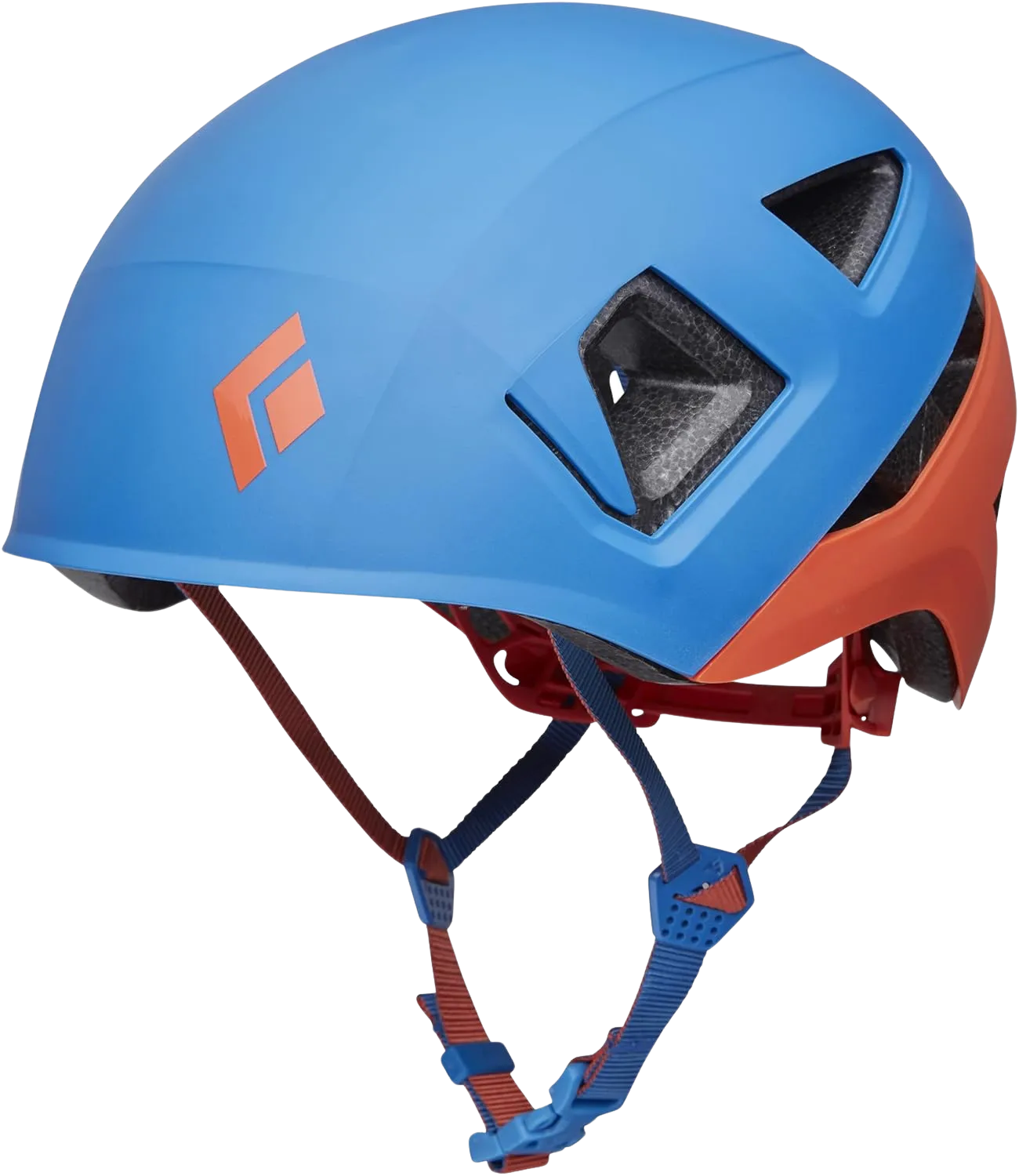
Black Diamond Capitan Kids Helmet

$ $ $ $
Black Diamond Capitan Kids Helmet

The Black Diamond Capitan represents the modern standard for youth protection, incorporating MIPS (Multi-directional Impact Protection System) to protect against rotational brain injury—a vital feature often absent in kids’ gear. It moves away from the “mushroom head” look of older foam helmets to a stylish skate-style aesthetic that kids actually want to wear. Like the Picchu, it carries dual certification for climbing and cycling. The trade-off for this robust protection and style is weight; at nearly 383g, it is noticeably heavier than pure foam helmets, which might fatigue smaller children on long multi-pitch days.

Overall
Safety Engineering
Growth Accommodation
Autonomy Engineering
Comfort
Durability
Certification

EN 12492, EN 1078, UIAA

System Weight

383g (MIPS version)

Features

MIPS Technology, Dual Certification

Shell

2-piece ABS

You Should Buy This If…

  • You are concerned about rotational brain injury (concussions).
  • Your child refuses to wear “dorky” helmets (style factor).
  • You want a highly durable shell that can take abuse.

You Should Reconsider If…

  • You need the lightest possible helmet (it is heavy at ~383g).
  • You are on a strict budget (MIPS adds cost).

Our Top Picks for Persona 3: The Team Crusher (Ages 10+)

Pro-Tip: If your kid is competing, keep their “send shoes” (like the Drago) strictly for competition burns and hard projects. Use a cheaper, durable shoe like the Tarantula Jr for warm-ups and volume training to save money.
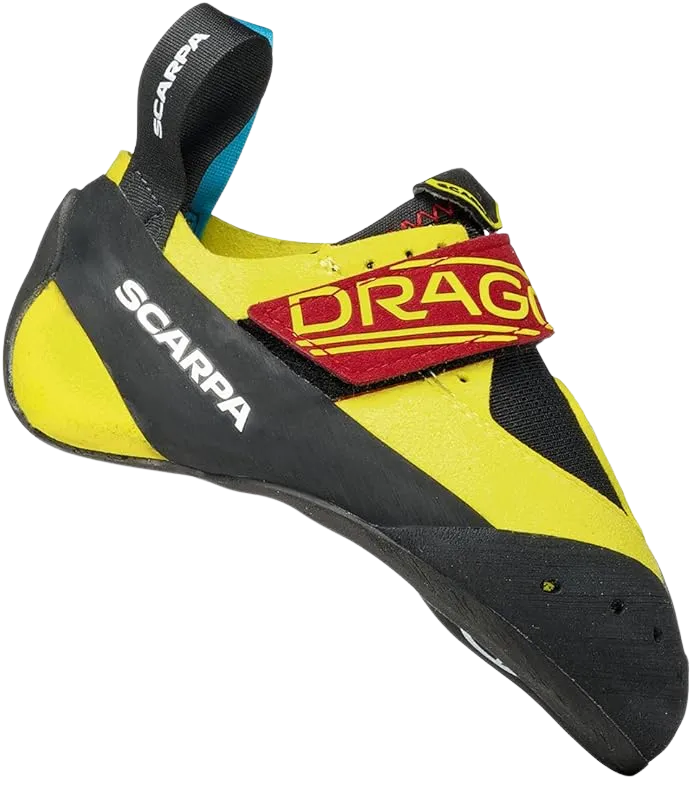
Scarpa Drago Kid

$ $ $ $
Scarpa Drago Kid

The Scarpa Drago Kid is not a “kid’s shoe” in the traditional sense; it is a high-performance competition tool miniaturized for youth athletes. Sharing the same PCB-Tension system and Vibram XS Grip 2 rubber as the World Cup-winning adult Drago, it provides unmatched sensitivity and friction on modern volumes. It allows young crushers to trust their feet on glass-smooth surfaces. However, parents must accept the financial reality: the soft rubber and thin materials that provide elite performance will wear out significantly faster than standard shoes—sometimes in just a few months of heavy training.

Overall
Performance Sensitivity
Autonomy Engineering
Comfort
Durability
Edging
Sole

3.5mm Vibram XS Grip 2

Upper

Microsuede with M50 Rubber

Technology

PCB-Tension, SRT

Sizing

EU 30-36

You Should Buy This If…

  • Your child is climbing V-hard grades (V5/7A+) and competing.
  • They need maximum sensitivity for smearing and volumes.
  • You understand these are “competition day” shoes, not daily trainers.

You Should Reconsider If…

  • You want a shoe that lasts more than 3 months of heavy use.
  • Your child primarily climbs vertical face routes (requires stiffer edging).

Conclusion

Safety is geometry. For children under five, inversion mitigation via a Type B full-body harness is the single most important child safety factor you can control. Remember that fit beats features every time; a harness or helmet that fits poorly is dangerous, regardless of the price. Always adhere to the specific waist, leg, and head centimeter ranges provided by the manufacturer.

Independence is confidence. Gear that children can use themselves builds the agency required to become a safe, self-reliant climber. Invest in the gear that fits your child’s current stage of development, not the one you hope they will grow into, to foster a safe lifelong passion.

FAQ – Frequently Asked Questions

At what age can a child switch from a full-body harness to a sit harness?

The switch is determined by anatomy, not just age. A child must have defined hips (iliac crests) to safely wear a seat harness, which typically happens around age 5 to 7. Until hips are developed, a sit harness can slide off during an inversion, so consider a transition harness like the Petzl Macchu paired with a chest harness.

Should I buy climbing shoes a size bigger so my child can grow into them?

No, climbing shoes rely on a snug fit for stability. Loose shoes prevent the child from using their toes effectively and can cause dangerous slipping. Instead, look for shoes with a high growth-adjustability system like the La Sportiva Stickit, which are designed to span two full sizes.

Can my child use their bike helmet for rock climbing?

Generally no, unless the helmet is specifically dual-certified for both sports. Climbing helmets are designed for top impacts (rockfall), while bike helmets primarily protect against side and frontal impacts. The Petzl Picchu and Black Diamond Capitan are rare exceptions that carry both certifications.

Why do my child’s expensive climbing shoes wear out so fast?

High-performance shoes use softer rubber (like Vibram XS Grip 2) for better friction, which wears down quickly, especially if the child has silent feet issues and drags their toes. For training durability, choose a shoe with harder rubber like the La Sportiva Tarantula Jr.

Risk Disclaimer: Rock climbing, mountaineering, and all related activities are inherently dangerous sports that can result in serious injury or death. The information provided on Rock Climbing Realms is for educational and informational purposes only. While we strive for accuracy, the information, techniques, and advice presented on this website are not a substitute for professional, hands-on instruction or your own best judgment. Conditions and risks can vary. Never attempt a new technique based solely on information read here. Always seek guidance from a qualified instructor. By using this website, you agree that you are solely responsible for your own safety. Any reliance you place on this information is therefore strictly at your own risk, and you assume all liability for your actions. Rock Climbing Realms and its authors will not be held liable for any injury, damage, or loss sustained in connection with the use of the information contained herein.

Affiliate Disclosure: We are a participant in the Amazon Services LLC Associates Program, an affiliate advertising program designed to provide a means for us to earn advertising fees by advertising and linking to Amazon.com. As an Amazon Associate, we earn from qualifying purchases. We also participate in other affiliate programs. Additional terms are found in the terms of service.