

In this article
You are at the anchor, sixty meters off the deck. The adrenaline of the ascent is fading, replaced by the silence of the summit. This is the precise moment the “complacency trap” springs. Statistics confirm that the descent—mechanically the simplest part of the day—is where the majority of catastrophic accidents occur. Gravity is a constant that does not forgive a missed buckle, a short rope, or a distracted rappeller.
To survive a lifetime of climbing, you must shift your mindset from “skilled practitioner” to “systems manager.” This guide dismantles the anecdotal habits of the past and replaces them with a zero-failure technical framework based on redundancy, physics, and verifiable safety protocols. Whether you refer to it as abseiling or rappelling, the gravity is the same. We will cover why separating your tube device from your harness is the modern safety standard, the physics of friction, the non-negotiable rules of knot stability, and the cognitive rituals required to override fatigue.
Why is the Descent Statistically the Most Dangerous Phase of Climbing?
What is the “Complacency Trap” and how does it lead to system failure?
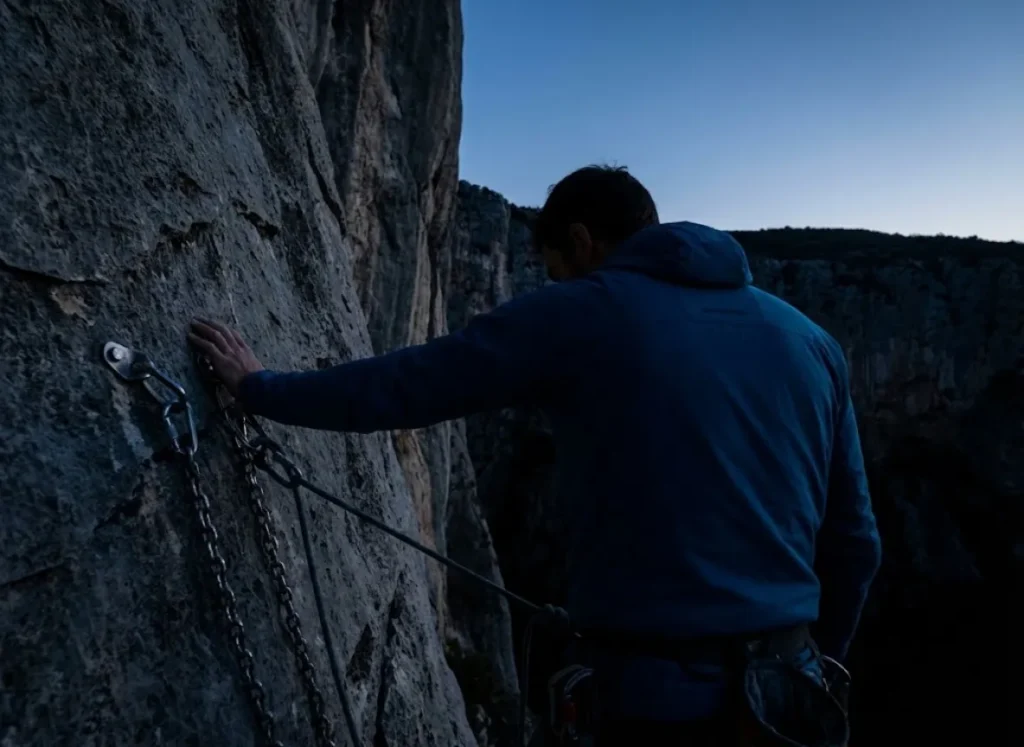
The “Complacency Trap” is the psychological phenomenon where a climber’s focus disintegrates once the physical difficulty of the ascent is over. It is the inverse of “Summit Fever“; instead of reckless ambition, it is reckless relaxation. When the climbing is “done” and the descent feels like a mere commute, the “familiarity heuristic” takes over. Veteran climbers often rely on muscle memory rather than active checklists, leading to skipped steps in their rappel setup.
Statistical reality hits hard here. Data from Accidents in North American Mountaineering and Yosemite Search and Rescue (YOSAR) confirms that rappelling accidents are rarely the result of equipment exploding. They are almost exclusively procedural errors in the human factor layer, such as rappelling off ends, failing to close the system, or unconnected devices.
The systemic paradox of rapping is that you surrender control. Unlike climbing, where you fight gravity with multiple points of contact, the rappel system relies entirely on a single mechanical linkage. This vulnerability is compounded by the physics of exhaustion. Physical fatigue and dehydration at the end of a route degrade cognitive function, making simple decisions difficult. We must transition from “Safety through Skill” (holding on tight) to “Safety through Redundancy” (systems that work even if you pass out).
Pro-Tip: Treat the rappel as the “crux” of the day. Verbalize your actions to your partner. “I am threading the rope. I am locking the carabiner.” Hearing the words forces your brain to process the action twice.
Once we acknowledge that our tired brains are the weak link, we must build a mechanical layer that protects us from ourselves. A forensic examination of the analysis of rappelling fatalities in North American climbing substantiates that descent errors are a leading cause of avoidable accidents. To combat the mental fatigue that causes these errors, many alpinists employ techniques like visualization and breathwork to build mental toughness, keeping their focus sharp until they are unroped on the ground.
How Do We Build the “Zero-Failure” Extended Rappel System?
Why is the “Extended Rappel” superior to the traditional belay loop attachment?
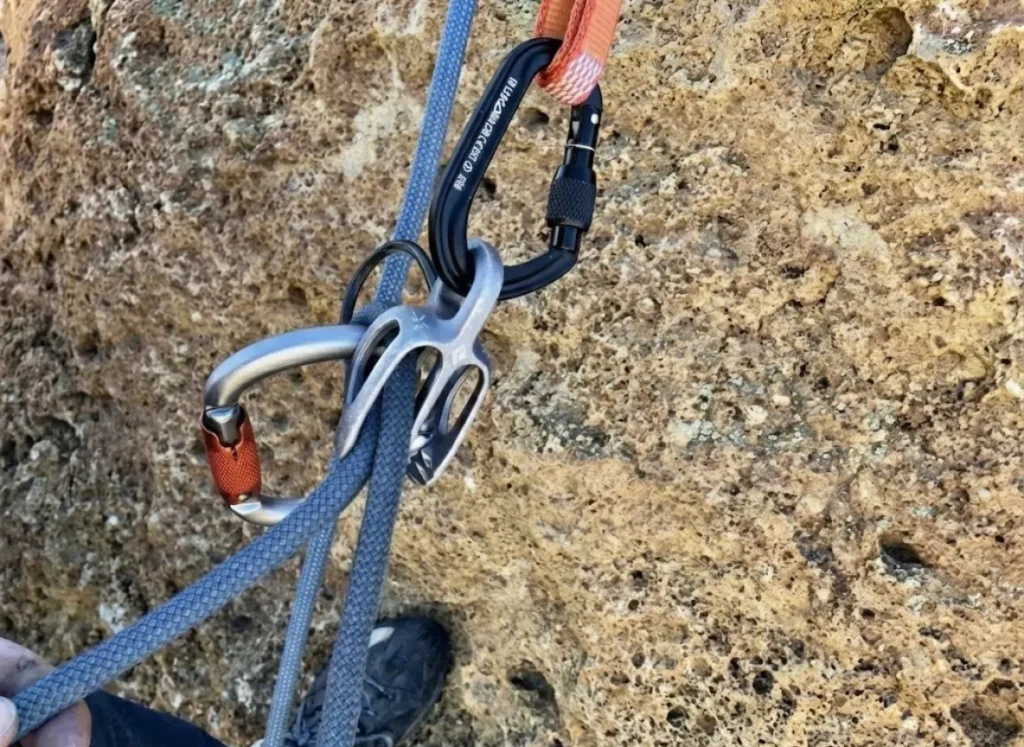
The extended rappel involves using a tether, such as a Personal Anchor System (PAS), a Petzl Connect Adjust, or a sewn 60cm nylon sling, to move the rappel device 12 to 18 inches away from the harness. This creates a “cockpit” layout for your safety systems.
The primary reason for this configuration is the creation of a “Safety Gap.” By extending the device, you physically separate the brake hand from the backup knot. This prevents interference and allows both hands to manage the rope without cramping. Improved ergonomics also play a massive role; moving the ATC or Petzl Reverso to eye level allows for a clearer line of sight and prevents loose clothing, hoody-strings, or hair in devices—a common and terrifying mishap for the inverted rappeller.
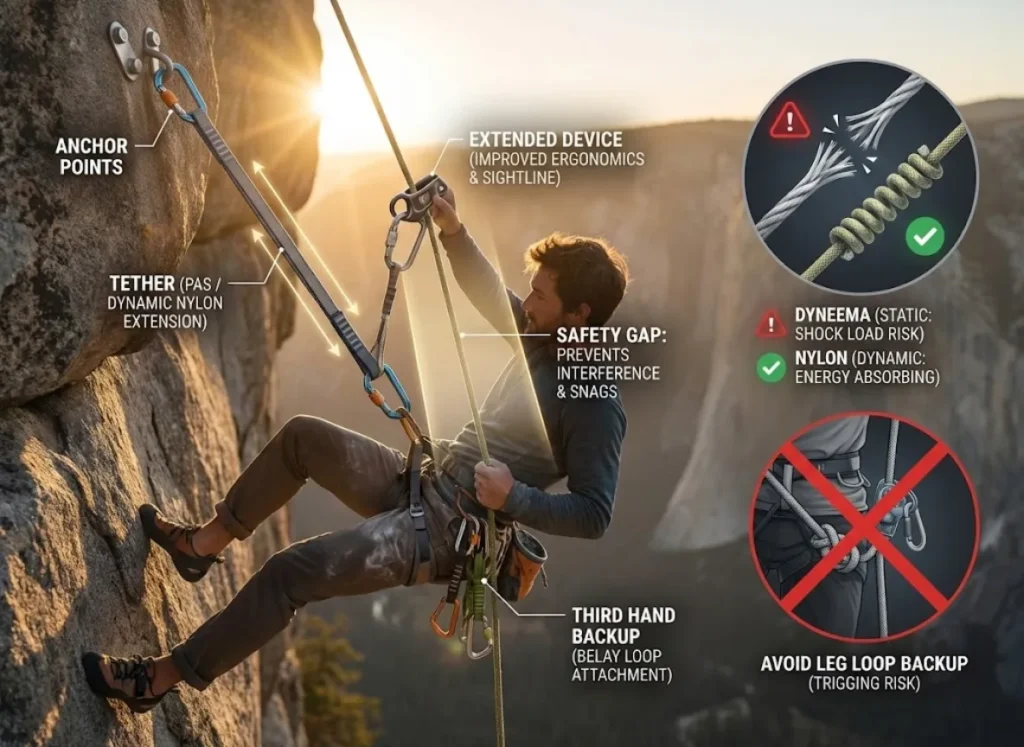
Material selection for extensions is critical. You must understand the difference between static Dyneema (or Spectra) and dynamic Nylon. Static materials do not absorb energy, meaning a slip and shock load on a Dyneema tether can be catastrophic for the rappel anchor point or your harness. Additionally, we must address the “Leg Loop Backup.” Old-school methods often placed the backup knot on the leg loop (a “leg rap”). This is dangerous due to “trigging,” where the leg loop lifts the backup knot into the tube style rappel device, unlocking the brake mechanism.
For professional instruction, the standardized curriculum for single pitch instructors, often taught by an AMGA certified guide, validates the extension as the requirement for guided settings. While many climbers use dedicated lanyards, understanding the data-backed safety analysis of PAS vs Daisy Chains is vital to ensure you aren’t using a tether that could fail under shock loading.
How does the “Third Hand” friction hitch function as a mechanical failsafe?
The “Third Hand backup” is a friction hitch backup attached to the brake strand of the rope, functioning as a “Dead Man’s Switch.” If the climber loses control due to rockfall, unconsciousness, or panic, the hitch jams and halts the descent immediately.
Proper placement is non-negotiable: the hitch must be attached to the belay loop (below the extended device). This ensures it acts on the brake strands effectively. While there are several hitches available—Prusik and Klemheist among them—the Autoblock is preferred for rappelling. It releases easily under load, whereas a Prusik can bite so hard it becomes difficult to unlock after hanging.
Regarding material science, the heat management generated during a steep rappel is significant. This is why Aramid or Technora cords (like the Sterling Hollow Block) are superior to standard nylon. These materials have extreme heat resistance (approx. 900°F) compared to nylon (approx. 480°F), which can glaze or melt during a fast descent.
Pro-Tip: Friction relies on the “Bite Ratio.” Your backup cord should be 2-3mm thinner than your climbing rope. A 7mm cord on a 9.5mm rope diameter works well. If they are the same diameter, the hitch may slide.
Quantitative holding power is also a factor. Data suggests that a 3-wrap hitch may fail to grab, whereas a 4-wrap hitch securely holds body weight. Alternatively, a partner can provide a fireman’s belay from below as a ground-based backup. For a deeper understanding, review the technical rescue handbook regarding friction hitch physics. If you are unfamiliar with tying these, you should consult a step-by-step mastery guide for the 8 core climbing knots before heading to the crag.
Which Device and Rope Protocols mitigate physics-based risks?
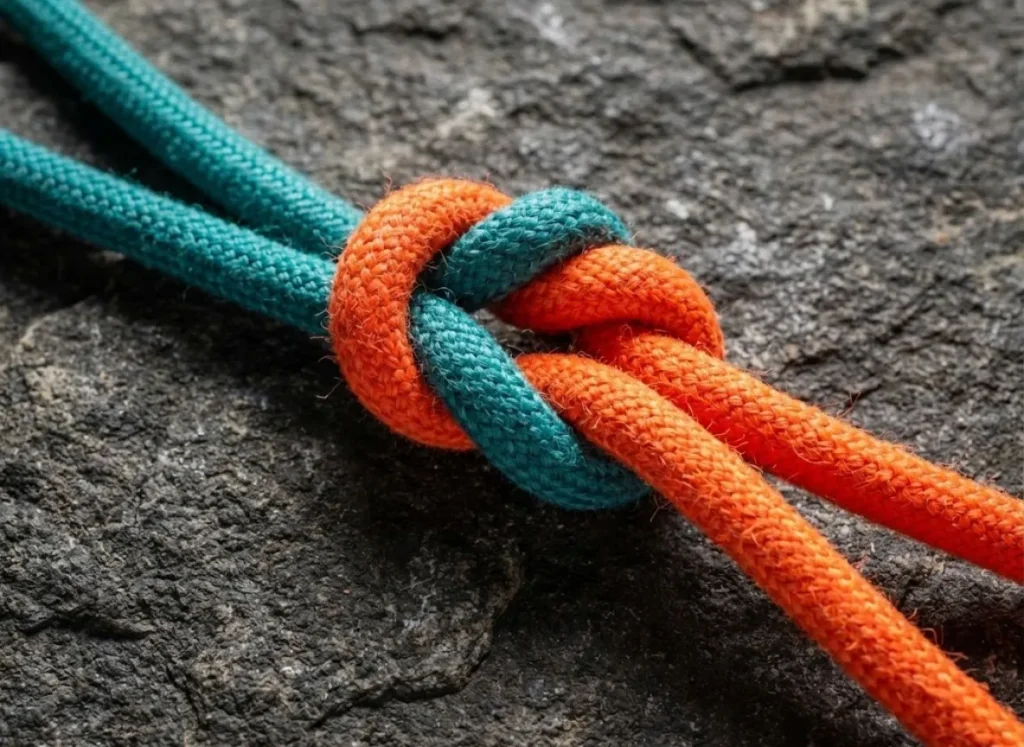
Why is the Flat Overhand Bend (EDK) the standard for joining two ropes?
The Flat Overhand Bend, colloquially known as the “European Overhand Knot” (EDK), is the standard for joining two ropes. Its geometry is asymmetrical, creating an “offset” knot that presents a smooth profile on one side. When pulled across rock, the knot rotates to slide over edges and cracks, unlike the barrel-shaped Double Fisherman’s which tends to jam in fissures.
We must address the scary name. Despite being called the “Overhand Knot,” extensive comparative testing of offset knots for rappelling proves it holds forces far exceeding rappel loads (>9kN). However, there is a critical “Tail Rule”: you must leave 12 to 18-inch tails. This accounts for the knot tightening or “rolling” slightly under initial load. You must dress the knot perfectly every time.
Climbing Knot Comparison for Rappel
Evaluating snag potential, strength, and safety status for joining ropes.
Profile / Snag Potential
Low / Minimal: Asymmetrical offset design causes the knot to rotate and act like a ramp, sliding over edges and smooth rock.
Safety Status
Recommended Standard: The modern industry standard for joining ropes, provided it has minimum 12-18 inch tails.
Profile / Snag Potential
High / Significant: Symmetrical, barrel-shaped profile creates a “catch point” on both sides, making it highly prone to jamming in cracks.
Safety Status
Alternative: Historically common but largely replaced by the EDK due to the high risk of snagging during rope retrieval.
Strength Warning
Low / Dangerous: Prone to “rolling” or capsizing at much lower loads (approx 2 kN in tests), consuming tail length rapidly.
Safety Status
NOT SAFE: Explicitly warned against as a dangerous alternative; should not be used for joining rappel ropes.
A vital warning: Do not confuse the EDK with the “Flat Figure 8.” While visually similar, the Flat Figure 8 is unstable and prone to capsizing (unrolling) at dangerously low loads. Never use it to join ropes. Whether you are using a complete climbing rope guide for single, half, and twin systems to select your cord, the EDK remains the joining knot of choice for double-rope rappels.
Why are “Triple Barrel” stopper knots non-negotiable?
Rappelling off the ends of the rope is one of the most common causes of fatality, and it is 100% preventable. The solution is the “Triple Barrel knot” (Triple Overhand).
Why triple? A simple overhand knot is small enough to be pulled through the friction mechanics of some modern rappel devices or squeezed through a locking carabiner under high force. A Triple Barrel creates a bulky stopper that physically cannot pass through the system. You must tie these knots in each strand independently. Tying the two ropes together at the bottom creates a closed loop that creates a nightmare of stuck ropes and snarls when you try to pull.
Environmental variables dictate this necessity. The “Uneven Rope” phenomenon occurs when ropes shift through the rappel anchor or stretch unevenly, causing one end to rise unexpectedly. Additionally, rappelling safety standards and protocols emphasize that wet nylon loses its dynamic absorption properties. Understanding the data-backed performance analysis of dry vs non-dry ropes helps explain why wet ropes handle differently, often feeding through the Black Diamond ATC-Guide faster, making stopper knots the final line of defense to close the system.
What is the “BRAKES” Protocol and the Final Weight Test?
How does the BRAKES acronym force a cognitive pause?
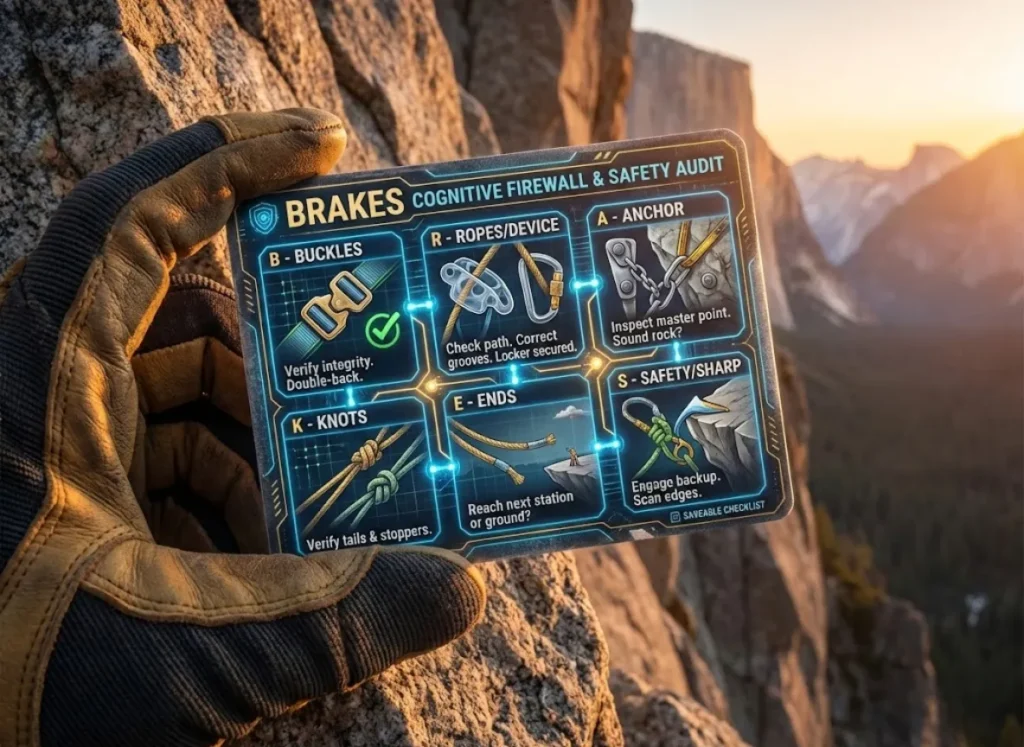
The BRAKES acronym is a cognitive firewall and safety audit. It breaks the “automatic” behavior pattern to force a conscious review of the system.
- B – Buckles: Verify harness integrity. Double-back if necessary, check leg loops.
- R – Ropes/Device: Check the thread path. Is the rope in the correct grooves? Is the locker secured? Is the extension sling secure?
- A – Anchor: Visually inspect the master point, bolts, and webbing. Is the rock sound?
- K – Knots: Verify the EDK tails (are they long enough?) and the stopper knots at the bottom.
- E – Ends: Do the ropes reach the next rappel station or the ground?
- S – Safety/Sharp: Engage the backup hitch. Scan the lip for sharp rock edges that could cut the sheath.
This aligns with UIAA safety standards for mountaineering equipment, which prioritize systematic checks. Since the first step involves your harness, ensure you recall the step-by-step safety protocol for perfect harness fit to ensure “B – Buckles” is a pass.
Why is the “Weight Test” the ultimate gatekeeper of safety?
Visual checks are essential, but eyes can be deceived. To weight the system is the physical verification of your rigging.
The procedure is simple but critical: Load the rappel tool with your full body weight while still clipped to the anchor via your PAS. Crouch down or lean back until the rope takes your weight. The objective is to verify that the device is threaded correctly (not cross-loaded) and that the friction hitch backup actually holds.
This is the “Unclip” moment. You only remove your safety tether after the rappel system is fully tensioned and proven effective. This test detects “Ghost Threads”—instances where the rope missed the device slot or carabiner—before it’s too late. If the system fails the weight test, you are already secured to the anchor. According to accident analysis regarding rappel system failures, skipping this step turns minor rigging errors into fatalities. If the test reveals an issue you cannot fix easily, you may need to employ essential self-rescue skills like escaping the belay to safely reorganize.
Final Thoughts: The Safety Manifesto
We have dismantled the habits of complacency and replaced them with a contingency layer of redundancy.
- Extend to Survive: The extended rappel setup is not a convenience; it is a safety architecture that enables reliable backup usage.
- Trust the Heat-Resistant Backup: An Aramid/Technora hollow block provides a margin of safety that nylon cords cannot match during friction management events.
- Respect the EDK: The Flat Overhand Bend is the superior knot for joining ropes, provided tails are strictly maintained at 12+ inches.
- Test Before You Trust: The BRAKES check and the Weight Test are the final firewalls between you and gravity.
Master these systems on the ground before taking them to the vertical world. Share this guide with your climbing partners—communication protocols and safety are a shared language.
FAQ – Frequently Asked Questions about Rappelling Safety
Is it safer to rappel with an extension or off the belay loop?
An extended rappel is significantly safer because it separates the device from the harness. This creates a dedicated workspace that prevents the backup knot from interfering with the descent device (trigging) and places the device at eye level for better monitoring.
What is the best backup knot for rappelling?
The Autoblock hitch is widely considered the best backup for simple raps because it is easy to release under load compared to a Prusik or Klemheist. Ideally, use a distinct material like a Sterling Hollow Block (Aramid) to prevent melting.
Can I use a Figure 8 knot to join two rappel ropes?
No. You should use a Flat Overhand Bend (EDK). The Flat Figure 8 is dangerous because it can capsize (roll apart) under relatively low loads, whereas a well-dressed EDK is stable and less likely to snag on rock.
How many wraps should my autoblock hitch have?
A minimum of 4 wraps is typically required to hold body weight safely, though this depends on the friction level between the cord and rope. You must perform a weight test every time to ensure the specific combination of your cord and the rope provides enough friction to hold you.
Safety Notice: Rock climbing and mountaineering are inherently high-risk
activities that can involve physical trauma or fatal incidents. The information on Rock Climbing Realms is for
educational and informational purposes only. Techniques and advice presented here are not a substitute
for professional, hands-on instruction. Conditions and risks vary by location. Always seek guidance
from a qualified instructor before attempting new techniques. By using this website, you agree that you
are solely responsible for your own safety. Any reliance you place on this information is strictly
at your own risk, and you assume all liability for your actions. Rock Climbing Realms and its authors
will not be held liable for any harm, damage, or loss sustained in connection with the use of this information.
Affiliate Disclosure: We are a participant in the Amazon Services LLC Associates Program, an
affiliate advertising program designed to provide a means for us to earn advertising fees by advertising and linking
to Amazon.com. As an Amazon Associate, we earn from qualifying purchases. We are also an official affiliate partner
of Black Diamond Equipment via the AvantLink network. If you click on a Black Diamond affiliate link and make a
purchase, we may earn a commission at no additional cost to you. We also participate in other affiliate programs.
Additional terms are found in the terms of service.