
In this article
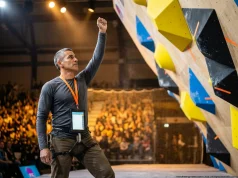
The electric silence in a packed arena as an athlete in an Olympic final launches into a gravity-defying sequence of leaps and catches. It’s more than just a climb; it’s a high-stakes physical chess match, a spectacle of modern sport climbing meticulously designed to test the absolute limits of human potential. This guide pulls back the curtain on the specialized craft of competition bouldering setting, decoding the science, art, and strategy behind these spectacular puzzles to give you the blueprint for mastering them yourself.
To transform from a spectator into a participant in this incredible discipline, you must understand its core pillars. We’ll start with The Rulebook, the non-negotiable framework from governing bodies like the IFSC that dictates everything from competition formats to scoring. Next, we’ll explore The Setter’s Craft, the unique philosophy of creating fair yet decisive challenges that separate a field of elite athletes. From there, we’ll learn The Physical Language of modern climbing, a vocabulary of specialized climbing holds and dynamic movements. Finally, we’ll chart The Athlete’s Pathway, translating this knowledge into an actionable training plan to build the skills and confidence to conquer these complex boulder problems.
What Rules Govern the Arena? Governance, Formats, and Scoring
This section deconstructs the precise regulatory framework that defines modern bouldering competitions, explaining the rules that shape every aspect of the event from the athletes’ experience to the final ranking. Before an athlete can touch the wall, their every move is already constrained by a complex rulebook. Understanding this invisible architecture is the first step to decoding the game.
How Do IFSC Regulations Shape a Competition?
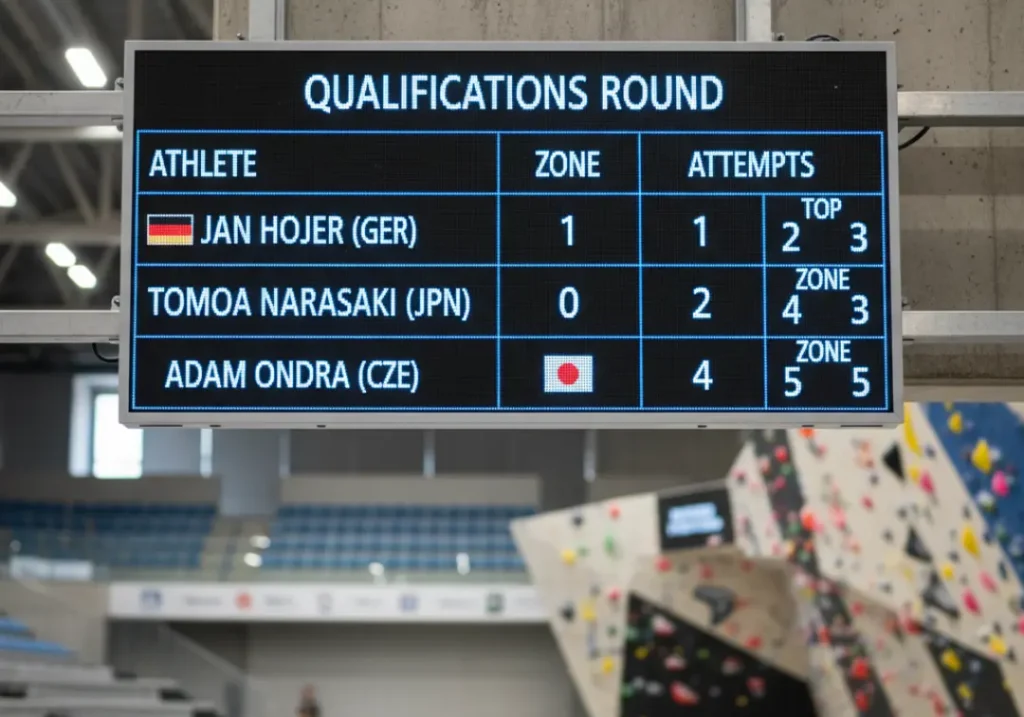
The International Federation of Sport Climbing (IFSC) sets the global gold standard for rules, governing the IFSC World Cup circuit and Olympic events. For years, the sport operated under a traditional hierarchical scoring system, seen in events like the Tokyo Olympics. An athlete’s rank was determined first by the number of “Tops,” or successful ascents marked by controlling the final hold with both hands. If there was a tie, the count of “Zones”—controlled intermediate holds—was used. As a final tie-breaker, officials counted the number of “Attempts” to each hold. This created a clear but sometimes rigid ranking, where a single extra attempt could drop an athlete several places, and an effective ranking was difficult with many tied competitors. The pressure was immense, often encouraging conservative climbing to minimize attempts rather than rewarding bold, risky moves. This classic structure progresses from a large qualification round to a 20-person semifinal round, culminating in a tense 8-person final round where athletes are kept in an “Isolation Zone” to ensure fairness.
However, with an eye towards events like the LA Olympics, a pivotal change for the 2025 season introduces a more transparent, point-based scoring system designed to be easier for a broad audience to follow and more rewarding for the athletes. Under the new rules, a Top is worth a clean 25 points, while securing a Zone is worth 10 points (only counted if the Top is not achieved). Most importantly, a minor penalty of just -0.1 points is applied for each unsuccessful attempt. This granular approach makes the cost of trying a risky, low-percentage move significantly lower than before. It empowers setters to create more complex, dynamic problems and, in turn, encourages athletes to attempt them, fulfilling the primary goal of spreading the field of scores and creating a more exciting spectacle. For a deeper dive into IFSC formats and rules, you can explore the full history and details of these competitive structures.
| IFSC Scoring System Evolution (Pre-2025 vs. 2025) | ||
|---|---|---|
| Feature | Pre-2025 System (Tops-Zones-Attempts) | 2025 System (Points-Based) |
| Primary Goal | Ranking based on a hierarchy: 1. Tops, 2. Zones, 3. Attempts to Top, 4. Attempts to Zone. | Ranking based on the sum of points accumulated across all boulders. |
| Top Value | Highest priority in the ranking hierarchy. | 25 points. |
| Zone Value | Second priority in the ranking hierarchy. | 10 points (if Top is not achieved). |
| Attempt Penalty | Used as a tertiary tie-breaker after Tops and Zones are compared. | -0.1 points per attempt, directly subtracted from the score for that boulder. |
| Example Score | A climber achieving a Top in 2 attempts would rank higher than a climber with a Top in 3 attempts. | A Top in 2 attempts scores 24.9 points. A Top in 3 attempts scores 24.8 points. |
| Tie-Breaker | Countback to previous round’s results. | Countback to previous round’s results. |
How Does the Competition Format Influence Strategy?
The format of a competition dictates the entire strategic approach an athlete must take. The most common format for local and qualifying events, like many USA Climbing Qualification Events (QEs) and local Bouldering Leagues, is Modified Redpoint. In this style, climbers have a set block of time, often three hours, to attempt as many problems as they wish. Success here demands exceptional time management, energy conservation, and the strategic sense to know which problems to try, which to rest for, and which to walk away from. Every boulder must have a four-point start, requiring the competitor to establish a controlled position on specific start holds before beginning.
In stark contrast, the finals of major events are governed by the Onsight format, considered the purest test of climbing ability. A competitor gets only one attempt on a route they have never seen or received any information (“beta”) about. After a brief observation period, it’s just them and the climbing wall. This format tests raw problem-solving, commitment, and execution under pressure. A hybrid of these two is the Flash format, where climbers get one attempt but are allowed to watch other competitors first. This tests a climber’s ability to learn visually from others’ successes and mistakes and then execute perfectly on the first try.
National bodies like USA Climbing (USAC) often adapt these IFSC guidelines for their domestic series, creating frameworks that serve a much broader range of competitor levels. For Qualification Events, the goal is to differentiate everyone from a novice competitor to an elite, national-level competitor. This creates a dual mandate for setters. To aid this, USAC rules may allow for two zones on a single boulder—Low Zones and a “Zone”—giving less experienced competitors more opportunities to score points and feel successful, while still providing a challenge for elite athletes.
What is the Philosophy Behind the Puzzles? The Setter’s Craft and Paradoxes
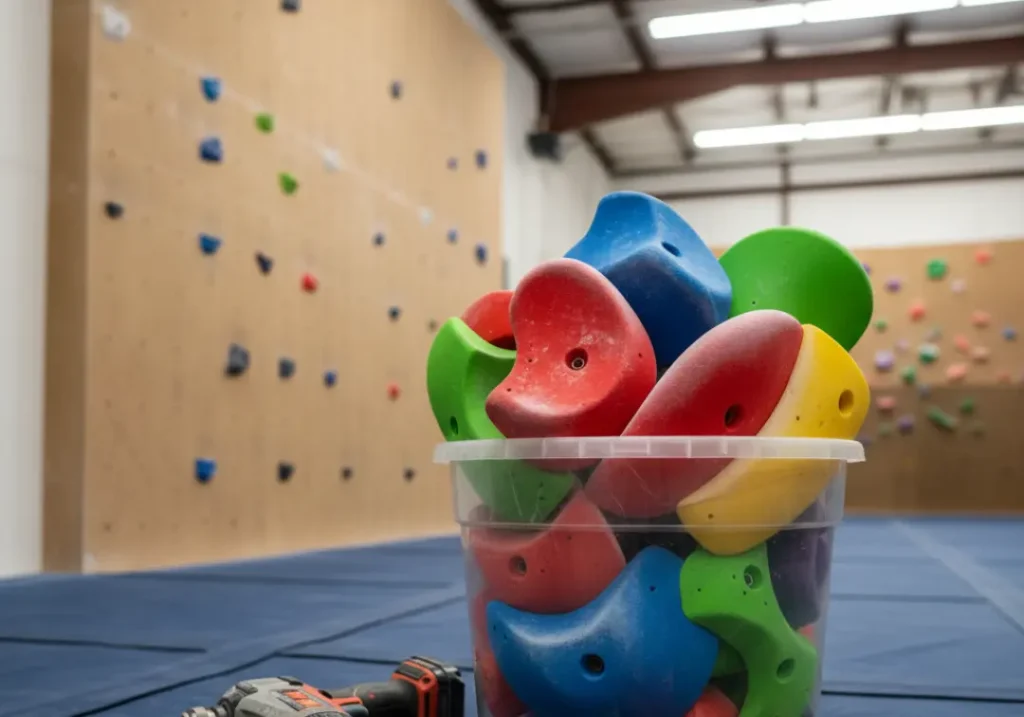
This section moves beyond the rules to explore the art and science of routesetting, examining the core objectives, inherent challenges, and creative processes that define the profession. With the rulebook as their canvas, setters begin their true work: crafting physical narratives designed to reveal a single champion. This is where objective analysis meets creative artistry.
What is the Prime Directive of a Competition Routesetter?
The single most important goal in competition style setting is to effectively separate the field and produce a clear, unambiguous ranking with minimal ties. A competition problem isn’t just “hard”; it’s a calibrated tool meticulously designed to elicit a specific range of outcomes from a specific group of competitors. To achieve this, setters create problems with “multiple fall points”—several distinct, difficult moves where a climber might fail, rather than a single, all-or-nothing crux. This approach ensures that even small differences in performance are reflected on the scoreboard, allowing for a more granular separation of athletes.
This process is a predictive exercise of the highest order. A successful competition round must test a wide diversity of styles—power, balance, coordination, and technique—to ensure the winner is the most versatile, well-rounded climber, not a specialist. Setters must anticipate how dozens of unique athletes will perform under pressure on a novel challenge, demanding an almost intuitive understanding of biomechanics, psychology, and the current meta of the competitive field. Subtly, the rise of climbing’s media profile has added an “entertainment mandate,” which increases spectator appeal and favors spectacular, visually compelling movements for the broadcast audience. This high-stakes environment is fundamentally different from the objectives that guide how setters assign grades in a gym, where regular gym turnover is guided by customer base analysis and feedback mechanisms, not elite athlete ranking.
| Competition vs. Commercial Routesetting Philosophies | ||
|---|---|---|
| Attribute | Competition Setting | Commercial (Gym) Setting |
| Primary Goal | Separate the field; create a clear winner and ranking. | Member satisfaction and retention; provide variety and an engaging experience. |
| Target Audience | A narrow, defined category of elite competitors (e.g., “Men’s World Cup Finalists”). | The entire gym membership, from first-time beginners to seasoned experts. |
| Difficulty Distribution | Progressive difficulty with multiple distinct fall points on each problem to create a score spread. | A bell curve distribution, with the majority of climbs set at the gym’s average grade (e.g., V3-V5). |
| Core Philosophy | A fair, objective test of all-around climbing ability designed to produce a decisive result. | An engaging, fun, and accessible physical puzzle designed for enjoyment and training. |
| Success Metric | A well-separated field with minimal ties and a final that is both decisive and exciting for spectators. | Positive member feedback, high traffic on routes, consistent membership renewal, and a low injury rate. |
How Do Setters Balance Universal Fairness with Individual Equity?
A fundamental paradox of setting is creating a challenge that is both universally fair (presents an equal test to all) and individually equitable (doesn’t disproportionately favor one body type). This focus on accessibility and fairness/equity is paramount. It becomes especially difficult when dealing with athlete morphology, such as height and reach. A long, “stretchy” move for a shorter climber might be a simple static reach for a taller one. To navigate this, setters must be intimately aware of the competitive field, knowing the physical characteristics of the shortest and tallest competitors expected to compete. This constant negotiation is a defining creative and analytical challenge, particularly in youth competitions where setting for children of different heights in the same category can be extreme.
Setters employ several strategies to mitigate these morphological advantages. They intentionally balance long-reach moves with compressed, “scrunchy” moves that demand flexibility and core power, which can be more challenging for taller climbers. They often design sequences that allow for alternative solutions (“beta”) of similar difficulty, enabling different body types to find a path to success. The creation of a competition boulder is an iterative, collaborative process of “forerunning,” where a diverse setting team climbs, tests, and refines the problem repeatedly to dial in the intended movement and ensure it is as fair as possible for the entire field. Understanding how a climber’s ape index can influence reach provides a deeper look into just one of the specific traits setters must consider.
What is the Physical Language of Modern Bouldering? Holds, Movements, and Archetypes
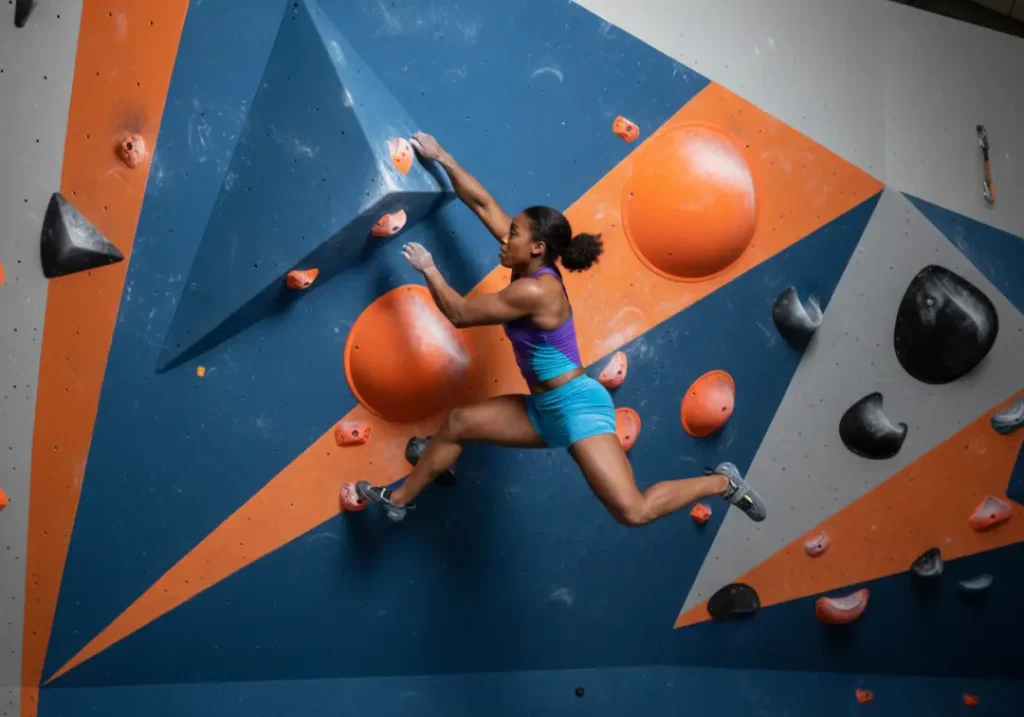
This section introduces the unique vocabulary of modern competition climbing, breaking down the specialized equipment and acrobatic movements that comprise the physical puzzles presented to athletes. Every discipline develops its own language. For competition setters, that language is written in resin and expressed through motion. Learning to read it is key to solving the puzzle.
What is in the Modern Arsenal of Holds?
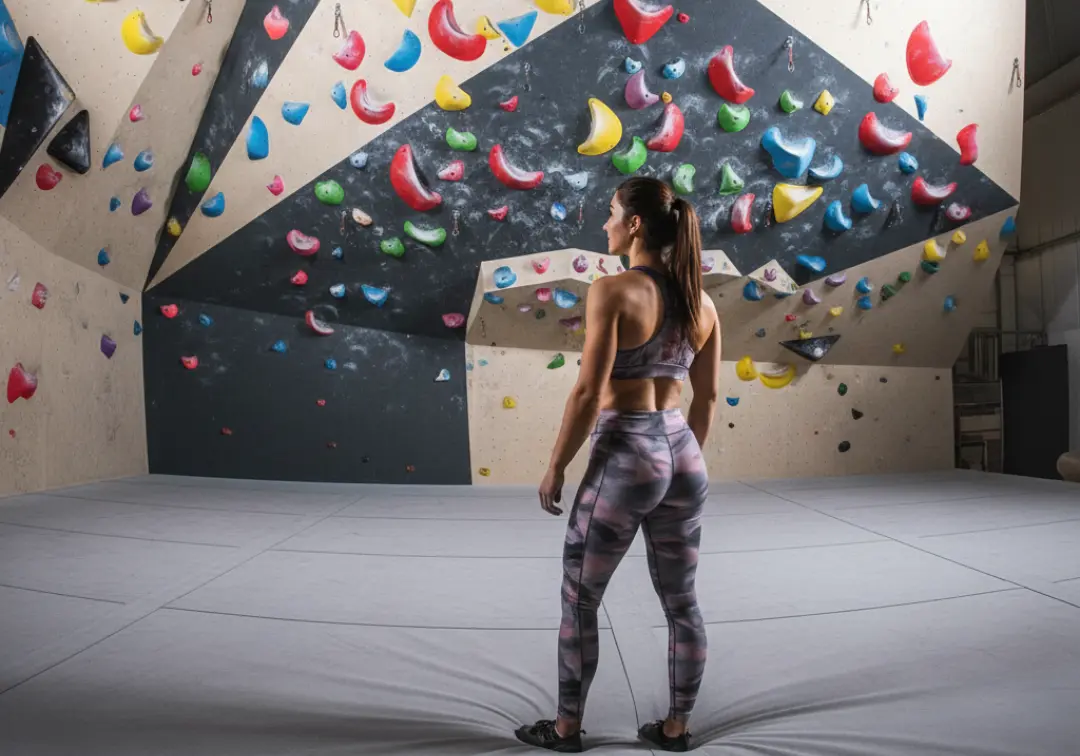
While traditional holds like crimps and slopers are still used, the modern “comp style” is defined by a new generation of climbing holds that give setters unprecedented control over movement. Volumes and Macros are large, geometric features bolted to the wall to alter its topography, creating new wall angles and three-dimensional challenges that engage the entire body. They can be used as holds themselves or have smaller “macro” holds attached, forcing climbers into complex positions that go far beyond simply pulling with their arms.
Pro-Tip: When you first look at a competition boulder, don’t just see holds. See the surfaces. Pay attention to the massive volumes and how they change the angle of the wall. The most important move might not be grabbing a hold, but pressing your entire body against a volume to maintain tension.
Representing an even greater innovation in dictating movement are Dual-Tex and No-Tex Holds. These feature both a standard grippy texture and a smooth, shiny “no-tex” surface. By strategically placing the no-tex area, setters can make large portions of a hold unusable, forcing a climber to grab it in a very specific way with a precise hand orientation. These holds act as “forcing functions,” removing ambiguity and tricky beta, compelling a climber to solve a sequence in the exact intended manner. This turns the climb into a specific biomechanical puzzle. For a complete overview, check out this guide to different climbing hold types.
What Are the Foundational Boulder Archetypes?
To ensure a comprehensive test of ability, setters at major competitions are often required to create a round of four competition boulders that fit into specific archetypes. The classic styles include:
- Technical/Slab Boulder: A problem set on a vertical or less-than-vertical wall (“slab”). This style tests balance, friction-based footwork, precise body positioning, and immense mental control. Sometimes this can be a very crimpy technical boulder, testing finger strength as well.
- Physical/Power Boulder: This is a more traditional test of raw strength, typically set on a steep, overhanging wall. It demands powerful pulling, strong core tension, and elite finger strength, reminiscent of traditional boulder problems found on rock.
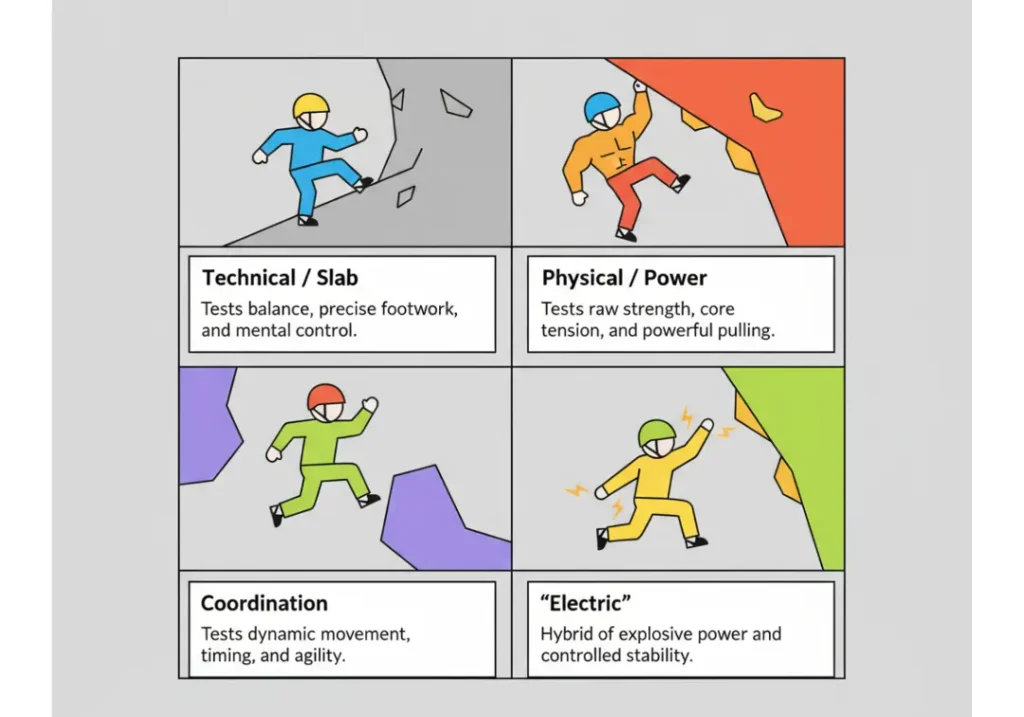
Modern competitions have introduced new, hybrid styles that have come to define the sport:
- Coordination Boulder: This problem is a pure showcase of modern dynamic movements. It is often a showy jumpy boulder, featuring a series of parkour jumps, pogos, and other complex, multi-part sequences like a paddle-dyno or lateral-dyno that test timing and agility more than pure power.
- “Electric” Boulder: A hybrid style that blends the explosive nature of coordination with the raw strength of physical problems. An electric boulder typically involves powerful, dynamic moves between very stable, controlled body positions, requiring both immense power generation and the ability to absorb and control momentum.
These archetypes form the building blocks of a competition, and learning to identify them is key to understanding the specific techniques required, like those needed for mastering advanced bouldering moves like dynos.
How Can Athletes Master These Challenges? A Guide to Training, Safety, and Progression
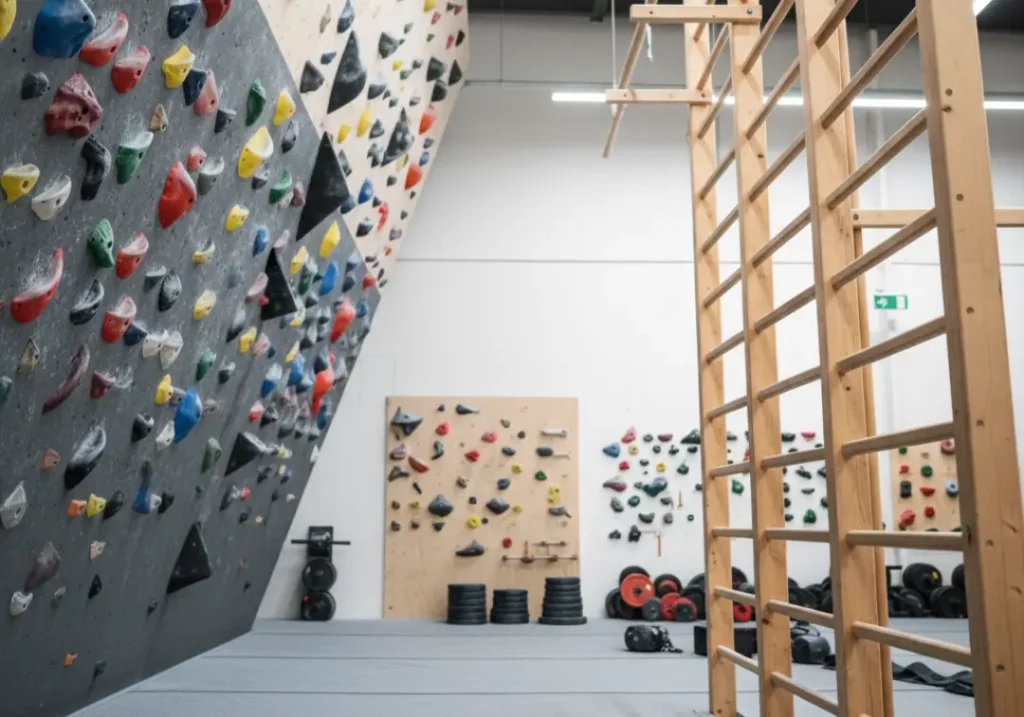
This section translates the academic understanding of competition setting into an actionable guide for dedicated climbers, providing a safe, progressive pathway to developing the skills required for modern bouldering. Understanding the language is one thing; speaking it is another. Now we move from analysis to action, building the physical and mental framework to execute these complex moves with confidence.
How Can a Climber Build a Structured Training Pathway for Dynamic Moves?
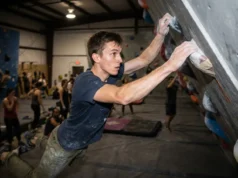
Attempting advanced dynamic moves without a solid foundation is inefficient and dramatically increases the injury risk. A progressive, structured approach is essential. The journey begins with Level 1: Foundational Stability. Before adding momentum, an athlete must master static balance, body tension, and efficient movement on simple terrain. From there, you move to Level 2: Introduction to Momentum, practicing controlled lunges (“deadpoints”) between good holds and learning to generate and absorb force in a predictable manner. The third level is Level 3: Mastering the Dyno, which focuses on developing explosive power and timing through simple, vertical jumps on a system board or spray wall.
The final stage, Level 4: Coordination & Comp Moves, requires breaking down complex sequences and learned movements like a toe-hook catch, double-clutch, or shuffle-step into their component parts and using tools like video analysis to understand the nuances of timing. The psychological component of this training is as important as the physical. Learning dynamic movement is as much about training the brain to manage fear as it is about training the body to produce power. Techniques like practicing falls from low heights and breaking down intimidating moves into smaller, manageable pieces are a form of systematic desensitization. This process teaches the nervous system that the perceived risk is manageable, thereby lowering the inhibition that prevents a climber from fully committing to a move. Building the right physical foundation with targeted strength and power exercises for climbers is a critical component of this pathway.
A Climber’s Progression for Dynamic Movements
A step-by-step guide from static stability to explosive dynamic climbing techniques.
Core Concept
Master static balance, body tension, and efficient movement before adding momentum.
Drills & Safety
Drills: Practice fundamental techniques like flagging, drop-knees, and heel/toe hooks on easy, low-angle terrain. Focus on climbing with straight arms, initiating movement from the hips and legs.
Safety: Learn to fall correctly from low heights: land on feet, bend knees deeply, and roll onto your back or butt to dissipate impact. Never use arms to break a fall.
Core Concept
Learn to generate and control momentum in a controlled manner.
Drills & Safety
Drills: Practice “deadpointing”—controlled lunges between good holds where three points of contact are maintained until the last moment. On easy warm-up climbs, intentionally skip holds to force longer, more dynamic reaches.
Safety: Always check that the fall zone is clear of people and objects. Begin practicing on vertical or slightly overhanging walls before moving to steeper terrain.
Core Concept
Develop explosive power, timing, and the mental commitment to leave the wall.
Drills & Safety
Drills: Set up simple, vertical dynos between large holds on a system board or spray wall. Practice by first just tapping the target hold, then work on grabbing it. Focus on syncing the explosive push from the legs with the pull from the arms.
Safety: Use a spotter for high, long, or awkward jumps. Ensure there is ample, well-placed padding. Visualize success before committing to the move.
Core Concept
Learn complex, multi-limb movements that require precise timing and body awareness.
Drills & Safety
Drills: Break down complex moves into their component parts (e.g., practice the leg swing of a pogo without jumping). Use video analysis of professional climbers to understand the nuances of timing and body position.
Safety: Warm up thoroughly with mobility exercises to prepare muscles and joints for explosive, multi-directional movements to prevent strains.
What are the Core Safety Protocols for High-Risk Moves?
Dynamic climbing is inherently higher risk than static climbing. Adhering to strict safety protocols is non-negotiable for longevity in the sport. Proper falling technique is a skill that must be practiced. The cardinal rule is to never break a fall with an outstretched arm or hand, as this is a primary cause of wrist, elbow, and shoulder injuries, corroborated by significant research on upper extremity injuries in climbers. The correct technique is to absorb impact with the strongest parts of the body. Aim to land on your feet with bent knees, then immediately roll backward onto your butt and back. This dissipates the force of the impact over a larger surface area and a longer period of time, significantly reducing the peak force on any single joint.
Pro-Tip: Practice falling on purpose. Start low on a vertical or slab wall. Climb up one or two moves and let go, focusing on landing softly on your feet and immediately rolling. Gradually increase the height. This not only builds muscle memory for safe falls but also reduces the fear associated with letting go, allowing you to commit more fully to hard moves.
Safety in a bouldering gym is a communal responsibility. Before attempting any problem, especially one with a large or unpredictable fall, a climber must ensure the landing zone is completely clear of people, water bottles, chalk bags, and other hazards. Be aware of surrounding climbers, as problems can often intersect. Clear communication is key; if unsure, wait or ask other climbers about their intentions before committing to a move. While spotting is less common in modern gyms with full padding, a good spotter can be invaluable for dangerous moves by guiding a falling climber to land safely on the mat, rather than catching them. These practices are part of a holistic approach found in a comprehensive guide to preventing and treating climbing injuries.
Conclusion
Competition bouldering has evolved into a professionalized sport governed by precise IFSC rules, with a new 2025 point-based system designed to increase spectator engagement and reward risk-taking. The core philosophy of a setter is to achieve clear athlete separation through diverse, challenging problems, while navigating the complex paradox of ensuring fairness for all body types. The sport has developed its own physical language, using specialized holds like dual-tex volumes and a vocabulary of dynamic movements like pogos and paddle-dynos to create unique biomechanical puzzles. For athletes, mastering these modern challenges requires a structured, progressive training approach that builds not only physical power and coordination but also the mental resilience to overcome fear and commit to high-risk moves safely.
Now that you can decode the craft of competition setting, apply these principles to your own climbing by exploring our full library of bouldering technique and training guides.
Frequently Asked Questions about Competition Bouldering Setting
What is the format of bouldering competitions?
Most high-level bouldering competitions, like those run by the IFSC, follow a multi-round format progressing from Qualifications to Semi-Finals and Finals.
Each round consists of approximately four boulder problems, with a time limit (e.g., four minutes) for each. Local competitions often use a more social “Modified Redpoint” format.
What is comp style bouldering?
“Comp style” bouldering refers to a modern setting philosophy that emphasizes dynamic, acrobatic, and coordination-based movements over static strength.
It frequently uses large volumes and dual-texture holds to force specific, often spectacular, sequences designed for athlete separation and spectator appeal.
What are the differences between competition and gym bouldering?
The primary difference is the goal: competition setting aims to rank a narrow field of elite athletes, while gym setting aims to provide an engaging experience for a wide range of customers.
Competition problems are designed with multiple distinct fall points for scoring, whereas gym problems typically follow a more linear difficulty progression.
What are the rules for Olympic bouldering?
The rules for Olympic bouldering follow the official guidelines established by the International Federation of Sport Climbing (IFSC).
This includes the new point-based scoring system (25 for a Top, 10 for a Zone), time limits per boulder, and a multi-round format where athletes climb in isolation, starting each boulder from a controlled four-point start.
Safety Notice: Rock climbing and mountaineering are inherently high-risk
activities that can involve physical trauma or fatal incidents. The information on Rock Climbing Realms is for
educational and informational purposes only. Techniques and advice presented here are not a substitute
for professional, hands-on instruction. Conditions and risks vary by location. Always seek guidance
from a qualified instructor before attempting new techniques. By using this website, you agree that you
are solely responsible for your own safety. Any reliance you place on this information is strictly
at your own risk, and you assume all liability for your actions. Rock Climbing Realms and its authors
will not be held liable for any harm, damage, or loss sustained in connection with the use of this information.
Affiliate Disclosure: We are a participant in the Amazon Services LLC Associates Program, an
affiliate advertising program designed to provide a means for us to earn advertising fees by advertising and linking
to Amazon.com. As an Amazon Associate, we earn from qualifying purchases. We are also an official affiliate partner
of Black Diamond Equipment via the AvantLink network. If you click on a Black Diamond affiliate link and make a
purchase, we may earn a commission at no additional cost to you. We also participate in other affiliate programs.
Additional terms are found in the terms of service.