Home Climbing Harnesses and Protection Climbing Helmet Guide: Best Picks by Head Shape & Tech

Climbing Helmet Guide: Best Picks by Head Shape & Tech

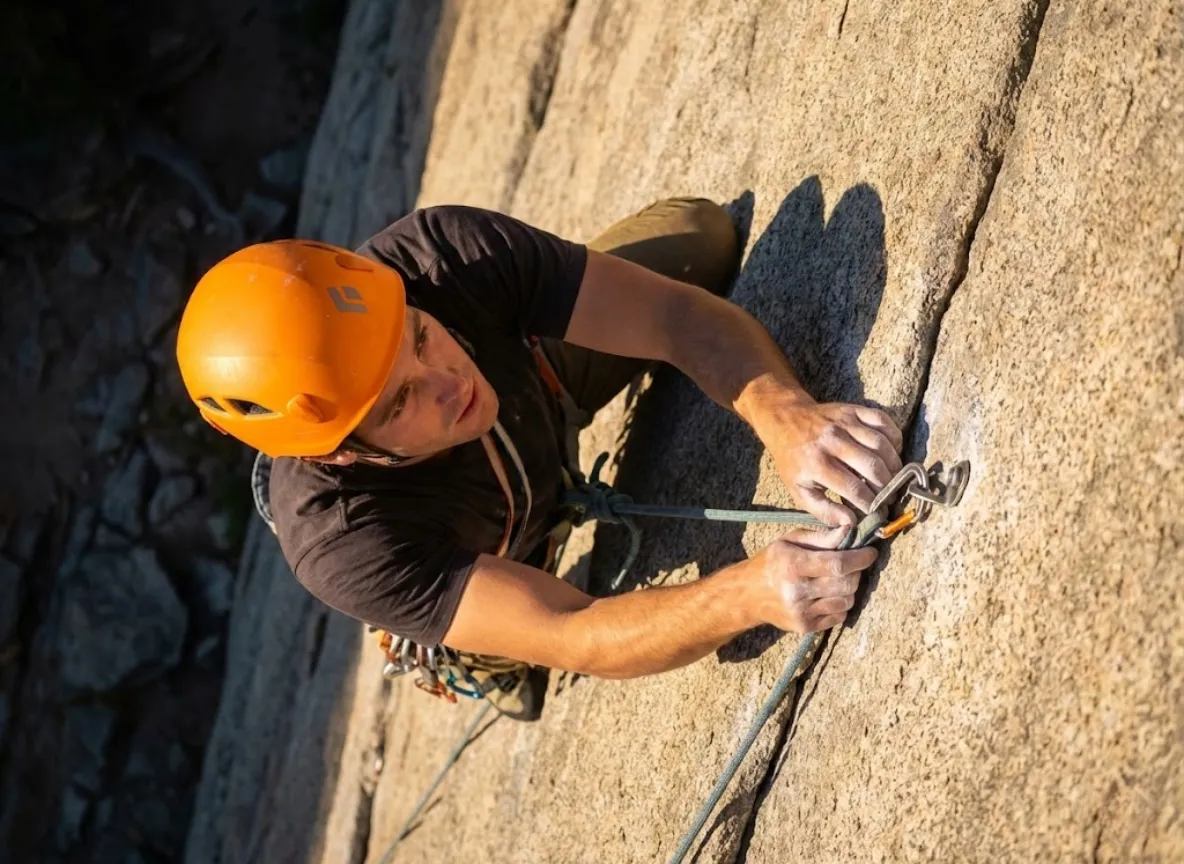
A climber wearing a modern climbing helmet ascending a steep granite rock face during sunset.

A falling rock doesn’t care about your send grade. In the vertical world, the margin between a story for the bar and a medical evacuation is often just two centimeters of expanded foam. A swinging lead fall generates forces your skull cannot withstand alone.

I’ve spent years guiding clients through the Rockies, and I’ve seen the aftermath of “good enough” gear. For too long, climbers have treated head protection as a bulky tax on performance. That ends now.

By analyzing 2026’s protective materials and prioritizing the critical physics of fit, we identify the specific Personal Protective Equipment (PPE) that offers “free speed” without sacrificing the safety margin required for the modern climber. Whether you need buying advice for sport climbing or alpine efficiency, this guide dissects the best overall options.

How to Choose the Right Climbing Helmet: An Expert’s Framework

Close-up view of a climbing helmet's internal foam liner and adjustable suspension dial system.

You need to look past marketing buzzwords. We are moving beyond the “bucket” mentality to understand how biomechanics and material science dictate genuine safety.

The Physics of Foam: EPP vs. EPS (Kinetic Energy Management)

Foam chemistry dictates how a climbing helmet handles impact and determines its lifespan. Traditional EPS (Expanded Polystyrene) is the “one-and-done” sacrifice. It is efficient at stopping catastrophic force, acting like a crumple zone, but it is brittle and prone to helmet fracture from daily abuse.

EPP (Expanded Polypropylene) functions differently. It acts as a resilient buffer through elastic deformation. This “rebound” quality makes it ideal for the fast-and-light alpinist who deals with minor dings and compression in haul bags.

A split-screen macro visualization comparing climbing helmet materials: white brittle EPS foam showing cracks on the left, and black resilient EPP foam showing elastic compression on the right.

Modern hybrid foam designs combine a durable ABS shell or Polycarbonate shell with an EPP core. This balances longevity with the necessary weight savings found in lightweight vs. durable rock climbing helmets. While manufacturers like Edelrid and CAMP push boundaries, authoritative studies on helmet liner materials confirm that material density directly correlates to impact consequence.

Cranial Topography: The “Fit” Friction

A helmet’s ability to stay on your head during an impact is dictated entirely by geometry and the internal suspension shape. We must differentiate between Dolichocephalic (Long Oval) and Brachycephalic (Round/Intermediate Oval) head shapes.

Historical manufacturing trends show a clear bias. Petzl typically favors Round/Intermediate shapes, while Black Diamond often favors Long Ovals. Mismatching these leads to the “Temple Pinch” or the dangerous “Bobblehead” effect.

A split-screen technical illustration. The left side shows a top-down view of a Dolichocephalic (Long Oval) head shape experiencing "Temple Pinch" inside a round helmet. The right side shows a Brachycephalic (Round) head shape with gaps inside a long oval helmet, labeled "Bobblehead Effect."

A poor fit compromises stability during a fall. To ensure the helmet performs according to UIAA 106 certification and EN 12492 certification, it must sit securely without wobbling. You need to measure your circumference and choose the right climbing helmet fit before committing to a purchase.

Pro-Tip: Put the helmet on and leave the chin strap unbuckled. Shake your head vigorously like a wet dog. If the helmet slides out of position, the suspension shape is wrong for your skull, regardless of how much you tighten the dial.

Rotational Impact & MIPS Integration

Most climbing accidents involve off-axis impacts. We call this the “Swinger’s Fall”—hitting the wall rather than just sustaining a top-down rock strike.

Rapid rotation of the skull causes brain shear. This can result in severe concussions even without a skull fracture. The MIPS (Multi-directional Impact Protection System) solution uses a low-friction layer to allow 10-15mm of independent movement.

A detailed 3D cross-section illustration of a climbing helmet impacting a rock wall. The image highlights the yellow MIPS inner layer sliding against the outer shell to deflect rotational energy, with embedded text labels explaining the mechanics.

This mechanism redirects rotational energy away from the brain, aiding in concussion deflection. Understanding these mechanics is crucial when assessing the top 10 climbing dangers, specifically lead falls and object strikes.

Our Selection Process: How We Built This Guide

A variety of climbing helmets arranged on a boulder for field testing and comparison.

We analyze gear based on physics and field reports, not marketing budgets. Our recommendations are derived from accident data, material analysis, and user feedback loops.

Every helmet was scored against six criteria: Kinetic Energy Management, Fit Geometry, Ventilation, Durability, Weight-to-Protection Ratio, and Features (like headlamp clips and chin strap comfort).

We analyzed top climbing helmets from industry giants and niche players, including Black Diamond, Petzl, Mammut, Edelrid, CAMP, Smith, Wild Country, Trango, and Metolius.

Our testing grounds included the polished granite of Yosemite, the sandstone of Red Rock, and the technical faces of Squamish and The Chief in British Columbia.

We filtered the market through three distinct user personas—The Hard-Use Professional, The Ultralight Specialist, and The Multi-Sport Athlete.

While we may earn a commission if you purchase through our links, this never influences our scoring. We prioritize your safety over our revenue.

The Best Climbing Helmets of 2026: Our Top Recommendations for Every Need

An alpinist wearing a lightweight climbing helmet traversing a high-altitude snowy ridge.

Our Top Picks for The Hard-Use Professional

For the climber who needs an everyday workhorse or a beater helmet that can survive being tossed at the crag.

Petzl Boreo

$ $ $ $
Petzl Boreo

The Petzl Boreo is the definitive workhorse of the modern climbing industry. Its thick ABS shell covers the entire head, offering superior side and rear impact protection that feels nearly indestructible in normal climbing use. It shrugs off the kind of abuse that retires lighter foam helmets, making it the top choice for guides and instructional fleets. However, that protection comes at a cost: it creates a distinct “mushroom” silhouette and retains significant heat. If you climb primarily in scorching desert environments, the lack of airflow will be noticeable.

Overall
Kinetic Energy Management
Cranial Topography & Fit
Ventilation Efficiency
Durability & Abuse Tolerance
Feature Integration
Shell Material ABS Shell
Liner Material EPP + EPS Liner
Weight 295 g (S/M)
Fit Profile Intermediate Oval / Round

You Should Buy This If…

  • You prioritize durability and longevity over weight savings.
  • You need a “beater” helmet for trad climbing or guiding.
  • You have a rounder head shape (Brachycephalic).

You Should Reconsider If…

  • You climb primarily in very hot climates (poor heat exhaust).
  • You are an ounce-counter looking for an ultralight profile.

Wild Country Syncro

$ $ $ $
Wild Country Syncro

Arguably the most durable helmet on the market, the Syncro features a reinforced polycarbonate top plate fused over an EPS core. We often call it “The Tank” because it withstands chaotic abuse on big wall environments where gear gets hauled and smashed daily. It offers excellent ventilation for a hardshell, keeping you cool on long belays. The critical downside is its sizing strategy. It is a “One Size” helmet. If you have a small head (<56cm), it simply will not fit securely, leaving you with a wobbly, unsafe setup.

Overall
Kinetic Energy Management
Cranial Topography & Fit
Ventilation Efficiency
Durability & Abuse Tolerance
Feature Integration
Shell Material Polycarbonate (Reinforced)
Liner Material EPS Core
Weight 260 g
Fit Profile Large/Universal (One Size)

You Should Buy This If…

  • You need absolute maximum durability for big walls or industrial use.
  • You have a larger head circumference (up to 62cm).
  • You want better ventilation than standard ABS hardshells.

You Should Reconsider If…

  • You have a small head (<56cm) as the “One Size” will not fit securely.
  • You want advanced features like magnetic buckles.

Mammut Skywalker 3.0

$ $ $ $
Mammut Skywalker 3.0

The Skywalker 3.0 is a robust hybrid helmet that appeals to the eco-conscious climber by incorporating recycled EPS foam. It features an extremely hard ABS shell designed to take a beating, making it a sustainable choice for daily cragging or institutional use. The “bucket” fit is deep and protective, encapsulating the head rather than perching on top. However, sustainability comes with a weight penalty. At 330g, it is one of the heaviest options on our list, which becomes noticeable during long days looking up at your leader.

Overall
Kinetic Energy Management
Cranial Topography & Fit
Ventilation Efficiency
Durability & Abuse Tolerance
Feature Integration
Shell Material ABS Shell
Liner Material Recycled EPS/EPP Foam
Weight 330 g
Fit Profile Deep / Bucket Fit

You Should Buy This If…

  • Sustainability and recycled materials are a purchase priority.
  • You prefer a “deep” fit that encapsulates the head rather than sitting on top.
  • You need a durable helmet at a competitive price point.

You Should Reconsider If…

  • Weight is a concern (at 330g, it is one of the heaviest).
  • You are looking for a low-profile aesthetic.

Black Diamond Half Dome

$ $ $ $
Black Diamond Half Dome

The Black Diamond Half Dome is the industry standard for affordability, essentially the “Toyota Corolla” of climbing helmets. Its durable ABS shell and highly adjustable suspension system make it the ideal entry-level choice that fits a wide variety of head shapes, particularly Ovals. It prioritizes value and ease of use over technical specs. The trade-off is the rear click-wheel mechanism. While convenient, it is the common failure point; if you crush it inside a backpack, the plastic gears can strip, rendering the fit system useless.

Overall
Kinetic Energy Management
Cranial Topography & Fit
Ventilation Efficiency
Durability & Abuse Tolerance
Feature Integration
Shell Material ABS Shell
Liner Material EPS Liner
Weight 330 g (S/M)
Fit Profile Oval

You Should Buy This If…

  • You are a beginner buying your first full kit and need to save money.
  • You need a “loaner” helmet that fits a wide range of head sizes.
  • You have an Oval head shape.

You Should Reconsider If…

  • You plan to do long multi-pitch routes (weight causes neck fatigue).
  • You are rough with packing (the dial mechanism can strip if crushed).

Our Top Picks for The Ultralight Specialist

If you are a weight weenie prioritizing alpine efficiency and breathability for glacial approaches.

Petzl Sirocco

$ $ $ $
Petzl Sirocco

The Petzl Sirocco remains the undisputed king of weight, tipping the scales at a stunning 170g. Its EPP monocoque design maximizes durability through elastic rebound, while the crown-only EPS puck ensures critical rockfall protection. It is the top choice for moving fast in the mountains where every gram counts. However, the soft EPP foam is cosmetically fragile. It will dent, scratch, and look like a chew toy if you treat it carelessly, even if the structural integrity remains intact.

Overall
Kinetic Energy Management
Cranial Topography & Fit
Ventilation Efficiency
Durability & Abuse Tolerance
Weight-to-Protection Ratio
Shell Material EPP Monocoque / Polycarbonate Cap
Liner Material EPP Body / EPS Crown
Weight 170 g (M/L)
Fit Profile Round / Intermediate

You Should Buy This If…

  • Weight is your primary consideration.
  • You want exceptional ventilation for high-output days.
  • You prioritize multi-impact resilience (EPP) over cosmetic hardness.

You Should Reconsider If…

  • You care about cosmetic dents (the foam marks easily).
  • You climb in areas with magnetic sand (magnetic buckle clogging).

Mammut Wall Rider MIPS

$ $ $ $
Mammut Wall Rider MIPS

The Wall Rider MIPS is a pioneering helmet that integrates the Multi-directional Impact Protection System into an ultralight EPP core. It offers the pinnacle of current safety tech for lead climbers concerned with rotational forces, without the bulk of a traditional hardshell. It is arguably the safest choice for the weight-weenie. The main drawback is the fixed “V” yoke on the chin strap. It is not adjustable around the ears, and for some climbers, it rubs constantly, turning a long route into an annoyance.

Overall
Kinetic Energy Management
Cranial Topography & Fit
Ventilation Efficiency
Durability & Abuse Tolerance
Weight-to-Protection Ratio
Shell Material Partial Hardshell Cap
Liner Material EPP Core / MIPS Layer
Weight 250 g
Fit Profile Round / Deep

You Should Buy This If…

  • You want maximum safety tech (MIPS) in a lightweight package.
  • You take frequent lead falls where swinging into the wall is a risk.
  • You have a rounder head shape.

You Should Reconsider If…

  • The fixed “V” chin strap yoke rubs your ears (try before buying).
  • You struggle with tight headlamp clips (notorious on this model).

Our Top Picks for The Multi-Sport Athlete

For the Skimo racer and those needing dual-certified protection for both rock and snow.

Petzl Meteor

$ $ $ $
Petzl Meteor

The Petzl Meteor bridges the gap between climbing and skiing as the first helmet certified for Ski Touring (PCSR-002). Lightweight, well-ventilated, and featuring dedicated goggle retention, it is the versatile choice for athletes who move through snow to get to the rock. It eliminates the need to own two separate helmets for these sports. Be aware, however, that it relies on an EPS liner. Unlike EPP models, this is a “one-and-done” helmet; a significant impact on the slopes or the crag means it must be retired immediately.

Overall
Kinetic Energy Management
Cranial Topography & Fit
Ventilation Efficiency
Durability & Abuse Tolerance
Feature Integration
Shell Material Polycarbonate Shell
Liner Material EPS Liner
Weight 240 g (S/M)
Fit Profile Round / Intermediate

You Should Buy This If…

  • You participate in ski mountaineering and want one helmet for both sports.
  • You need dedicated goggle compatibility.
  • You have a Round/Intermediate head shape.

You Should Reconsider If…

  • You want a multi-impact EPP helmet (Meteor is EPS).
  • You need full alpine skiing certification (EN 1077) for resort use.

The Bottom Line

Fit is safety. A high-tech MIPS helmet that pinches your temples or sits too high is significantly less safe than a basic model that properly contours to your skull.

Remember the material lifespan: EPP foam is a multi-impact investment, while EPS is an insurance policy you hope to never cash in. There is no “best” helmet, only the best tool for your objective—whether that’s hauling bags on El Cap or sprinting up a ridge.

Measure your head circumference today. Identify your shape. Invest in the PPE that you will actually want to wear.

Pro-Tip: If you are between sizes, always size up. You can wear a beanie under a slightly large helmet, but you cannot suffer through a headache caused by a small one.

FAQ – Frequently Asked Questions

Can I use a bike helmet for rock climbing?

No. Bike helmets are designed for single-impact forces to the crown or forehead (falling off a bike). Climbing helmets are tested specifically for penetrating impacts from above (rockfall) and, increasingly, side protection. They have different certification standards (EN 12492 vs. EN 1078).

What is the difference between EPP and EPS foam?

EPS (Expanded Polystyrene) is brittle and crushes upon impact, making it a one-time use material. EPP (Expanded Polypropylene) is elastic and can rebound from minor impacts, making it more durable for everyday wear and tear. (See the Petzl Sirocco for a prime example of EPP).

Does MIPS really matter for climbing?

Yes, especially for lead climbing. Traditional helmets protect efficiently against vertical rockfall. MIPS reduces rotational brain injury caused by angled impacts when you swing into the wall during a fall. (See the Mammut Wall Rider MIPS for this technology).

How do I know if I have a round or oval head shape?

If you frequently feel pressure on your temples but have gaps at the front and back, you likely have a Round head (try Petzl). If you have pressure on your forehead but gaps at the sides, you likely have an Oval head (try Black Diamond).

How long are climbing helmets good for (Expiration Dates)?

Most manufacturers recommend retiring a helmet after 10 years of storage or 3-5 years of regular use, even without a major impact. UV radiation degrades plastics over time. If you see cracks, severe dent resistance failure, or frayed straps, retire it immediately.

Risk Disclaimer: Rock climbing, mountaineering, and all related activities are inherently dangerous sports that can result in serious injury or death. The information provided on Rock Climbing Realms is for educational and informational purposes only. While we strive for accuracy, the information, techniques, and advice presented on this website are not a substitute for professional, hands-on instruction or your own best judgment. Conditions and risks can vary. Never attempt a new technique based solely on information read here. Always seek guidance from a qualified instructor. By using this website, you agree that you are solely responsible for your own safety. Any reliance you place on this information is therefore strictly at your own risk, and you assume all liability for your actions. Rock Climbing Realms and its authors will not be held liable for any injury, damage, or loss sustained in connection with the use of the information contained herein.

Affiliate Disclosure: We are a participant in the Amazon Services LLC Associates Program, an affiliate advertising program designed to provide a means for us to earn advertising fees by advertising and linking to Amazon.com. As an Amazon Associate, we earn from qualifying purchases. We also participate in other affiliate programs. Additional terms are found in the terms of service.