

In this article
The cam was stuck. Not just wedged—stuck. Trigger wires kinked at 90 degrees, lobes locked open inside a flared crack 40 feet up a sandstone wall in Indian Creek. No amount of wiggling would free it. The choice: abandon a $90 piece of gear or risk a sketchy free solo to retrieve it.
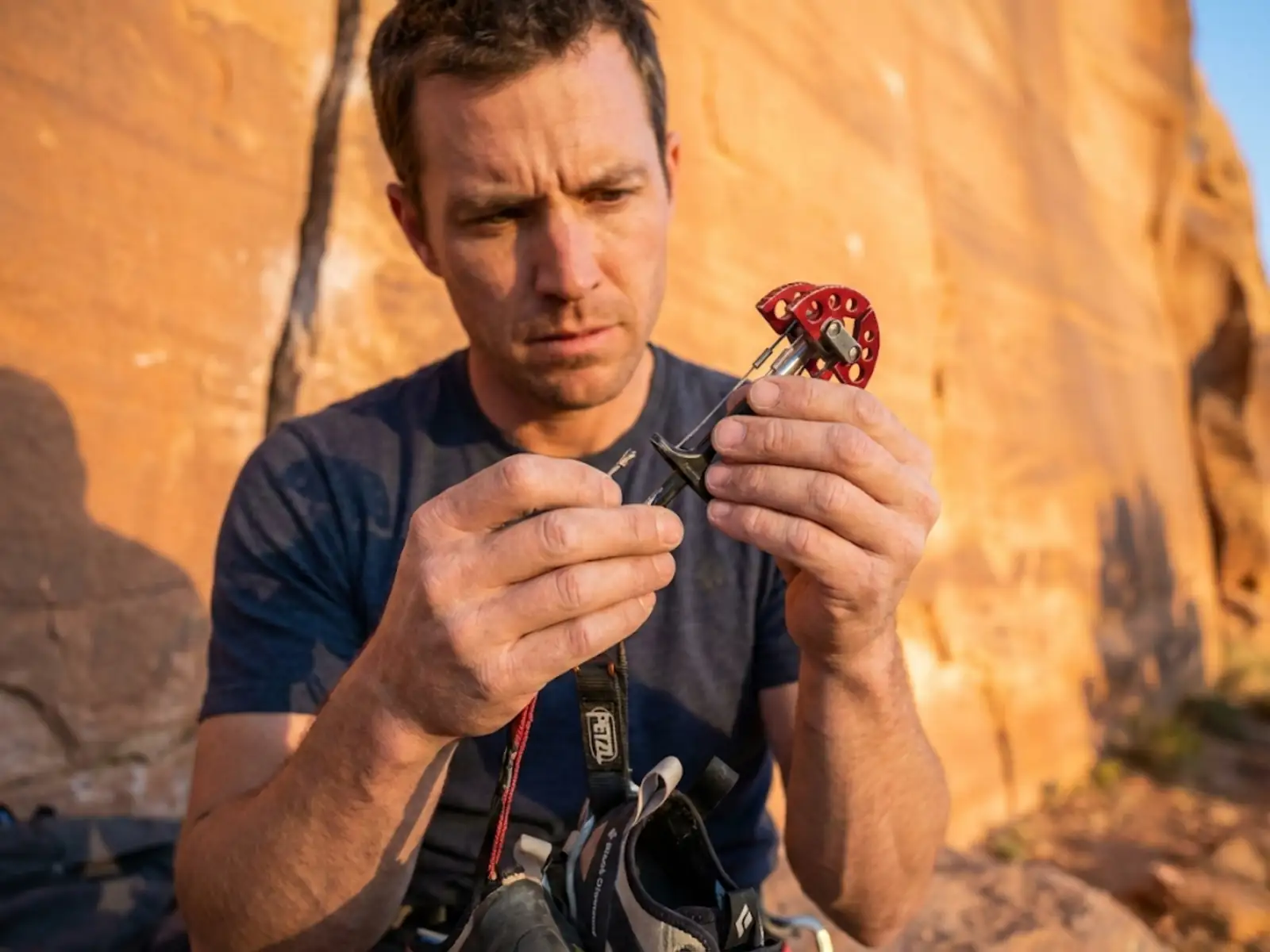
After two decades of trad climbing and more cam repairs than I care to count, I can tell you this scenario is almost always preventable. Trigger wire failure is the most common non-catastrophic failure mode in spring-loaded camming devices. Unlike axle or lobe damage—which renders a cam unsafe—trigger wire issues are purely operational. The cam still holds falls. It just won’t retract.
But that operational failure has real consequences: lost gear, dangerous retrieval attempts, and the nagging question of whether a DIY cam repair will actually hold up in the field. This article answers one question: What repair methods actually work?
⚡ Quick Answer: For standard-size cams (C4 #0.5-3), DIY repairs using copolymer trimmer line (0.095″) or MIG welding wire (0.030″) are field-proven and cost-effective. For small-geometry cams, ultralight models, or complex systems, factory service is the smarter play—tight tolerances make DIY success rates drop below 50%. The key is matching material to cam geometry and verifying repairs with a 100-cycle stress test before trusting your life to them.
The Mechanical Role of Trigger Wires in SLCD Systems
The Physics of Cam Placement: Why Trigger Wires Matter
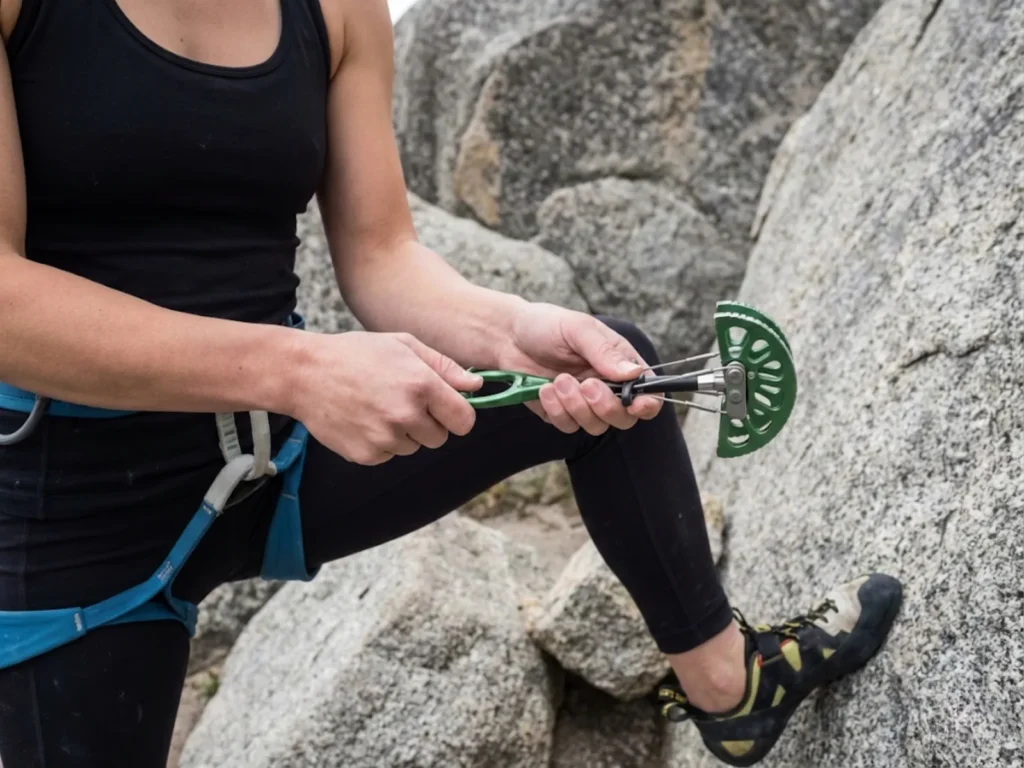
Spring-loaded camming devices operate on the logarithmic spiral principle, maintaining a constant camming angle (typically 13.75°) against crack walls. The trigger wire provides the mechanical linkage to overcome internal spring tension, allowing you to retract the lobes for placement or removal.
Here’s what most climbers don’t realize: actuation force varies dramatically by cam size. Small cams like a Black Diamond C4 #0.3-0.75 require 200-400 centi-Newtons of force, while large cams (#3-6) demand 600-1000 cN. That’s why a #5 feels like you’re squeezing a hand gripper while a #0.5 barely takes effort.
The trigger system is non-load-bearing during falls—the axle and lobes handle that. But when the trigger fails, the device becomes operationally useless. You can’t place it, you can’t remove it, and if it’s already in a crack, you’re looking at either a dangerous retrieval or abandoned gear.
Pro tip: If your trigger feels “mushy” or requires significantly more force than other cams in your rack, the wire is likely kinked internally—even if the exterior looks fine. Replace it before it fails mid-climb.
Proper “timing” (equal wire length) ensures lobes retract symmetrically. Mismatched timing creates unstable placements where one side of the cam retracts faster than the other. Understanding trigger wire function is foundational to proper cam placement technique, which we cover in depth in our cam guide.
Component Hierarchy: What’s Critical vs. What’s Replaceable
Not all cam components are created equal. The primary axle (stainless steel) is load-bearing—catastrophic if failed. Never attempt DIY repair on axles. The cam lobes (6061/7075 aluminum) form the frictional interface. Wear reduces holding power but doesn’t cause sudden failure.
Trigger wires (stainless steel or nylon) are mechanical linkage only. Failure equals operational loss, not safety compromise. Internal springs (spring steel) handle lobe expansion. Degradation causes “walking” but not fall failure.
After 10 years of trad climbing, I’ve retired cams for axle wear and lobe deformation, but I’ve repaired trigger wires on at least 15 units—some still in service after 5+ seasons. The UIAA doesn’t certify trigger wires separately; they’re considered a user-serviceable component. Manufacturer warranties typically cover axle/lobe defects but exclude trigger wire wear (considered normal use).
Knowing which components are critical informs your regular cam maintenance schedule.
Failure Modes: Abrasion, Fatigue, and Permanent Deformation
Trigger wire failure happens through three mechanisms: high-cycle fatigue, low-cycle fatigue, and abrasion. High-cycle fatigue (HCF) is low-stress, high-repetition failure—think 10,000+ placements. Microscopic surface imperfections from pliers act as stress concentrators where cracks initiate.
Low-cycle fatigue (LCF) occurs when you kink a wire. Once kinked, fatigue life drops by 60-80%. That’s why a single bad kink often means immediate replacement, even if the wire hasn’t snapped yet.
Abrasion is environment-dependent. Quartz crystals in sandstone act like microscopic saw blades. Granite is less abrasive due to larger crystal structure. Inspect trigger wires after every Indian Creek or Red Rocks trip—sandstone abrasion is 3-4x more aggressive than granite.
Pro tip: Nylon trigger lines (used in some ultralight cams) are susceptible to UV degradation and thermal cycling. In extreme cold, the polymer becomes brittle and prone to fracture.
Here’s something most climbers don’t know: increasing wire diameter can decrease fatigue life if the bend radius stays constant. It’s counterintuitive, but the larger diameter increases strain on the outer fibers of the wire. This is why you can’t just throw thicker wire at every problem.
Material Science: Comparing Repair Options
Polymer Systems: Trimmer Line (Nylon 6 and Copolymers)
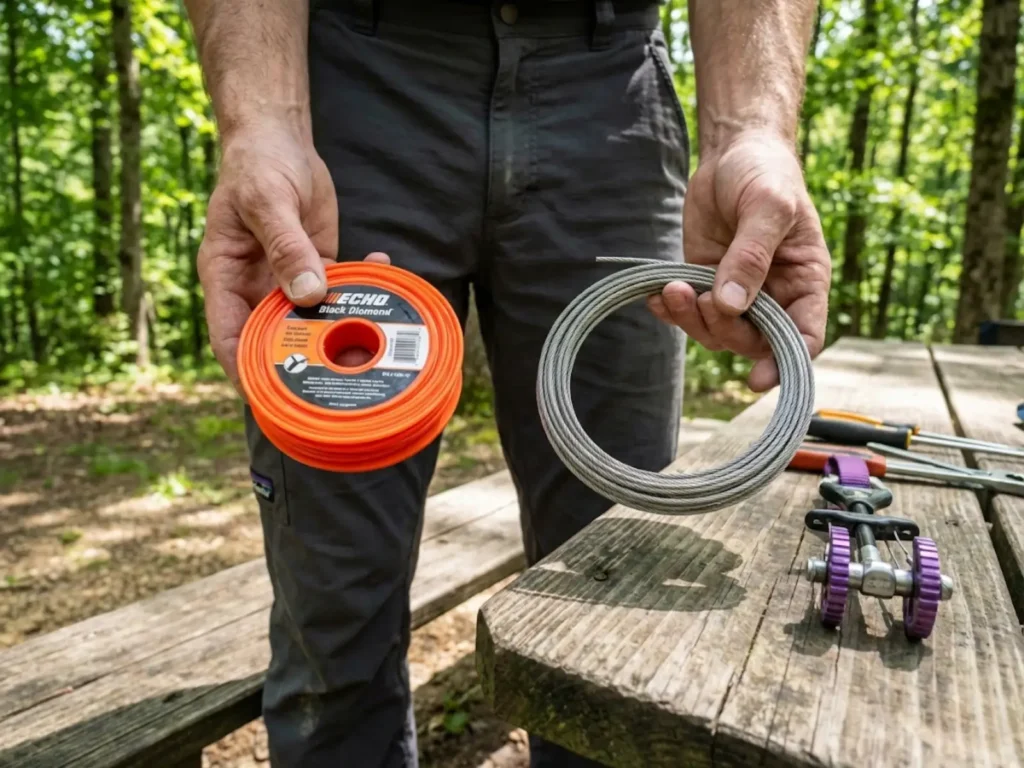
Weed whacker line is the most popular DIY repair material for good reason. It’s cheap, readily available, and works. But not all trimmer line is created equal. You want copolymer nylons (bonded multi-substance), which offer 20-30% better durability than standard monofilament.
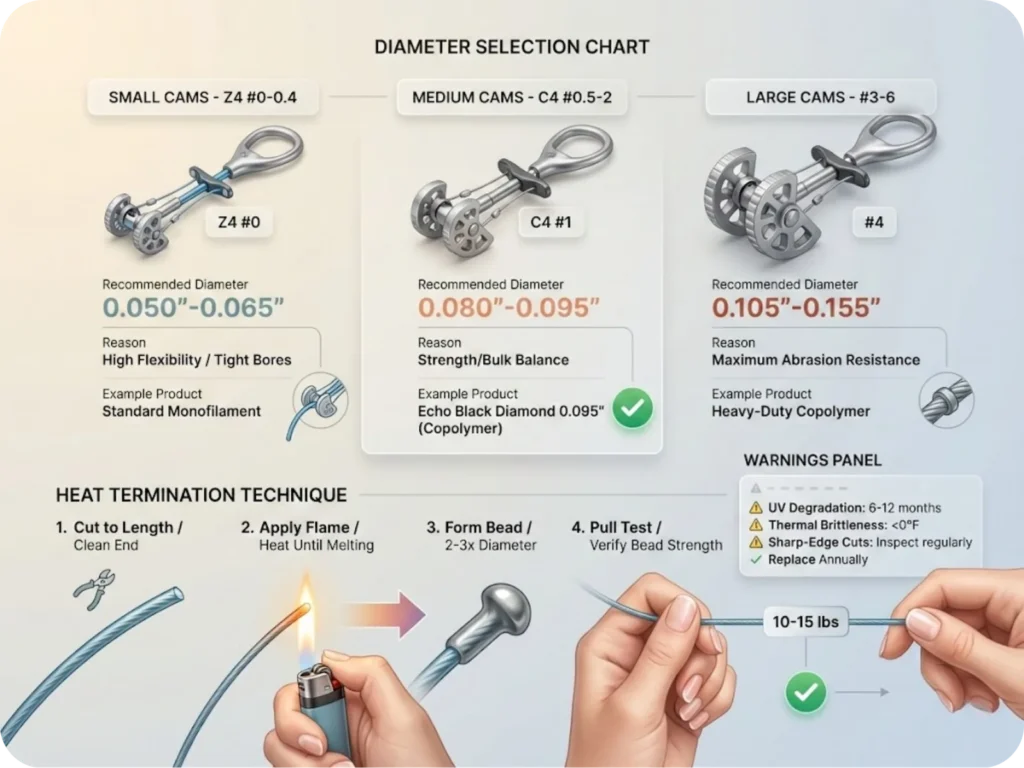
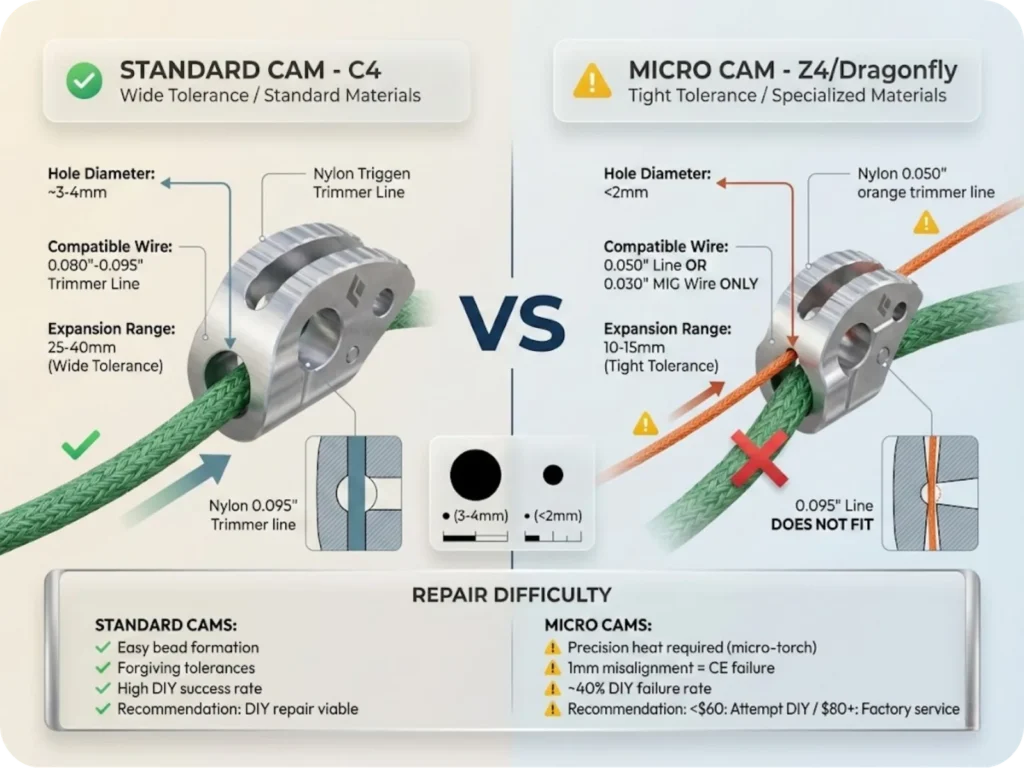
Diameter selection matters. For small cams (Z4 #0-0.4), use 0.050″-0.065″ line for high flexibility in tight bores. Medium cams (C4 #0.5-2) need 0.080″-0.095″ for optimal strength/bulk balance. Large cams (#3-6) require 0.105″-0.155″ for maximum abrasion resistance.
The termination method is simple: heat with a flame to form a “bead” that mechanically stops against the lobe. The bead must be 2-3x wire diameter to prevent pull-through. Test bead strength by pulling with 10-15 lbs of force before installing. If it deforms, re-heat and enlarge.
I’ve used Echo Black Diamond twisted trimmer line (0.095″) on C4 #1-2 cams for 3 seasons. Zero failures, but I replace annually due to UV concerns. The weaknesses are real: UV degradation (6-12 months in high sun exposure), thermal brittleness below 0°F, and susceptibility to sharp-edge cuts.
Trigger wire repair is similar in philosophy to cam sling replacement—both are user-serviceable if done correctly.
Metallic Systems: MIG Welding Wire and Stainless Steel Cable
When should you use metal instead of polymer? When you need zero-stretch precision and long-term durability. MIG welding wire (0.030″) is rigid, maintains 90-degree bends for secure lobe insertion, and is ideal for Black Diamond Z4 and other small-geometry cams.
Stainless steel braided cable (1/24″-1/16″) is factory-standard for larger cams. It requires swage sleeves and crimping tools (Nicopress or equivalent). Material grades matter: 304 stainless for general use, 316 stainless for marine/high-humidity environments (superior corrosion resistance).
Here’s the critical part: NEVER pair aluminum swage sleeves with stainless wire. The anodic index difference (~0.87V) causes rapid galvanic corrosion—you can read more about galvanic compatibility in metal pairings. Use copper or stainless sleeves only. Swaging verification requires Go/No-Go gauges to confirm crimp integrity. Under-crimped sleeves can slip under spring tension.
The trade-off with metal wires is unforgiving: a single kink equals permanent deformation equals immediate replacement. Nylon is more forgiving.
Specialized Fibers: Kevlar and Dyneema (When to Avoid)
Kevlar (aramid fiber) offers high tensile strength and minimal thermal expansion. Metolius uses it in Master Cam factory triggers. But here’s the problem: Kevlar is highly sensitive to internal abrasion. If the protective sheath is compromised, the core must be replaced immediately.
Dyneema (UHMWPE) has exceptional strength-to-weight ratio, but its low melting point (~275°F) makes flame-based terminations impossible. Metolius doesn’t sell Kevlar trigger repair kits to consumers—they require factory inspection/replacement.
Cost analysis: Kevlar cord costs $2-3/foot vs. $0.10/foot for trimmer line. For a cam that costs $70-90, factory service ($15-25) is more economical. I’ve never successfully repaired a Kevlar-triggered cam in the field. The precision required exceeds DIY capabilities. Unless you have professional rigging experience and specialized tools, avoid Kevlar/Dyneema repairs. Use manufacturer service.
Manufacturer Repair Ecosystems: What’s Available vs. What’s Required
Black Diamond: Modular Kits and the Ultralight Exception
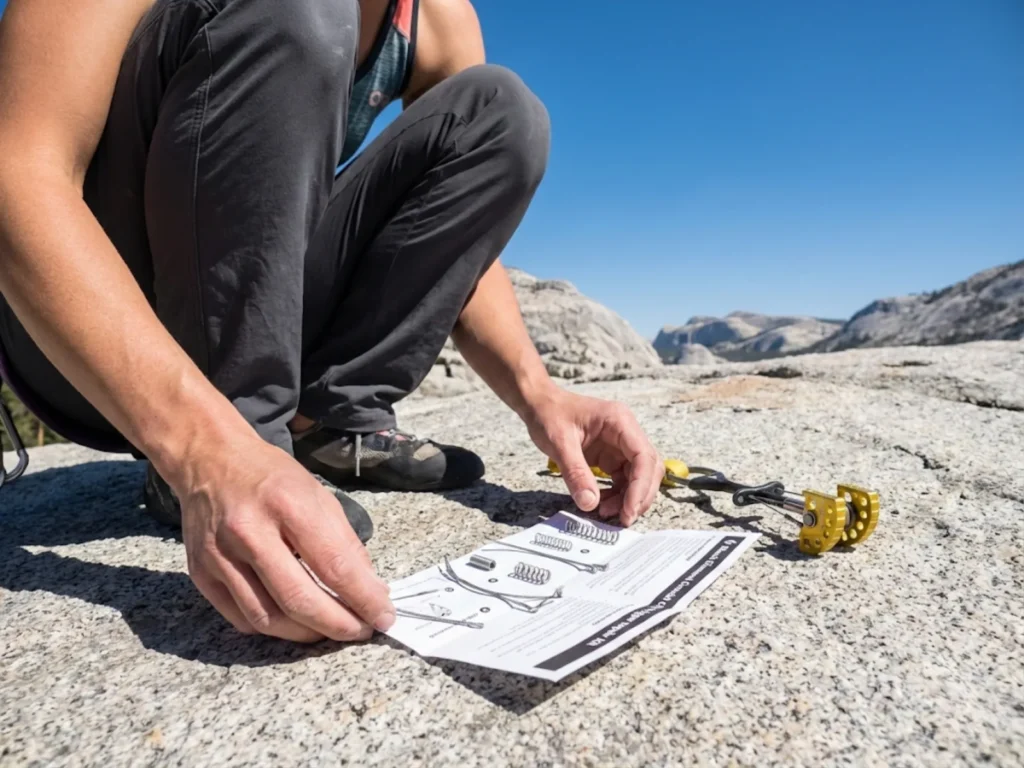
Black Diamond offers user-installable repair kits for C4 standard cams (sizes 0.3-6). Kits include 2 wires + instructions for $6-$9. The C4 Ultralight (UL) kits are available but significantly more complex. UL wires are ~50% thinner and pinned directly into lobes (not hooked).
Here’s the critical UL issue: standard trimmer line (0.095″) is too thick for UL trigger bars. Repairs require 0.050″ line or thinner MIG wire. Before buying a UL repair kit, measure the trigger bar pinch width with calipers. If your replacement wire doesn’t fit, you’ll need to grind/file the bar—a risky modification.
C4 cams use a double-axle system. Unequal wire lengths cause asymmetric lobe retraction, creating unstable placements. BD’s warranty covers manufacturing defects but excludes wear/abrasion. Trigger wire replacement is considered user maintenance.
I’ve successfully repaired C4 #0.5-2 with standard kits. UL repairs have a 50% success rate due to tight tolerances. Knowing when to repair vs. retire a cam is part of understanding gear retirement criteria.
Metolius: The Professional Inspection Model
Metolius doesn’t sell trigger repair kits to consumers. All repairs must go through factory service. Their philosophy: trigger failure often indicates deeper issues (spring fatigue, axle wear). Factory inspection catches these before they become safety hazards.
The service process includes ball-bearing burnisher cleaning (steel media polishes inaccessible cam head areas), lubrication, balancing, and new Kevlar-core triggers + slings. Cost is $15-25 per cam (includes cleaning, inspection, trigger replacement, sling replacement if needed). Turnaround is 2-4 weeks during peak season (spring), 1-2 weeks off-season.
Swaged joint monitoring is critical—it’s the primary fatigue/fraying point. Metolius emphasizes visual inspection of swages every 20-30 uses.
Pro tip: If you climb year-round, send cams for service in late fall. You’ll get them back before spring trips, and turnaround is faster.
Wild Country: Precision via Proprietary Tooling
Wild Country provides sized repair kits for small (0.5-1) and large (2-4) New Friend cams. Each includes 3 wire pairs + bending tool. The bending tool replicates factory-standard hooks that secure wire to lobe. Without this tool, achieving consistent hook geometry is nearly impossible.
Inspection guidelines: slightly bent wires can be readjusted by gentle bending. Cracks in plastic trigger or wire corrosion equal mandatory replacement. Wild Country uses 316 stainless steel (marine-grade) for superior corrosion resistance.
Cost is $12-18 per kit (covers 3 cam sizes, so cost-per-repair is ~$4-6). The bending tool is reusable across multiple repairs. If you own 6+ Wild Country cams, buying one kit pays for itself after 2-3 repairs. Wild Country’s system is the most DIY-friendly among major manufacturers, but it still requires patience and precision.
Engineering Challenges: Small Cams and Complex Geometries
Tight Tolerances: Z4, Dragonfly, and Micro Cam Repairs
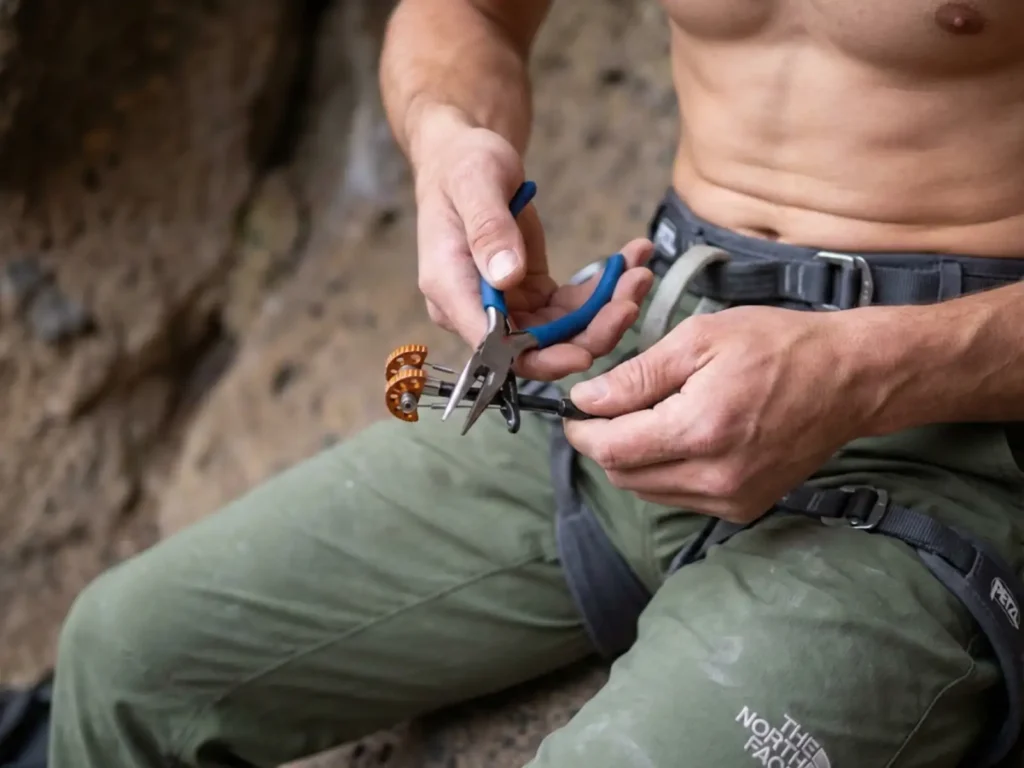
Micro cams like the Z4 #0 and DMM Dragonfly have lobe holes <2mm diameter. Standard 0.095″ trimmer line won’t fit. You need 0.050″ trimmer line or 0.030″ MIG wire—the only viable options.
Small cams have limited expansion ranges (often 10-15mm). Even 1mm of wire misalignment can push the cam outside CE certification retraction specs. Bead formation on 0.050″ line requires extreme heat control. Too much heat equals melted-through wire.
Use a butane micro-torch (jewelry/electronics tool) instead of a lighter for small-diameter beads. Precision heat prevents wire degradation. DIY repairs on cams smaller than #0.5 have a ~40% failure rate within the first season (based on community reports).
For cams <$60, attempt DIY repair. For premium small cams ($80+), factory service is worth the cost.
The Omega Pacific LinkCam: When DIY Becomes Custom Fabrication
The LinkCam has telescoping lobe design—multiple lobe segments increase complexity. Trigger wires connect via proprietary pressed-in pins. The repair process: grind off old connectors with Dremel → fabricate new eyebolts from plumbing pipe mount strapping → file to fit → reset spring tension (2 turns from relaxed state).
Incorrect spring tension means lobes won’t retract fully or will over-retract (causing walking). Tool requirements: Dremel with cut-off wheel, jeweler’s files, precision screwdrivers, spring tension gauge (or extensive trial-and-error). Time investment: 2-4 hours for first repair; 1-2 hours for subsequent repairs once you’ve developed the technique.
Pro tip: Document your spring tension settings with photos and notes. You’ll forget the exact configuration between repairs.
Only attempt if you have machining experience or the cam is discontinued/irreplaceable. Otherwise, retire the unit.
Metallurgical Integrity: Corrosion Risks and Material Pairing
The Anodic Index: Why Aluminum Sleeves Destroy Stainless Wire
Galvanic corrosion occurs when dissimilar metals contact in moisture (electrolyte). The metal with higher anodic index becomes the sacrificial anode and corrodes. Anodic index difference >0.25V initiates rapid corrosion in damp environments.
Material pairings matter: Stainless wire + aluminum sleeve equals ~0.87V difference (EXTREMELY HIGH RISK – DO NOT USE). Stainless wire + copper sleeve equals ~0.27V (LOW RISK – ACCEPTABLE). Stainless wire + stainless sleeve equals 0.00V (NO RISK – PREMIUM). Galvanized wire + aluminum sleeve equals ~0.14V (VERY LOW RISK – COMPATIBLE).
Salt (sea cliffs) acts as a catalyst, increasing corrosion rate by 5-10x. Inspect swaged joints for white/green corrosion deposits after every coastal climbing trip.
Cleaning Protocols: Preventing Salt-Induced Crystallization
Clean after every use in coastal environments. Every 5-10 uses in dry inland areas. Cleaning method: M16 brush or stiff toothbrush + near-boiling water (avoid textile slings). This dissolves old lubricants and embedded grit.
Drying with compressed air removes moisture from internal channels—critical for preventing corrosion initiation. Lubrication: apply only to clean, dry cams. Use Metolius Cam Lube (MCL) or automotive silicone spray (waterproof, dirt-repelling).
Storage: store cams with triggers released (lobes expanded). This reduces spring fatigue and wire stress. Keep a dedicated “post-trip cleaning kit” in your vehicle: brush, small bottle of silicone spray, compressed air can. Clean cams immediately after climbing, not weeks later.
I started this protocol after losing 2 cams to corrosion-induced trigger failure. Five years later, zero corrosion issues.
Verification Protocols: Testing Repairs Before Trusting Your Life
The 100-Cycle Stress Test
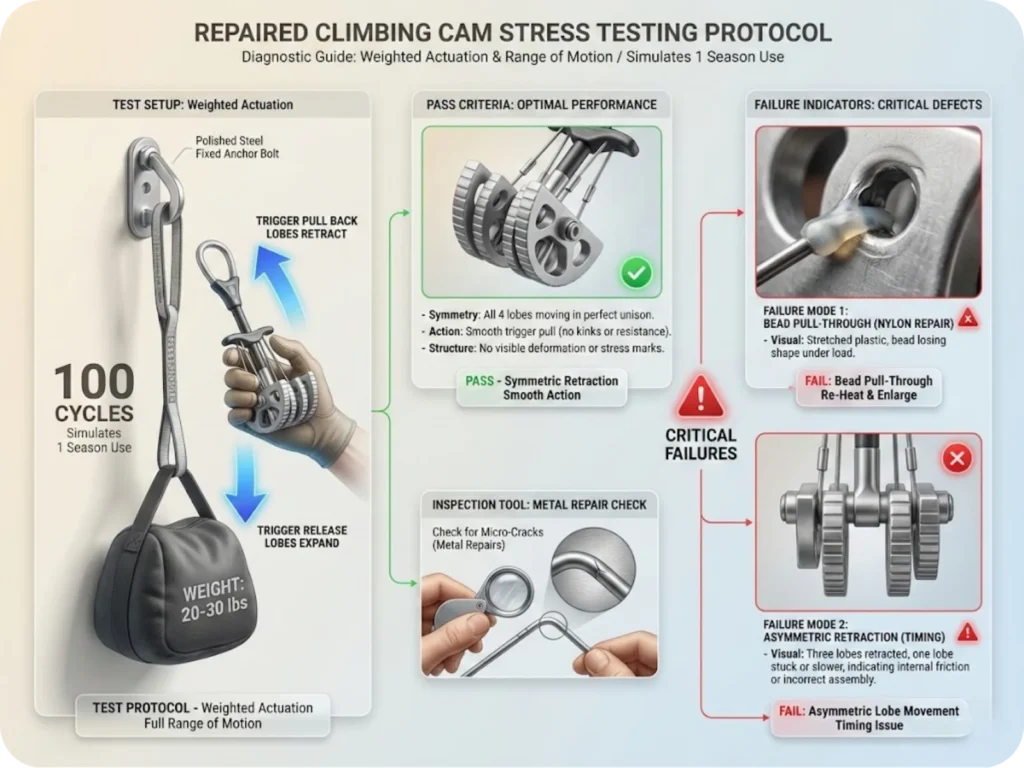
Actuate the cam 100 times from full open to full closed. This mimics ~1 season of moderate use (20-30 climbing days). Failure indicators: beads “pulling through” lobe holes (nylon repairs), swage slippage (metal repairs), increased actuation force (wire kinking internally), asymmetric lobe retraction (timing issues).
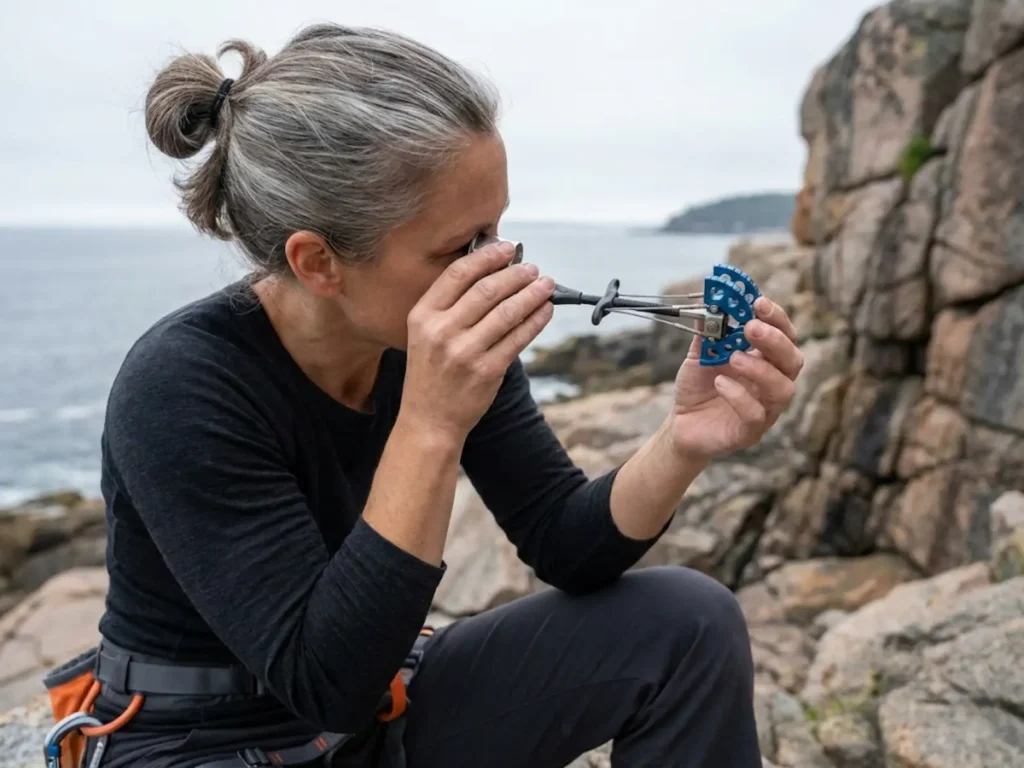
If nylon beads show signs of pull-through, re-heat and enlarge before field use. For metal wire inspection, check for micro-cracks at bend points using 10x magnification (jeweler’s loupe).
Perform the stress test with the cam weighted (hang 20-30 lbs from the sling). This simulates real-world tension during placement/removal. Pass criteria: zero visible deformation, consistent actuation force, symmetric lobe movement.
Lobe Timing and Symmetry Verification
With trigger fully retracted, lobes should be perfectly symmetrical (equal angles from axle). Correction methods: for nylon, adjust tension by re-heating one bead and pulling wire through slightly. For metal, re-bend hooks to equalize wire length.
Audible test: cam should snap back to 90-degree position immediately upon trigger release. Sluggish return equals spring fatigue or wire friction. Tactile test: pull firmly on cam lobes while trigger is locked. Zero movement equals proper engagement.
Apply dry PTFE or silicone lubricant to springs/axles for smooth action without attracting grit. Compare your repaired cam to a factory-new unit of the same model. If actuation force or lobe timing feels different, re-do the repair.
This verification process mirrors the cam inspection checklist we use for all trad gear. Final verification: place cam in a crack and weight it with your body. If it feels “off,” don’t use it on lead.
Go/No-Go Gauges for Swage Integrity
Go/No-Go gauges verify swage compression adequacy. “Go” slot equals properly compressed swage fits. “No-Go” slot equals under-compressed swage doesn’t fit. Common swaging tools: Locoloc L250 (compatible with 621-GA-1P gauge, 1/32″-3/16″ sleeves), Nicopress 2930 (specific gauge 323-2930GAUGE for Nicopress sleeves), HIT THSC600 (integrated gauge, 1/16″-3/16″ sleeves).
Under-compression risk: sleeve can slip under spring tension, causing sudden trigger failure mid-climb. Over-compression risk: wire damage/weakening (less common but possible with excessive force).
If you don’t have a Go/No-Go gauge, use the “tug test”: pull swaged joint with 50+ lbs of force. If it slips even slightly, re-crimp. Gauges run $15-30. If you’re repairing 3+ cams, the investment is justified.
Conclusion
Trigger wire repair isn’t rocket science, but it’s not casual tinkering either. The difference between a repair that lasts five seasons and one that fails on your next trip comes down to three things: material selection matched to cam geometry, metallurgical compatibility (never aluminum on stainless), and rigorous verification (the 100-cycle stress test isn’t optional).
For standard-size cams (C4 #0.5-3, Master Cam equivalents), DIY repairs using copolymer trimmer line (0.095″) or MIG wire (0.030″) are field-proven and cost-effective. For small-geometry cams, ultralight models, or complex systems like the LinkCam, factory service is the smarter play—tight tolerances and proprietary components make DIY success rates drop below 50%.
The real takeaway? Trigger wire failure is almost always preventable through proactive maintenance: regular cleaning (especially after coastal trips), proper lubrication, and storage with triggers released. But when failure does happen, you now have the engineering knowledge to make an informed repair-vs-retire decision.
Now go send something—with gear you can actually trust.
FAQ
Can I use fishing line instead of trimmer line for cam trigger wire repair?
No. Fishing line (monofilament nylon) is designed for tensile strength, not abrasion resistance. It lacks the durability of copolymer trimmer line and will fail rapidly under the cyclic loading and rock contact that trigger wires endure. Trimmer line is specifically engineered for abrasion resistance, making it the superior choice for this application.
How long does a DIY trigger wire repair typically last?
A properly executed repair using copolymer trimmer line or stainless steel cable can last 3-5 seasons of moderate use (20-30 climbing days per year). Lifespan depends on climbing environment (sandstone is more abrasive than granite), maintenance frequency, and material quality. UV exposure degrades nylon over time, so annual replacement is recommended even if the wire looks intact.
Is it safe to climb on a cam with a repaired trigger wire?
Yes, if the repair is done correctly. Trigger wires are non-load-bearing—they only retract lobes for placement or removal. The cam’s holding power comes from the axle, lobes, and springs. However, a failed trigger can leave a cam stuck in a crack, forcing dangerous retrieval or gear abandonment. Always perform the 100-cycle stress test and lobe timing verification before trusting a repaired cam on lead.
Why do manufacturers like Metolius not sell trigger repair kits?
Metolius’s philosophy is that trigger wire failure often indicates deeper issues like spring fatigue or axle wear. Their factory service includes a comprehensive inspection (ball-bearing burnisher cleaning, lubrication, balancing) that catches safety-critical problems a DIY repair would miss. For $15-25, you get professional-grade service that extends the cam’s overall lifespan, not just a quick fix.
Can I repair Black Diamond Ultralight cam triggers with standard trimmer line?
Not reliably. Ultralight triggers are ~50% thinner than standard cams C4 wires and use a different attachment system (pinned into lobes vs. hooked). Standard 0.095 trimmer line is too thick for UL trigger bars. You’ll need 0.050 line or thinner MIG wire, and even then, the tight tolerances make DIY success rates around 50%. Black Diamond sells UL-specific repair kits, but factory service is often the safer choice.
Safety Notice: Rock climbing and mountaineering are inherently high-risk
activities that can involve physical trauma or fatal incidents. The information on Rock Climbing Realms is for
educational and informational purposes only. Techniques and advice presented here are not a substitute
for professional, hands-on instruction. Conditions and risks vary by location. Always seek guidance
from a qualified instructor before attempting new techniques. By using this website, you agree that you
are solely responsible for your own safety. Any reliance you place on this information is strictly
at your own risk, and you assume all liability for your actions. Rock Climbing Realms and its authors
will not be held liable for any harm, damage, or loss sustained in connection with the use of this information.
Affiliate Disclosure: We are a participant in the Amazon Services LLC Associates Program, an
affiliate advertising program designed to provide a means for us to earn advertising fees by advertising and linking
to Amazon.com. As an Amazon Associate, we earn from qualifying purchases. We are also an official affiliate partner
of Black Diamond Equipment via the AvantLink network. If you click on a Black Diamond affiliate link and make a
purchase, we may earn a commission at no additional cost to you. We also participate in other affiliate programs.
Additional terms are found in the terms of service.